June 2, 2026
What Is Accidental Death Insurance and Who Should Buy It?
Accidental death insurance pays your family if a covered accident takes your life. Learn what it covers, who should buy it, and California costs.
What Is Accidental Death Insurance and Who Should Buy It?
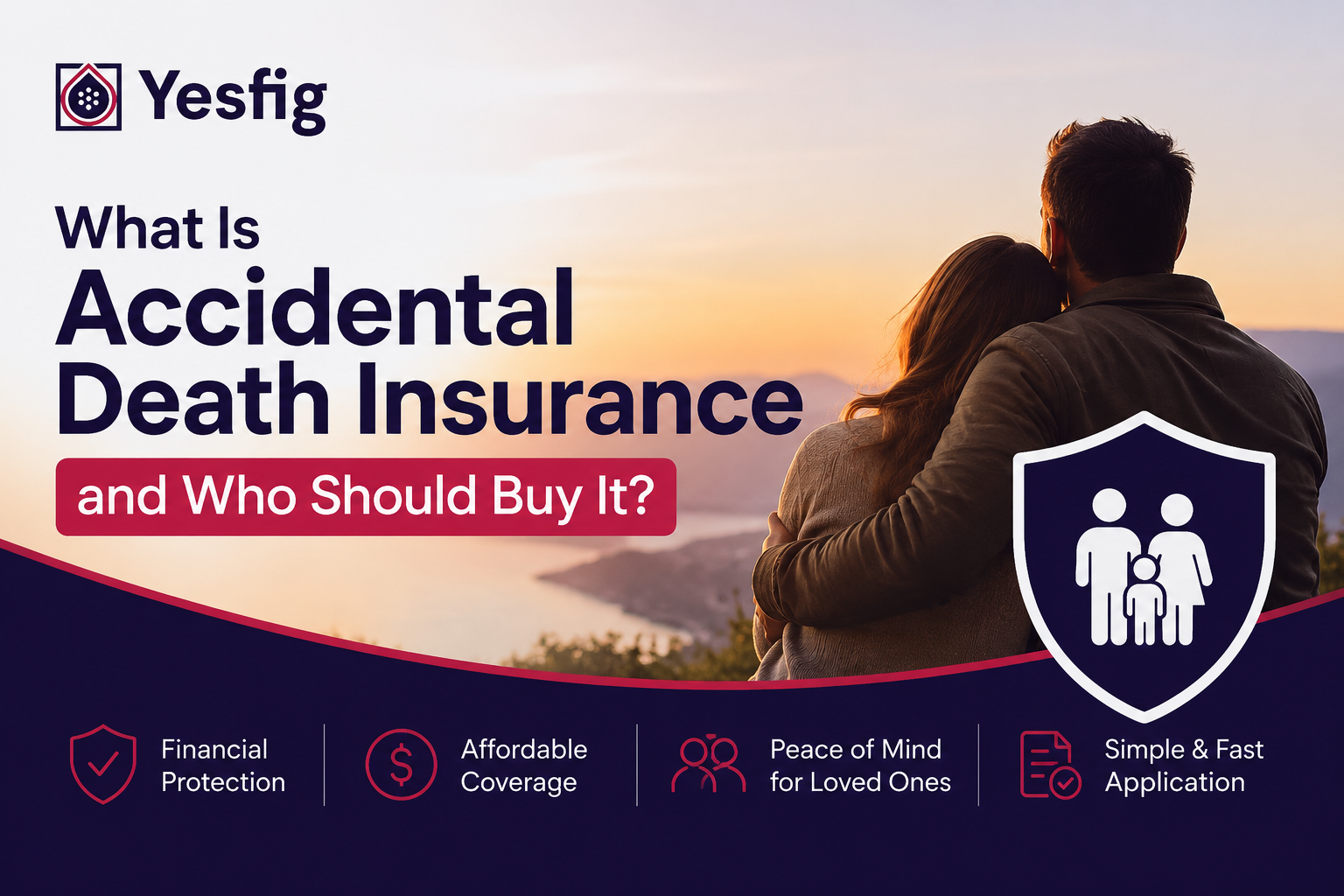
Quick answer: Accidental death insurance pays a lump sum to your loved ones if you die from a covered accident, like a car crash or a serious fall. It's cheap and easy to qualify for, but it only covers accidents, not illness or natural causes. It works best as a supplement to life insurance, not a replacement.
Table of contents
- What is accidental death insurance?
- What accidental death insurance covers, and what it doesn't
- How is it different from life insurance?
- Who should buy accidental death insurance?
- How much does it cost in California?
- How to decide if it's right for you
- Frequently asked questions
- The bottom line
Marcus runs a warehouse floor in Sacramento. He's 34, has two kids, and spends his days around forklifts and loading docks. He keeps meaning to sort out life insurance, and now an offer for accidental death insurance has shown up in his inbox for a few dollars a month. Should he take it?
If you've asked a version of that question, this is for you. The product sounds simple, and it mostly is. But the fine print decides whether it's a smart, cheap add-on or nine dollars you could spend better.
What is accidental death insurance?
Accidental death insurance is a policy that pays a lump-sum benefit to the people you name if you die as the result of a covered accident. That's the whole job. A car crash, a fatal fall, a drowning, a workplace machinery incident: if the cause is an accident and it's covered by your policy, your beneficiaries get the payout.
Some versions are sold as accidental death and dismemberment (AD&D), which adds payments for losing a limb, sight, or hearing in an accident. The core idea is the same. You're insuring specifically against sudden, accidental harm, not against every way a life can end. Yesfig Insurance, a brand of Focus Insurance Group based in Los Angeles, offers this coverage to California residents.
What accidental death insurance covers, and what it doesn't
Here's the part that trips people up, so read it twice. Accidental death insurance only pays when death is caused by a covered accident. It does not pay for death from illness, disease, or natural causes, which is how most people actually die. That single rule explains everything about the product, including why it's so cheap.
Typical exclusions to expect on most policies:
- Death from sickness, heart attack, stroke, or other natural medical causes
- Suicide
- Deaths involving drugs or alcohol above legal limits
- High-risk activities like skydiving or racing (varies by policy)
- Acts of war
Good to know: Always read the covered-accidents and exclusions list before you buy. Two policies at the same price can define "accident" very differently, and that definition is the thing you're paying for. When in doubt, ask Fig or a licensed Yesfig advisor to walk you through it.
Still sorting out what kind of coverage you need?
That's exactly what Fig is for. Explore your accidental death coverage options and get plain answers about what's actually covered before you commit to anything.
How is it different from life insurance?
This is the comparison that matters most, because confusing the two is the costliest mistake you can make here. Term life insurance pays your family no matter how you die, accident or illness, as long as the policy is active. Accidental death insurance pays only if an accident is the cause.
There's a tradeoff in the other direction, though. Term life usually requires health underwriting, sometimes a medical exam, and your rate depends on your age and health. Accidental death coverage typically asks few or no medical questions, so it's faster to get and easier to qualify for if your health would make life insurance pricey. If you want the broad protection a family relies on, start with California term life insurance. If you want a cheap, easy top-up, accidental death earns its keep.
Key takeaways
- Accidental death insurance pays only for death caused by a covered accident, never illness or natural causes.
- It's inexpensive and easy to qualify for because accidents cause a small share of deaths.
- It's a supplement to life insurance, not a substitute for it.
- In California, you can hold both an accidental death policy and a term life policy at the same time.
Want to see how this fits with coverage you already have?
Yesfig reviews what you've got, maps the gaps, and shows you where to improve price or protection. Compare your accidental death and life options in a few minutes, no pressure.
Who should buy accidental death insurance?
Accidents are a leading cause of death for adults under 45, according to the CDC, which is the simple reason this coverage exists. Still, it's not for everyone, and it's rarely meant to stand alone. It tends to make the most sense for:
- People in physically demanding jobs. Warehouse crews, drivers, tradespeople, and construction workers face more on-the-job accident risk, so an affordable accident payout fits their reality. (Marcus, the warehouse lead, lands squarely here.)
- People who commute a lot. If you're on the 405 or the 5 for hours each week, vehicle accidents are your biggest everyday exposure.
- People who can't easily get or afford term life. Because there's little to no medical underwriting, accidental death coverage is reachable when health issues make life insurance expensive or slow.
- People who already have life insurance and want to stack a low-cost layer on top, especially while raising kids or carrying a mortgage.
Who should not lean on it alone? Anyone whose family depends on their income for the long haul. If that's you, term life does the heavy lifting and accidental death is the extra, not the plan.
How much does it cost in California?
Accidental death insurance is one of the cheapest policies you can buy. With Yesfig, coverage starts at $9 a month for California residents, though your actual rate depends on your age, the benefit amount you choose, and the policy details. The low price is a direct result of the narrow coverage: insurers pay out far less often than they would on a policy that covers all causes of death.
One important note on availability: Yesfig offers accidental death insurance in California only. If you're shopping from another state, this particular line won't be available to you through Yesfig, though several other coverage types serve a wider footprint.
How to decide if it's right for you
Keep it to three steps:
- Check what you already have. If you have no life insurance, start there first, since term life covers far more situations. Accidental death fills a gap; it doesn't fill the whole hole.
- Get a quick quote. Because there's usually no medical exam, you can see an accidental death price in minutes and compare it against your budget.
- Add it as a supplement, then revisit at renewal. Treat it as a low-cost layer, and reassess as your job, family, or income changes.
Without any coverage, a sudden accident could leave your family covering the mortgage, daycare, and final costs all at once. That's the quiet risk this product is built to soften.
Frequently asked questions
Is accidental death insurance worth it?
It's worth it as an inexpensive supplement, especially if you have a higher-risk job, commute often, or already carry life insurance and want a low-cost add-on. It's not worth relying on as your only coverage, since it pays nothing if you die from illness or natural causes, which is far more common.
Does accidental death insurance cover death from illness?
No. Accidental death insurance pays only when death results from a covered accident, such as a car crash or fatal fall. Death from illness, disease, heart attack, stroke, or other natural causes is not covered. For protection against any cause of death, you need term life insurance instead.
What's the difference between accidental death and life insurance?
Term life insurance pays your beneficiaries regardless of how you die, as long as the policy is active. Accidental death insurance pays only for accidents. Life insurance usually requires health underwriting, while accidental death coverage typically asks few or no medical questions and costs much less.
Can I have both accidental death and life insurance?
Yes, and many people do. The two work well together. Term life provides broad protection against any cause of death, and an accidental death policy stacks an extra, low-cost payout on top for accidents. In California, Yesfig can help you set up both.
Who is accidental death insurance best for?
It's best for people with physically demanding jobs, heavy commuters, those who can't easily qualify for life insurance, and anyone who already has life coverage and wants an affordable supplement. It's a poor fit as a standalone policy for someone whose family depends on their long-term income.
Is accidental death insurance available outside California?
Through Yesfig, accidental death insurance is available in California only. If you live elsewhere, you'd need to look at carriers licensed in your state. Yesfig does offer several other coverage types across a wider set of states, but this specific line is California-based.
The bottom line
For Marcus, the answer is yes with an asterisk: a few dollars a month for accidental death coverage is a smart layer given his job, as long as he also lines up real life insurance for his kids. That's the right way to see this product. Accidental death insurance is a cheap, easy supplement that buys a little more peace of mind, not the foundation your family stands on.
Ready to add accidental death coverage?
Get an accidental death insurance quote in minutes with Yesfig. California coverage starts at $9/mo, and a licensed advisor is there whenever you want a human in the loop.
About the Author

Mathew Bahadori
CEO, Yesfig Insurance
Leading the company’s mission to make insurance more accessible, modern, and customer-focused. With a passion for innovation and personalized service, he continues to help individuals and families find smarter coverage solutions for life, auto, home, health, and business insurance.