
July 28, 2026
Why Term Life Insurance Is the Default Pick for Most Families
Term life is the default choice for most families for good reasons. Learn why it usually beats permanent coverage, and the cases where it doesn't.
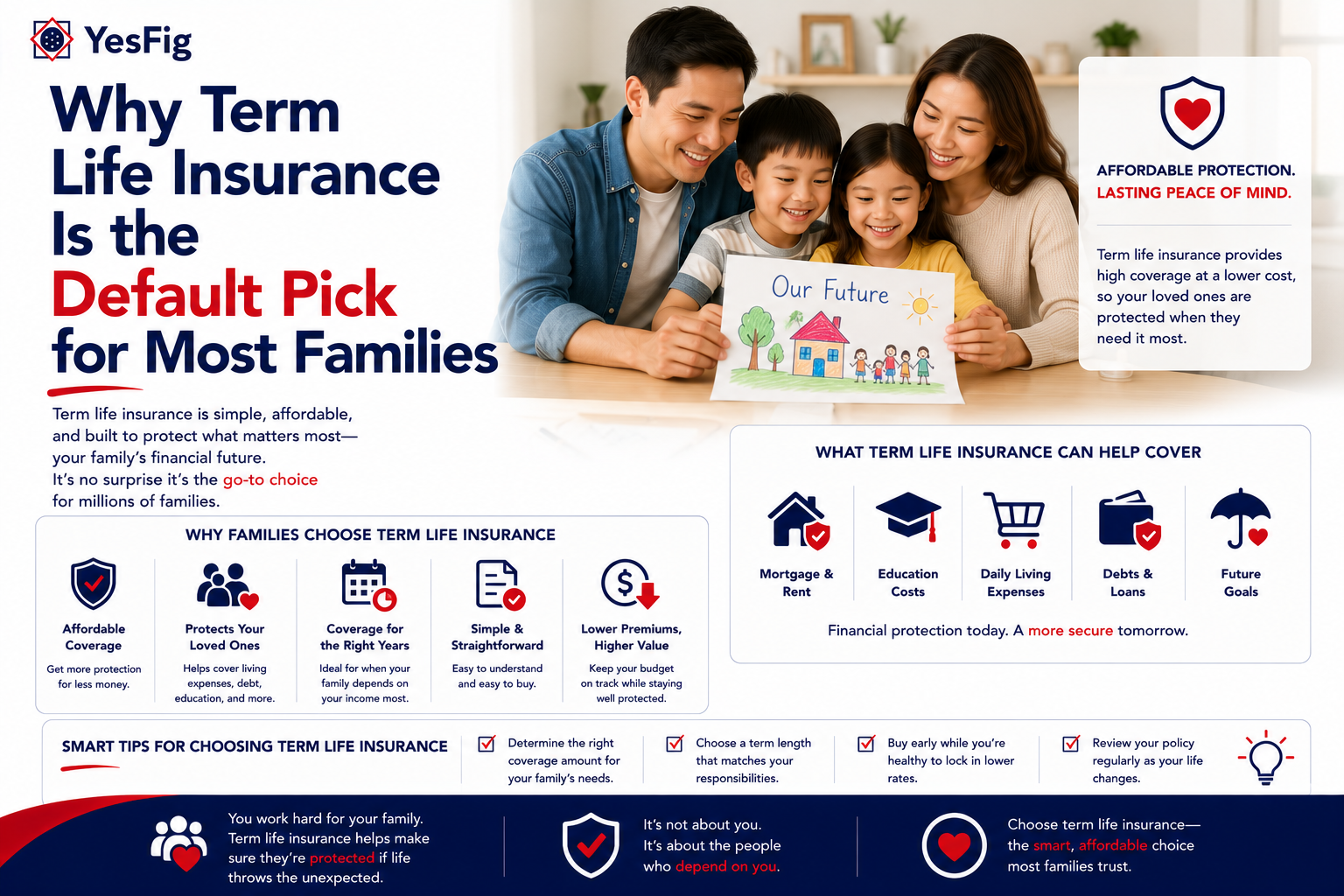
Why Term Life Insurance Is the Default Pick for Most Families
Quick answer: Term life insurance is the default for most families because it offers the most coverage per dollar. It covers a set period, usually your working and child-raising years, at a fraction of the cost of permanent policies, so families can afford a benefit large enough to actually protect them. Permanent coverage suits specific needs, but term fits most.
Table of contents
- What term life insurance is
- Why term life insurance for families makes the most sense
- The temporary need most families are insuring
- When permanent life insurance is the better fit
- What California families should know
- How families should choose term life insurance
- Frequently asked questions
When Renata and her husband had their second child in Fresno, they knew they needed life insurance but got lost in the options fast: term, whole, universal, and a pitch that made permanent coverage sound like the responsible choice. In the end, they did what most families do, and for good reason. Term life insurance for families has become the default not because it's a compromise, but because it usually protects them best for the money.
That popularity rests on real logic, not marketing. Here's what term insurance actually is, why it fits most families so well, and the specific situations where a different choice makes more sense.
Trying to choose between term and permanent?
That's the right question to work through. Fig can explain the tradeoffs in plain English and show you what term life in California costs, with no pressure to buy.
What term life insurance is
Term life insurance covers you for a set number of years, commonly 10, 20, or 30, and pays a death benefit if you pass away during that period. If you outlive the term, the coverage simply ends. There's no savings component and no cash value, just protection for a defined window.
That simplicity is the point. Because the insurer is only covering a limited period rather than your entire life, term costs dramatically less than permanent coverage for the same death benefit. A young, healthy parent can often secure a substantial policy for a modest monthly premium, which is exactly what a family protecting its income needs.
Why term life insurance for families makes the most sense
The core reason is coverage per dollar. A family's biggest life insurance job is replacing lost income and covering major obligations if a parent dies, and that requires a large death benefit. Term lets families buy that large benefit affordably, while the same coverage in a permanent policy could cost many times more.
That affordability isn't a minor detail, it's what makes adequate protection possible. Families on a budget can often cover both parents with meaningful policies for the price of one small permanent policy. Underinsuring to afford a fancier product is the mistake term helps families avoid. Some also add an inexpensive accidental death policy on top for extra protection. The goal is enough coverage, and term delivers it.
Good to know: The real measure of a family policy is whether the death benefit is large enough to replace income and cover your debts. Term buys far more of that benefit per dollar than permanent coverage, which is why it's the default for families who need substantial protection on a real budget.
The temporary need most families are insuring
Here's the insight that makes term the natural fit. The financial risk most families are insuring against is largely temporary. You need coverage most during the years you're raising children, paying a mortgage, and building toward retirement.
Those obligations tend to wind down on a schedule. Your kids grow up and become financially independent, your mortgage gets paid off, and your savings and retirement accounts grow to stand on their own. By the time a 20- or 30-year term ends, many families no longer need the same coverage, because the very needs it protected have faded. Matching the term to that window, often the years until your youngest is independent and your mortgage is gone, is exactly what term is built to do.
Want to size a policy to your family's timeline?
That's a quick conversation. Yesfig can help you match a term length and benefit to your mortgage and your kids' timeline. Compare Yesfig term life in a few minutes.
When permanent life insurance is the better fit
Term is the default, not the universal answer, and it's worth being honest about that. Permanent coverage genuinely fits certain situations. If you have a lifelong dependent, such as a child with special needs who will need support after you're gone, coverage that never expires makes sense.
Other cases include estate planning at high net worth, where permanent insurance can provide liquidity to cover estate taxes, business succession needs, or a desire for lifelong coverage with a cash value component. The trade is real: permanent costs much more and adds complexity, so it should be a deliberate choice for a specific reason, reviewed with a professional, not a default. For most families protecting income during their working years, term remains the better fit. If you want the option to go permanent later, ask about a conversion rider, which lets you convert without a new medical exam.
What California families should know
Term life is the coverage Yesfig offers to California residents, and it's priced to make protecting your family affordable. For a young, healthy parent, meaningful coverage often costs less per month than a night out, which is what makes insuring both parents realistic.
One California detail helps you buy with confidence: every life policy comes with a free look period, generally at least 10 days, and 30 days for policyholders aged 60 and over. That gives you time to review the policy in full and cancel for a refund if it isn't right. Yesfig Insurance, a Los Angeles-based brand of Focus Insurance Group, offers term life across California and can help you size a policy around your family.
Key takeaways
- Term life offers far more coverage per dollar than permanent policies.
- Families need a large death benefit, and term makes that affordable.
- The need is mostly temporary, ending as kids grow and the mortgage is paid.
- Permanent coverage fits specific cases like a lifelong dependent or estate planning.
How families should choose term life insurance
Getting it right is straightforward. Here's the approach in three steps:
- Size the benefit to your needs. Base it on replacing income, plus your mortgage, debts, and future costs like childcare and education.
- Match the term to your timeline. Choose a length that covers the years your family depends on you, often until your youngest is independent.
- Insure both parents. Cover each partner, including a stay-at-home parent, since both contribute value a family would need to replace.
Do that and you build the protection your family actually needs, affordably. For more plain-English coverage guidance, the Yesfig blog breaks it down without the jargon.
Frequently asked questions
Why is term life insurance recommended for families?
Because it offers the most coverage per dollar. Families need a large death benefit to replace income and cover obligations like a mortgage, and term makes that affordable, while the same coverage in a permanent policy costs far more. It also matches the temporary window, your working and child-raising years, when protection matters most.
Is term or whole life insurance better for a family?
For most families, term is better because it delivers a large, affordable death benefit during the years they need protection. Whole life costs much more for the same benefit and adds a cash value component. Whole or other permanent coverage fits specific needs, like a lifelong dependent or estate planning, but not the typical family's situation.
How long should a family's term life policy be?
Long enough to cover the years your family depends on your income, often 20 or 30 years. A common approach is to match the term to when your youngest child becomes financially independent and your mortgage is paid off. By then, many families no longer need the same coverage, since the obligations it protected have wound down.
Isn't it a waste if I outlive my term life policy?
No, it means the protection did its job during the years you needed it, without you ever needing the payout. You paid for security during a high-risk window at a low cost. Many people compare this favorably to paying much more for permanent coverage they may not need once their kids are grown and their mortgage is gone.
Should both parents have life insurance?
Usually, yes. If a parent who earns income passes away, the family loses that income. But a stay-at-home parent also provides value, like childcare and household work, that would be expensive to replace. Covering both parents, each sized to their role, protects the family regardless of which one they lose.
The reason term is the default for families isn't that it's the cheapest option to check off, it's that it protects them best for the money. Renata and her husband covered both of themselves with 20-year policies sized to their mortgage and kids, for less than one permanent policy would have cost. Match the coverage to your family's real needs and timeline, and term does exactly what it's designed to do.
Ready to protect your family the smart way?
About the Author

Mathew Bahadori
CEO, Yesfig Insurance
Leading the company’s mission to make insurance more accessible, modern, and customer-focused. With a passion for innovation and personalized service, he continues to help individuals and families find smarter coverage solutions for life, auto, home, health, and business insurance.