
July 14, 2026
How Hail, Wind, and Storm Coverage Actually Works
Wind and hail damage is usually covered, but flooding isn't. Learn how storm damage coverage works for your home and car, and the gaps to watch.
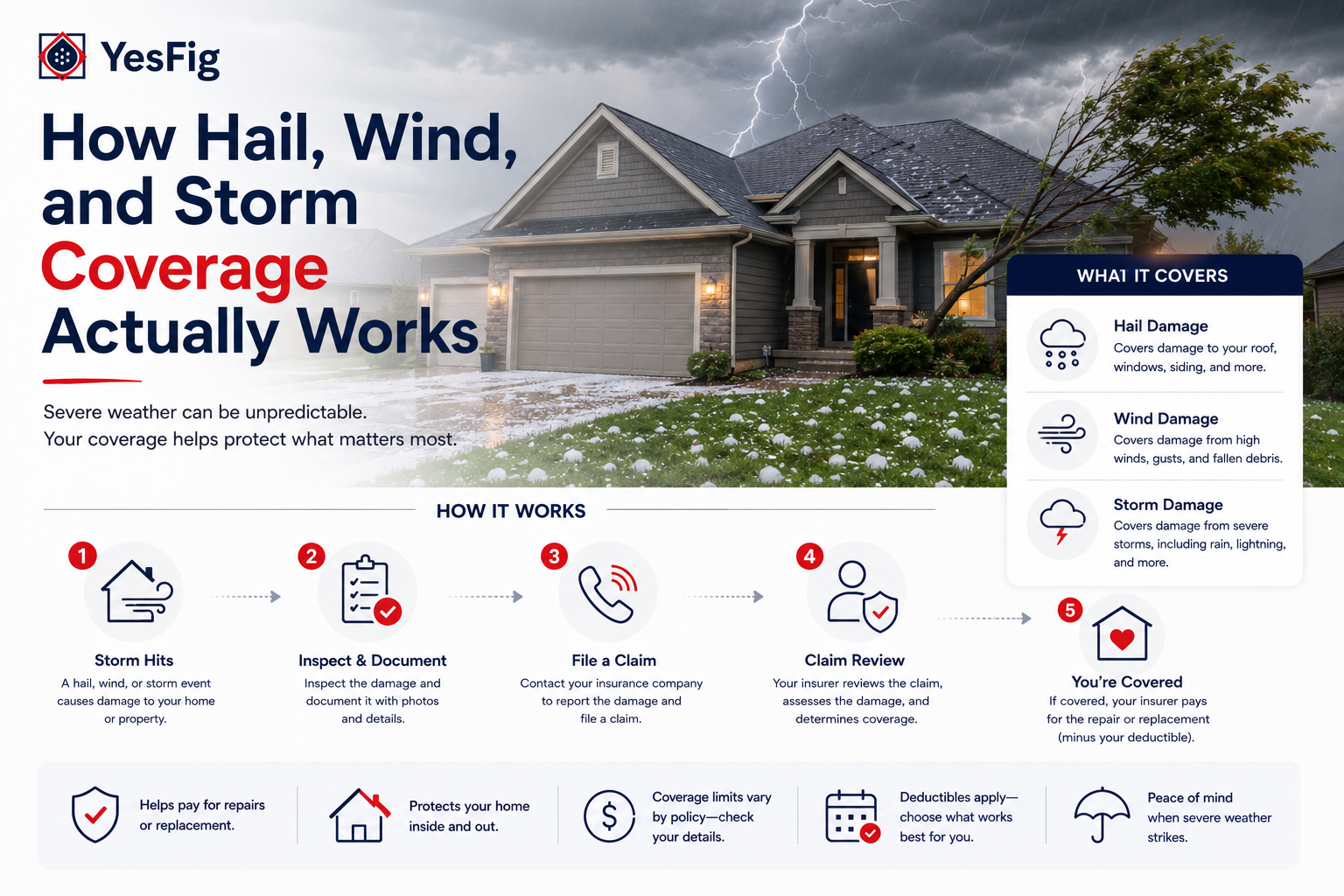
How Hail, Wind, and Storm Coverage Actually Works
Quick answer: Standard homeowners insurance usually covers storm damage from wind and hail, including roof, siding, and window damage, plus your belongings and temporary housing. The big exception is flooding, which is never covered and requires separate flood insurance. Hail or wind damage to your car is covered under your auto comprehensive coverage, not your home policy.
Table of contents
- What storm damage coverage includes
- The big exception: flood damage
- How your car is covered in a storm
- Do you have enough storm damage coverage?
- What California homeowners should know
- How to make sure you're covered before a storm
- Frequently asked questions
When a heavy windstorm tore shingles off Nate's roof in Sacramento and cracked a window, his first question was the one most homeowners ask: is this covered? The good news is that a lot of storm damage is. But there's one major exception that catches people off guard, and it can cost tens of thousands of dollars. Knowing how storm damage coverage actually works, before the next storm, is what keeps a bad day from becoming a financial disaster.
Here's what your policy covers when wind and hail hit, the one thing it almost never covers, and how your car fits into the picture, so you know exactly where you stand before the sky opens up.
What storm damage coverage includes
For your home, standard homeowners insurance covers most damage from wind and hail. That means a roof torn up by a windstorm, siding battered by hail, broken windows, and structures blown down are typically covered, up to your policy limits.
The protection goes beyond the structure. Your personal property damaged in a storm is covered, and if the damage makes your home unlivable, your policy helps with temporary housing costs. There's even coverage when wind creates an opening and rain gets in through it, since the storm caused the damage. Standard homeowners insurance is built to handle exactly these kinds of events.
Not sure what your policy covers in a storm?
That's worth confirming before storm season. Fig can explain how your storm coverage works and show you what a California homeowners policy includes, with no pressure to switch.
The big exception: flood damage
Here's the exception that trips up almost everyone: flooding is not covered by standard homeowners insurance. If rising water, storm surge, or heavy rain floods your home from the ground up, your regular policy pays nothing. Flood damage requires separate flood insurance, which is a completely different policy.
The distinction can feel subtle but matters enormously. Rain entering through a wind-damaged roof is covered, because wind caused it. Water rising into your home from outside is a flood, and it isn't. Assume flooding is covered and you could face a denied claim and tens of thousands in repairs, since standard homeowners leaves flood damage out entirely. If you're in a flood-prone area, a separate flood policy is worth serious consideration.
How your car is covered in a storm
Storms don't just hit houses, and your car is covered under a different part of your insurance. Hail dents, a tree falling on your parked car, or wind damage are all handled by your auto comprehensive coverage, not your homeowners policy and not collision.
That means you need comprehensive coverage on your vehicle to be protected from storms, and any claim is subject to your comprehensive deductible. If you carry auto insurance with comprehensive, a hailstorm that dents your car is a covered claim, separate from anything happening to your home.
Want to make sure your home and car are both covered?
A quick review catches any gaps. Yesfig can check your homeowners and auto coverage so storms are covered on both fronts, and show you the cost. Compare your home insurance in a few minutes.
Do you have enough storm damage coverage?
Having coverage and having enough coverage aren't the same thing. One thing to check is your deductible, because many policies apply a separate, higher deductible for wind or hail claims than for other losses. That can change what you actually pay after a storm.
Another is how your policy handles your roof. Some policies pay roof damage at depreciated value rather than full replacement cost, especially for older roofs, which can leave a gap. It's worth confirming both before you need to file. You can review a California homeowners policy and set your deductible and roof coverage where you want them.
Good to know: Many policies apply a separate wind or hail deductible, often a percentage of your home's insured value rather than a flat dollar amount. That can make a storm claim's deductible much higher than you'd expect, so check yours before you need it.
What California homeowners should know
California's storm risks look a little different. Here, storms usually mean wind and heavy rain rather than the hail common in states like Texas and the Midwest, though wind damage is still fully covered. The bigger gap for many Californians is water: flooding from heavy rain needs separate flood insurance, just as it does everywhere.
It's also worth remembering that earthquake damage, like flood, is excluded from standard homeowners and handled separately. Yesfig Insurance, a Los Angeles-based brand of Focus Insurance Group, offers homeowners and auto coverage across California, so you can line up storm protection for both your home and your car in one place.
Key takeaways
- Wind and hail damage to your home is usually covered by standard homeowners insurance.
- Flooding is never covered and needs a separate flood insurance policy.
- Storm damage to your car is covered by auto comprehensive, not your home policy.
- Check your wind or hail deductible and roof coverage, since gaps are common.
How to make sure you're covered before a storm
A little prep beats scrambling after the fact. Here's the approach in three steps:
- Review your policy. Confirm your wind and hail coverage, check your storm deductible, and see how your roof is covered.
- Add flood insurance if you need it. Since standard homeowners excludes flooding, get a separate flood policy if you're at any real risk.
- Document your property. Take photos of your home and belongings now, so you have proof if you ever file a claim.
Do that and a storm becomes a claim you can handle, not a surprise. For more on protecting your home, the Yesfig blog breaks it down without the jargon.
Frequently asked questions
Does homeowners insurance cover storm damage?
Usually, yes, for wind and hail. Standard homeowners insurance typically covers damage from wind and hail, including your roof, siding, windows, and belongings, plus temporary housing if your home is unlivable. The major exception is flooding, which is not covered and requires separate flood insurance. Check your policy for specific limits and deductibles.
Does homeowners insurance cover flood damage from a storm?
No. Standard homeowners insurance does not cover flooding, even from a storm. Rising water, storm surge, and flooding from heavy rain all require a separate flood insurance policy. Rain that enters through a wind-damaged roof is covered, since wind caused it, but water rising into your home from outside is a flood and is excluded.
Is hail damage to my car covered by insurance?
Yes, if you carry comprehensive coverage on your auto policy. Hail dents, a tree falling on your car, and other storm damage are covered under comprehensive, not collision or your homeowners policy. Any claim is subject to your comprehensive deductible. Without comprehensive coverage, storm damage to your vehicle isn't covered.
Why is my wind or hail deductible higher than my regular deductible?
Many policies apply a separate deductible for wind or hail claims, often set as a percentage of your home's insured value rather than a flat amount. In hail and wind-prone areas, this protects insurers from frequent, costly claims. It means your out-of-pocket cost for a storm claim can be higher than for other losses, so check it in advance.
Does storm damage coverage pay full replacement cost for my roof?
Not always. Some policies pay roof damage at actual cash value, which factors in depreciation, rather than full replacement cost, especially for older roofs. That can leave you covering part of a roof replacement yourself. Check whether your policy uses replacement cost or depreciated value for the roof before a storm hits.
Storm coverage protects you well against wind and hail, as long as you know where its limits are. Nate confirmed his roof and window damage was covered, checked his wind deductible, and added a flood policy for the rainy season, so he was ready before the next storm rolled through. Understand the coverage now, and severe weather stays a claim, not a catastrophe.
Ready to storm-proof your coverage?
Get a homeowners insurance quote in minutes with Yesfig. Coverage in California starts at $25/mo, and a licensed advisor can make sure your wind, hail, and storm protection fits your home, and flag any gaps like flood. Ready before the next storm.
About the Author

Mathew Bahadori
CEO, Yesfig Insurance
Leading the company’s mission to make insurance more accessible, modern, and customer-focused. With a passion for innovation and personalized service, he continues to help individuals and families find smarter coverage solutions for life, auto, home, health, and business insurance.