June 19, 2026
Group Health for Teams of 5 to 50 Employees
mall business health insurance for teams of 5 to 50: how group health works, what it costs, the participation rules, and when coverage is required.
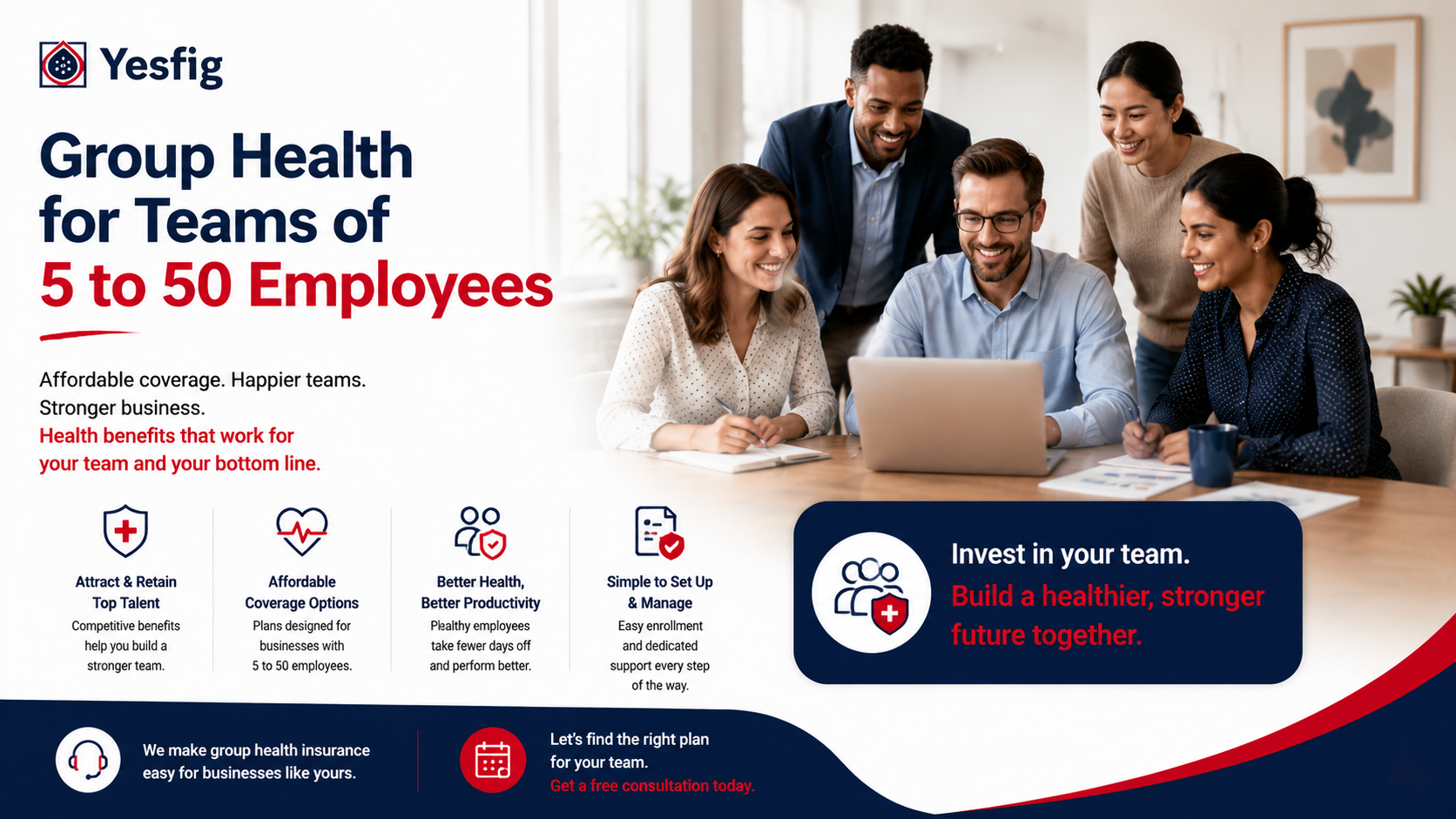
Group Health for Teams of 5 to 50 Employees
Quick answer: Small business health insurance is well within reach for teams of 5 to 50, which sit squarely in the small-group market. You pick a plan, decide how much of the premium your business covers, and enroll your team. Companies under 50 employees generally aren't required to offer it, but many do to attract talent.
Table of contents
- Why team size shapes your group health options
- What small business health insurance covers
- What group health costs for a team of 5 to 50
- Are you required to offer it? The 50-employee line
- How to set up small business health insurance for your team
- What California adds for small groups
- Frequently asked questions
Naomi's marketing agency just crossed 14 people, and lately three strong candidates have asked the same thing in interviews: do you offer health insurance? She knows the answer should be yes, but she's fuzzy on what that actually involves for a team her size. If you run a growing business, small business health insurance for a team of 5 to 50 is more accessible than you might think, and getting it right is a real edge in hiring.
The 5-to-50 range is a sweet spot, big enough to qualify cleanly for group plans, small enough to stay flexible. Here's how it works at that size.
Why team size shapes your group health options
Group health is organized around team size, and your headcount determines which market you're in. Teams of 5 to 50 fall squarely into the small-group market, which is generally built for employers up to 50 employees federally, and up to 100 in states like California.
That matters because the small-group market is designed for exactly your situation: standardized, accessible plans without the complexity larger employers face. You're not too small to qualify, and not yet large enough to trigger the heavier rules that come at 50 employees and beyond.
So a team in this band has real options and reasonable simplicity at the same time. The first step is understanding what a group health plan actually includes.
Team growing and wondering where to start?
That's the right question to ask early. Fig can explain how group health works for a team your size, in plain English, before you commit to anything. Start with the basics of small business group health.
What small business health insurance covers
A group plan gives your employees the same kinds of coverage they'd get individually, often at a better value because the cost is shared and the risk is pooled across your team. Plans typically include doctor visits, preventive care, hospitalization, prescriptions, and the other essentials.
You'll choose from familiar plan types, like HMO, PPO, EPO, and high-deductible plans paired with health savings accounts, usually across metal tiers that balance premium against out-of-pocket costs. The business decides which plan or plans to offer, and how much of the premium to cover.
The appeal for a team of 5 to 50 is straightforward: group coverage is a powerful hiring and retention tool, and it's frequently more cost-effective per person than sending employees to buy an individual health plan on their own.
What group health costs for a team of 5 to 50
Cost has two sides: what the business pays and what employees pay. Premiums depend on the plan you choose, your team's profile, and your location, but the structure is consistent.
The employer contribution is the big lever. You decide what share of the premium your business covers, with employees paying the rest, usually through payroll. There's also typically a minimum participation rate, meaning a certain percentage of eligible employees must enroll for the plan to be offered.
Good to know: Businesses with fewer than 50 full-time-equivalent employees generally aren't required to offer health insurance, but once you reach 50, the employer mandate applies. Insurers also typically require a minimum participation rate and a minimum employer contribution. In California, the small-group market covers employers up to 100 employees. Yesfig offers group health in California and five other states.
Those participation and contribution requirements are normal parts of group coverage, and they're easy to plan around once you know they exist.
Key takeaways
- Teams of 5 to 50 fall squarely in the small-group health market.
- Under 50 full-time-equivalent employees, offering coverage is generally optional.
- At 50 employees, the employer mandate kicks in.
- Plans usually require minimum participation and an employer contribution.
Are you required to offer it? The 50-employee line
This is the rule that matters most for a growing team, and the 5-to-50 range sits right on the edge of it. Whether you must offer coverage depends on your full-time-equivalent (FTE) count.
Below 50 FTEs, you generally are not required to offer health insurance. Many businesses in this range offer it anyway, purely to compete for talent. Once you reach 50 FTEs, you become an applicable large employer, and the employer mandate requires you to offer affordable, adequate coverage or potentially face penalties.
If your team is climbing toward 50, this is worth watching closely, because crossing the line changes your obligations. Knowing where you stand keeps the transition from catching you off guard.
How to set up small business health insurance for your team
Setting up coverage is more straightforward than most owners expect. Walk these steps in order:
- Confirm your FTE count. Know your full-time-equivalent number and whether you're near the 50-employee line.
- Set your budget and contribution. Decide how much of the premium your business will cover.
- Compare plans and carriers. Weigh plan types and networks against what your team actually needs.
- Check participation and enroll. Confirm the minimum participation rate and sign up your team during the setup window.
- Reassess at renewal. Review the plan each year as your team and costs change.
That sequence takes you from "should we?" to a live plan. A licensed Yesfig advisor can handle the heavy lifting on plan comparison and setup so you can stay focused on running the business.
What California adds for small groups
California small businesses get a few helpful specifics. The state defines the small-group market as employers with up to 100 employees, so a team of 5 to 50 has plenty of room as it grows.
California also runs a small-business marketplace with standardized plan designs that make comparing options easier, and very small employers who buy through it may qualify for a tax credit if they meet the requirements. Confirm those specifics with a tax professional. Yesfig Insurance, a brand of Focus Insurance Group based in Los Angeles, can help a California team navigate the choices.
Frequently asked questions
How many employees do you need for a group health plan?
Group plans are generally available to businesses with at least one or two employees, so a team of 5 to 50 qualifies easily. This range sits within the small-group market, which is built for employers up to 50 employees federally, and up to 100 in states like California. You have solid options at this size.
Is a business with under 50 employees required to offer health insurance?
Generally, no. The federal employer mandate applies to applicable large employers with 50 or more full-time-equivalent employees. Businesses below that threshold usually aren't required to offer coverage, though many do to attract and keep staff. Once you reach 50 full-time-equivalent employees, you become subject to the mandate, so it's worth tracking your headcount.
How much does group health insurance cost for a small business?
It depends on the plan, your team's profile, and your location, so there's no flat figure. The business chooses how much of the premium to contribute, with employees covering the rest, often through payroll. Comparing plan types, networks, and contribution levels each year is the best way to keep costs in line with your budget.
Do employees have to enroll in the group plan?
Not all of them, but insurers usually require a minimum participation rate among eligible employees for the plan to be offered. Employees who already have other coverage, such as a spouse's plan, are typically excluded from that calculation. Knowing the participation requirement upfront helps you confirm your team can meet it before setting up the plan.
Can a small business get help paying for group health insurance?
Possibly. Very small employers, generally those with fewer than 25 full-time-equivalent employees and average wages below a set threshold, may qualify for a federal tax credit if they pay a meaningful share of premiums and enroll through the small-business marketplace. Eligibility rules are specific, so confirm whether you qualify with a tax professional.
The right size to get it right
A team of 5 to 50 is an ideal place to offer health coverage: you qualify cleanly for group plans, you're not yet bound by the toughest rules, and the benefit pays off in hiring and retention. Know where you stand on the 50-employee line, set your contribution, and compare your options. Like Naomi, you can turn "do you offer health insurance?" into an easy yes.
Ready to offer coverage your team will value?
Talk to Yesfig about group health and a licensed advisor can walk you through setup, participation rules, and the plan that fits your team and budget.
About the Author

Mathew Bahadori
CEO, Yesfig Insurance
Leading the company’s mission to make insurance more accessible, modern, and customer-focused. With a passion for innovation and personalized service, he continues to help individuals and families find smarter coverage solutions for life, auto, home, health, and business insurance.