
July 28, 2026
Rideshare Drivers: What Auto Insurance You Actually Need
Your personal auto policy won't cover rideshare driving. Learn why rideshare insurance matters, the coverage gaps to know, and how to fill them.
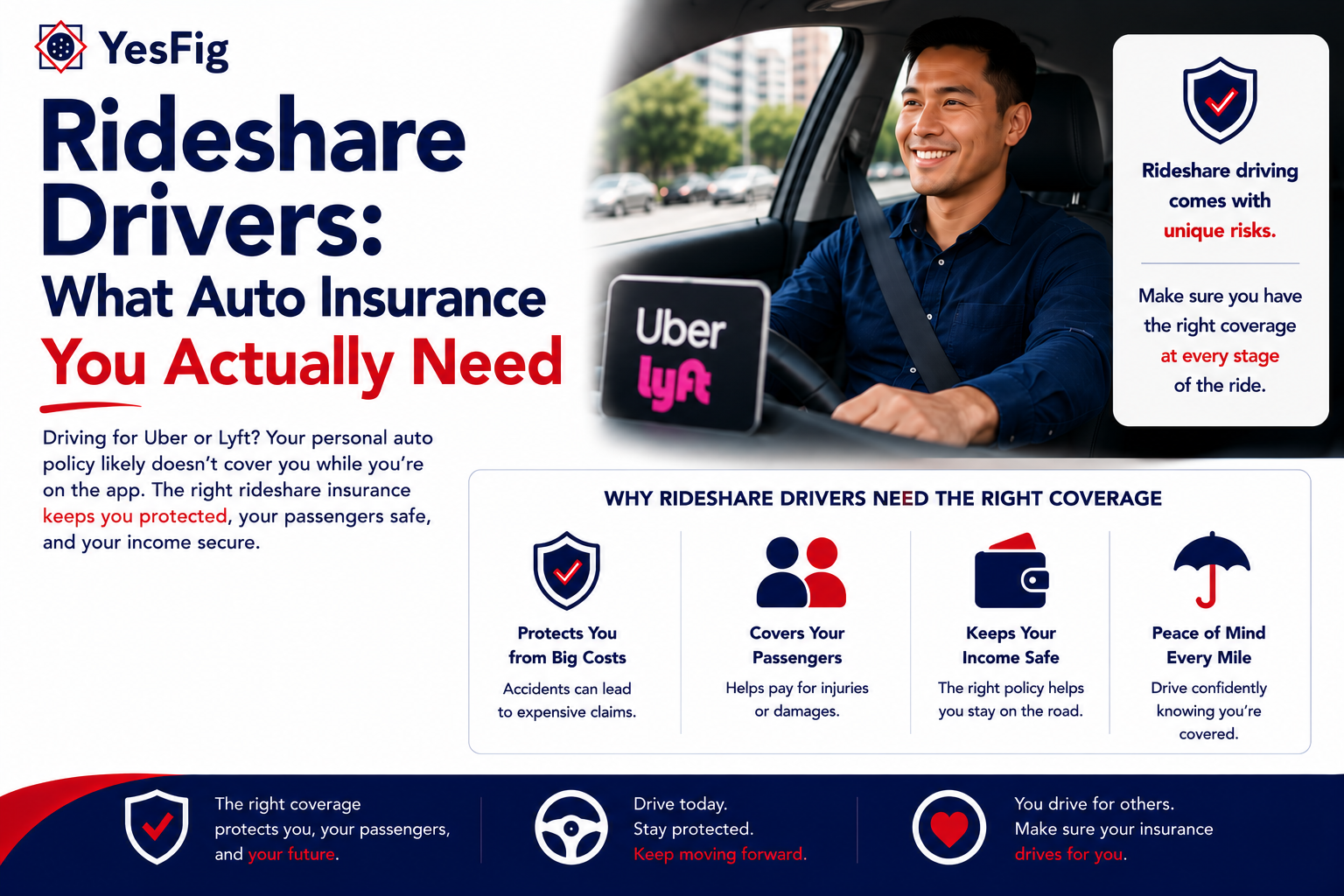
Rideshare Drivers: What Auto Insurance You Actually Need
Quick answer: Your personal auto policy generally excludes rideshare and delivery driving, so a claim while working can be denied. Uber and Lyft provide coverage, but with gaps, especially while you're waiting for a request. The fix is a rideshare endorsement added to your personal policy, plus disclosing to your insurer that you drive for hire.
Table of contents
- The coverage gap most rideshare drivers don't know about
- Why you need rideshare insurance
- The three periods that determine your coverage
- What rideshare insurance actually covers
- What California rideshare drivers should know
- How to get the right coverage as a rideshare driver
- Frequently asked questions
Andre started driving for Uber part-time in Sacramento to bring in extra income, and he assumed his regular car insurance had him covered on the job. It doesn't, and that assumption is the single most expensive mistake a rideshare driver can make. Rideshare insurance exists because personal auto policies weren't built for driving strangers around for money, and the gap between what you have and what you need can leave you paying for a serious accident yourself.
The good news is that the fix is affordable and simple once you understand the problem. Here's the coverage gap most drivers miss, how rideshare coverage fills it, and exactly what you need before your next shift.
The coverage gap most rideshare drivers don't know about
Here's the core issue: standard personal auto insurance generally excludes driving for hire. The moment you're transporting a passenger for money or delivering food for pay, your regular policy typically won't cover you. If you have an accident while working, your insurer can deny the claim entirely.
That leaves you exposed in a way most drivers never realize until it's too late. An accident during a shift without proper coverage could mean paying for the other driver's damage, your own repairs, and any injuries out of your own pocket. For Andre, one at-fault collision while carrying a passenger could cost far more than he'd earn from months of driving. This isn't a small technicality, it's the whole reason rideshare coverage exists.
Not sure if you're covered while driving?
That's exactly what to check first. Fig can explain how rideshare coverage works and show you what California car insurance options look like, with no pressure to switch.
Why you need rideshare insurance
The solution is a rideshare endorsement, an add-on to your personal auto policy that extends your coverage to the times you're driving for an app. It's designed to fill the gaps that your personal policy and the rideshare company's coverage leave behind, and for most part-time drivers it's inexpensive. Full-time drivers may need a commercial policy instead.
Just as important is being upfront with your insurer. Driving for rideshare without telling them isn't a gray area, it's a risk to your entire policy.
Good to know: If you drive for rideshare or delivery and don't tell your insurer, a claim while working can be denied, and your insurer can cancel or non-renew your policy for misrepresentation. Always disclose that you drive for hire and add rideshare coverage.
The three periods that determine your coverage
Rideshare coverage is easiest to understand as three phases of a shift, because your protection changes with each one. Knowing them shows you exactly where the gaps are.
Period 0 is when the app is off and you're driving personally. Your normal personal policy covers you as usual. Period 1 is when the app is on and you're waiting for a ride request, with no passenger yet. This is the thinnest coverage: Uber and Lyft provide only limited liability here, usually no coverage for damage to your own car, and your personal policy generally doesn't apply because you're working. Periods 2 and 3 cover the drive to pick up a passenger and the trip itself, and here the rideshare company's coverage is strongest, commonly around $1 million in liability. The catch is that damage to your own vehicle in these periods is typically only covered if you carry collision and comprehensive on your personal policy, and often with a high deductible. The biggest surprise for drivers is that the $1 million doesn't protect you the whole time you're online, only once you're matched.
Want coverage with no gaps between periods?
That's what the right setup does. Yesfig can help you build auto coverage that accounts for your rideshare driving, so you're protected across every period. Compare your car insurance in a few minutes.
What rideshare insurance actually covers
A rideshare endorsement is built to close exactly the gaps above. Its biggest job is covering Period 1, the waiting phase where you'd otherwise be thinly protected, by extending your personal coverage to that window. It also helps cover damage to your own car across the periods where the app's coverage is contingent, so your vehicle isn't left out.
One point catches delivery drivers off guard: food and package delivery counts as driving for hire too, so apps like DoorDash and Instacart create the same coverage gap. Many rideshare endorsements also cover delivery driving, but not all do, so confirm yours includes the apps you actually use. The goal is seamless coverage from the moment you log on to the moment you log off, with no phase left uncovered.
What California rideshare drivers should know
California was an early regulator of rideshare insurance, so the rules here are specific. State law requires companies like Uber and Lyft to carry contingent liability coverage during Period 1 of at least $50,000 per person, $100,000 per accident, and $30,000 for property damage, and to provide $1 million in liability during Periods 2 and 3.
That's real protection, but it doesn't close every gap. Period 1 coverage is still limited and contingent, and damage to your own vehicle generally isn't covered by the company unless you carry collision and comprehensive yourself. So a rideshare endorsement remains the smart move for California drivers, and disclosing your driving to your insurer is essential. Yesfig Insurance, a Los Angeles-based brand of Focus Insurance Group, offers auto coverage across California and can help you get the protection you need.
Key takeaways
- Personal auto insurance generally excludes rideshare and delivery driving.
- A claim while working can be denied, leaving you to pay out of pocket.
- Coverage changes by period, and Period 1 (waiting) is the biggest gap.
- A rideshare endorsement fills the gaps, and you must disclose your driving.
How to get the right coverage as a rideshare driver
Getting protected takes one conversation. Here's the approach in three steps:
- Disclose your driving. Tell your insurer you drive for rideshare or delivery, since hiding it puts your whole policy at risk.
- Add a rideshare endorsement. Ask for the add-on that extends your personal coverage across all periods, or a commercial policy if you drive full-time.
- Confirm your apps are covered. Make sure the coverage includes every app you use, including delivery, not just passenger rideshare.
Do that and you're protected from log-on to log-off. For more on managing your coverage, the Yesfig blog breaks it down without the jargon.
Frequently asked questions
Does my personal car insurance cover rideshare driving?
Generally, no. Standard personal auto policies exclude driving for hire, so once you're carrying a passenger for money or delivering for pay, your regular policy typically won't cover an accident. Your insurer can deny the claim. To be protected, you need a rideshare endorsement added to your policy or a commercial policy.
What is rideshare insurance?
Rideshare insurance is usually an endorsement added to your personal auto policy that extends coverage to the times you're driving for an app like Uber or Lyft. It fills the gaps your personal policy and the rideshare company's coverage leave, especially while you're waiting for a request. It's typically affordable for part-time drivers.
Doesn't Uber or Lyft's insurance cover me?
Only partially. Uber and Lyft provide strong liability coverage, commonly around $1 million, but only once you've accepted a ride and are en route or carrying a passenger. While you're logged in and waiting for a request, their coverage is limited and usually excludes damage to your own car. That waiting period is the biggest gap.
Do I need rideshare insurance for food delivery?
Usually, yes. Food and package delivery counts as driving for hire, so apps like DoorDash and Instacart create the same coverage gap as passenger rideshare. Your personal policy generally won't cover an accident while delivering. Many rideshare endorsements also cover delivery, but confirm yours includes the specific apps you use.
What happens if I don't tell my insurer I drive for rideshare?
It's risky. If you have an accident while driving for hire and never disclosed it, your insurer can deny the claim. Worse, they can cancel or refuse to renew your policy for misrepresentation, since you weren't insured for how you were actually using your car. Disclosing and adding coverage protects you on both fronts.
Rideshare driving is a great way to earn, but only if an accident on the job doesn't wipe out your earnings and then some. Andre added a rideshare endorsement, told his insurer he drives for Uber, and confirmed his delivery app was covered too, so he's protected the entire time he's online. Close the gap before your next shift, and you can focus on driving instead of your exposure.
Ready to drive covered?
Get a car insurance quote in minutes with Yesfig. Coverage in California starts at $30/mo, and a licensed advisor can help you add rideshare protection and confirm you're covered across every period. Log on knowing you're protected.