
July 16, 2026
How to Use Pet Insurance for Routine Care vs Emergencies
Standard pet insurance doesn't cover routine care. Learn what it does cover, how wellness add-ons really work, and where the real value is.
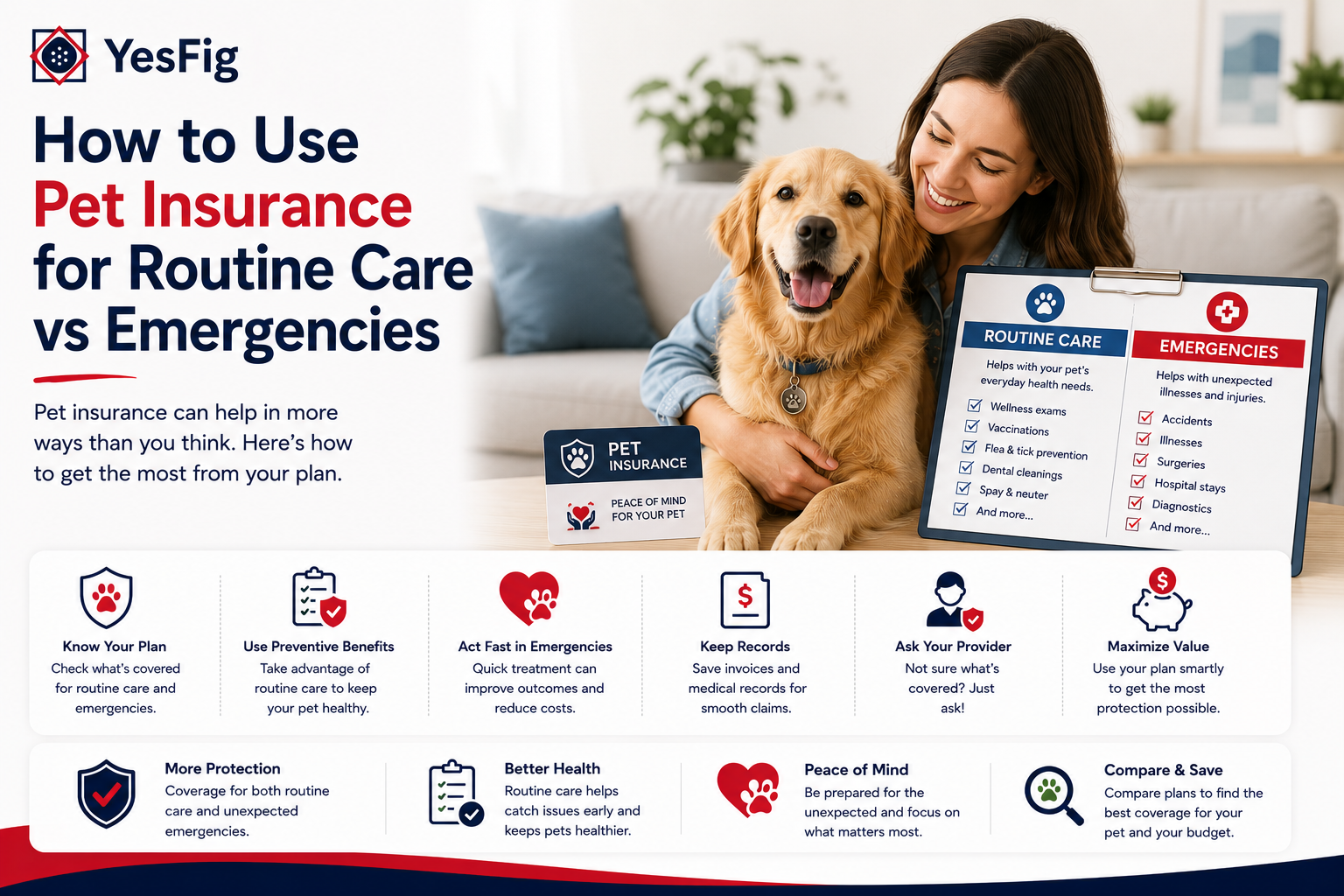
How to Use Pet Insurance for Routine Care vs Emergencies
Quick answer: Standard pet insurance covers emergencies and illnesses, not routine care. Vaccines, annual exams, and dental cleanings are excluded unless you buy a separate wellness add-on. Wellness plans are budgeting tools rather than true insurance, since you pay roughly what you get back. The real value of pet insurance is protecting you from a large, unexpected vet bill.
Table of contents
- What pet insurance is actually built for
- How your policy handles emergencies
- Why pet insurance for routine care works differently
- The honest math on wellness add-ons
- What California pet owners should know
- How to use pet insurance for routine care and emergencies
- Frequently asked questions
When Rina's dog Otis swallowed a sock in Modesto and needed emergency surgery, her pet insurance turned a four-figure crisis into a manageable claim. Two months later she submitted his annual vaccines and got nothing back, which confused her completely. Same pet, same policy, opposite outcomes. That gap is the most misunderstood thing about pet insurance for routine care versus emergencies.
The short version: your policy is built for the sock, not the shots. Here's what standard coverage actually pays for, why routine care sits outside it, and the honest math on the wellness add-ons that promise to fill the gap.
What pet insurance is actually built for
Insurance exists to transfer risk you can't absorb. For pets, that means the unexpected and expensive: emergency surgery, a broken leg, cancer treatment, a sudden illness. Those bills can run into the thousands with no warning, and that's the risk worth insuring.
Routine care is the opposite. Annual exams, vaccines, and flea prevention are predictable costs you can plan for. They're modest, scheduled, and known in advance, which makes them a budgeting question rather than an insurance one. That distinction explains almost everything about how these policies are designed.
Not sure what your policy actually covers?
That's worth pinning down. Fig can explain the difference between accident and illness coverage and wellness, and show you what Yesfig pet insurance includes, with no pressure.
How your policy handles emergencies
This is where pet insurance earns its keep. A standard accident and illness policy covers sudden injuries and illnesses, including diagnostics, surgery, hospitalization, and medications tied to a covered condition. Otis's surgery is the textbook case.
The mechanics are worth knowing before an emergency, not during one. You'll pay your deductible, then get reimbursed at your reimbursement percentage, up to your annual limit. And because pet insurance is reimbursement-based, you pay the vet in full first and get money back after. That matters at 2 a.m. in an emergency clinic, so keep a way to cover the bill upfront while your claim processes.
Why pet insurance for routine care works differently
Here's the part that catches owners off guard: standard pet insurance does not cover routine care, period. Vaccines, wellness exams, spay or neuter surgery, dental cleanings, and flea and tick prevention are excluded from accident and illness policies.
That's not a loophole, it's the design. Insurers price policies around unpredictable events, and predictable ones don't fit that model. To get anything toward routine care, you have to add a separate wellness plan, which is sold as an optional add-on rather than part of your core coverage. Rina's vaccines weren't denied because of a technicality, they were never in her policy to begin with.
Good to know: A wellness add-on isn't really insurance. It's a prepayment plan with a capped annual allowance, and it's priced so you get back roughly what you pay in. There's no risk transfer, which is the opposite of how your accident and illness coverage works.
Want coverage where it actually counts?
That's the core policy. Yesfig can set up accident and illness coverage sized to protect you from the bills you can't plan for. Compare pet insurance options in a few minutes.
The honest math on wellness add-ons
Wellness plans deserve a clear-eyed look, because the marketing rarely gives you one. A typical add-on charges a monthly fee and reimburses a capped amount per service, maybe a set dollar allowance toward vaccines, an exam, and a dental cleaning. Add it up and the annual cap usually lands close to what you paid in fees.
That's by design. You're prepaying your own routine vet bills, not insuring against a risk. Some owners like the forced budgeting and the simplicity of one monthly payment, which is a legitimate reason to buy one. But if you'd rather set aside the same money yourself, you'd likely come out about even, with more flexibility. The one thing to avoid is trading away accident and illness coverage to afford a wellness plan, because that's backwards. Protect against the $5,000 surgery first.
What California pet owners should know
California gives you a useful safeguard here. State law requires pet insurers to clearly disclose what's covered and excluded, including whether a policy covers routine or preventive care, so the answer has to be spelled out rather than buried.
That transparency matters, since California is a high-cost state for veterinary care and emergency visits in major metros get expensive fast. That's exactly why the accident and illness side is where your money does the most work. Yesfig Insurance, a Los Angeles-based brand of Focus Insurance Group, offers pet coverage across California with the terms laid out up front.
Key takeaways
- Standard pet insurance covers emergencies and illnesses, not routine care.
- Vaccines, exams, and dental cleanings need a separate wellness add-on.
- Wellness plans roughly break even by design, so they're budgeting, not protection.
- Never drop accident and illness coverage to afford a wellness plan.
How to use pet insurance for routine care and emergencies
Use each tool for the job it's built for. Here's the approach in three steps:
- Insure the catastrophic. Make accident and illness coverage your foundation, since that's the bill you can't absorb.
- Budget the routine. Plan for vaccines and exams out of pocket, or add a wellness plan if you prefer one monthly payment.
- Know your claim process. Remember you pay the vet first, so keep a way to cover an emergency bill while you wait on reimbursement.
Do that and your money goes where the real risk is. For more on choosing pet coverage, the Yesfig blog breaks it down without the jargon.
Frequently asked questions
Does pet insurance cover routine care like vaccines and checkups?
No. Standard accident and illness pet insurance excludes routine and preventive care, including vaccines, wellness exams, spay or neuter, dental cleanings, and flea prevention. To get anything toward those, you need a separate wellness add-on. Your core policy is designed for unexpected injuries and illnesses, not predictable annual costs.
What's the difference between pet insurance and a wellness plan?
Pet insurance transfers risk, covering unexpected emergencies and illnesses that could cost thousands. A wellness plan is an optional add-on that reimburses a capped amount toward routine care like vaccines and exams. Wellness plans aren't really insurance, since you pay roughly what you get back. They're a budgeting tool rather than protection.
Are pet wellness plans worth it?
It depends on what you want. They're priced so the annual allowance roughly matches what you pay in fees, so they rarely save money. Some owners value the forced budgeting and single monthly payment. If you'd rather set aside the same amount yourself, you'd likely come out even. Just never drop accident coverage to buy one.
Does pet insurance cover emergency surgery?
Yes, that's what it's built for. A standard accident and illness policy covers sudden injuries and illnesses, including diagnostics, surgery, hospitalization, and related medications, subject to your deductible, reimbursement percentage, and annual limit. Pre-existing conditions and waiting periods still apply, so enroll before a problem appears.
Do I have to pay the vet before pet insurance reimburses me?
Usually, yes. Pet insurance is reimbursement-based, so you pay the vet the full bill and submit a claim to get money back afterward. That means you need a way to cover a large emergency bill upfront while your claim processes. Some insurers offer direct payment options, so ask if that matters to you.
Pet insurance works beautifully when you use it for what it's designed to do. Rina's policy covered Otis's surgery, exactly the bill she couldn't have absorbed, and she now budgets his vaccines separately without expecting a check. Insure what could wreck your finances, plan for what won't, and your coverage stops being confusing and starts being genuinely useful.
Ready to cover what you can't plan for?
Get a pet insurance quote in minutes with Yesfig. Coverage in California starts at $9/mo, and a licensed advisor can build accident and illness protection around your pet and your budget. Protection where it actually matters.
About the Author

Mathew Bahadori
CEO, Yesfig Insurance
Leading the company’s mission to make insurance more accessible, modern, and customer-focused. With a passion for innovation and personalized service, he continues to help individuals and families find smarter coverage solutions for life, auto, home, health, and business insurance.