
June 24, 2026
Pet Insurance for Pre-Existing Conditions: What's Actually Possible
Pet insurance for pre-existing conditions has real limits, but you still have options. Learn what's covered, what isn't, and how to plan ahead.
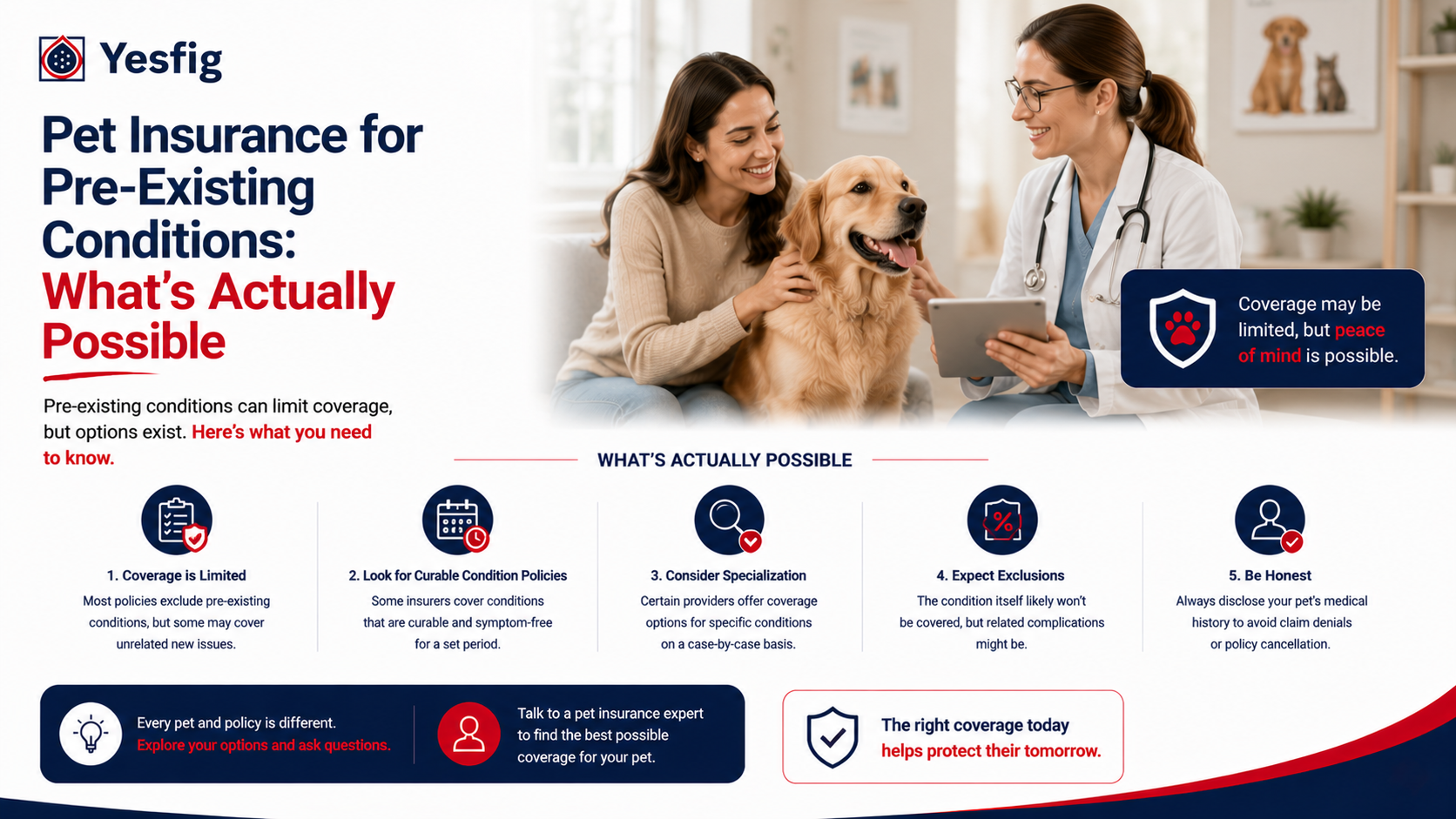
Pet Insurance for Pre-Existing Conditions: What's Actually Possible
Quick answer: Most pet insurance does not cover pre-existing conditions, especially chronic ones like diabetes or allergies that your pet already has. Some insurers will cover a curable condition again after your pet stays symptom-free for a set period. The best move is to enroll while your pet is young and healthy, so future conditions are covered.
Table of contents
- What counts as a pre-existing condition?
- Is there pet insurance for pre-existing conditions?
- Curable vs. incurable conditions: the line that matters
- What pet insurance still covers for an already-diagnosed pet
- How waiting periods turn into pre-existing exclusions
- How to approach pet insurance for pre-existing conditions
- Frequently asked questions
When Mara's 8-year-old dog Biscuit was diagnosed with allergies in Sacramento, her first thought was insurance. Her second thought, after a few minutes of reading, was disappointment: almost nothing seemed to cover a condition a pet already has. That reaction is common, because the rules around pet insurance for pre-existing conditions are stricter than most owners expect.
The honest version isn't all bad news, though. There's a real line between what's off the table and what's still very much possible. Here's what pre-existing conditions actually mean for coverage, and how to get the most protection for your pet from here.
What counts as a pre-existing condition?
A pre-existing condition is any illness or injury that showed up before your coverage started. That includes anything your pet was diagnosed with, treated for, or showed symptoms of, even if no vet put a name to it yet. If the signs were there before your policy began, insurers treat it as pre-existing.
Timing is everything here. A condition counts as pre-existing if it appeared before your start date or during the policy's waiting period, the short window after you sign up before coverage kicks in. That's why the date you enroll matters so much, a point we'll come back to.
Is there pet insurance for pre-existing conditions?
Here's the straight answer: no major pet insurer will cover a condition your pet already has, especially a chronic or incurable one. Diabetes, allergies, heart disease, cancer history, and hip dysplasia are typically permanent exclusions. No policy you buy today will pay for a condition that was already there yesterday.
That sounds harsh, but it's how the whole industry works, and it's the same reason you can't insure a house that's already on fire. Yesfig Insurance, a Los Angeles-based brand of Focus Insurance Group, follows the same standard every reputable pet insurer does. The good news is that pre-existing doesn't mean uninsurable, which is where most owners get the wrong idea.
Want to know what a plan would actually cover?
That's worth checking before you assume the worst. Fig can explain exactly how pre-existing conditions work for your situation and show you what Yesfig pet coverage includes, with no pressure to enroll.
Curable vs. incurable conditions: the line that matters
Not every pre-existing condition is treated the same. Insurers usually split them into two groups, and the difference is the most important thing to understand here.
Incurable conditions, the chronic ones like diabetes or allergies, stay excluded for good. Curable conditions, like a one-time ear infection, a urinary infection, or a bout of vomiting that fully resolved, are different. Many insurers will cover a curable condition again if your pet goes a set stretch of time, often around six months, with no symptoms and no treatment. The exact rule varies by company, so it's one of the first things worth checking in a policy.
Good to know: California was an early regulator of pet insurance, and state law requires insurers to clearly disclose how they define and handle pre-existing conditions and waiting periods. Read those disclosures in any policy so there are no surprises at claim time.
What pet insurance still covers for an already-diagnosed pet
This is the part owners miss. Even if your pet has a pre-existing condition, a new policy still covers brand-new, unrelated problems that show up after you enroll. Biscuit's allergies wouldn't be covered, but a future broken leg, a swallowed toy, or an unrelated illness generally would be.
For a lot of pets, that's still meaningful protection, since vet bills for accidents and new illnesses add up fast. A Yesfig pet insurance plan can cover everything that isn't tied to the pre-existing condition, which is often most of what could go wrong. The pre-existing exclusion is a carve-out, not a door slammed shut on the whole policy.
Want to know if a plan is worth it for your pet?
It often is, even with a condition on file. Yesfig can show you what's covered and what's excluded for your specific pet, so you can decide with real numbers instead of guesswork. Compare pet insurance options in a few minutes.
How waiting periods turn into pre-existing exclusions
Remember that waiting period from earlier? It's where a lot of accidental exclusions happen. If a condition first appears during the days or weeks after you sign up, before coverage is active, it's treated as pre-existing, even though you already enrolled.
Some conditions carry longer waiting periods than others. Things like cruciate ligament injuries or hip issues often have extended waits, sometimes six months or more. The lesson is the same across the board: the longer you wait to enroll, the more time there is for something to appear and become a permanent exclusion. Wait until a problem shows up, and it's too late to insure it.
Key takeaways
- Most pet insurance won't cover a pre-existing condition, especially chronic ones.
- Curable conditions can sometimes be covered again after a symptom-free period.
- A policy still covers new, unrelated conditions, so it can be worth it anyway.
- The real fix is to enroll early, before anything becomes pre-existing.
How to approach pet insurance for pre-existing conditions
You can't undo a pre-existing condition, but you can play the situation well. Here's the smart approach in three steps:
- Enroll early. The single best move is to insure your pet while young and healthy, before anything becomes pre-existing.
- Read the pre-existing and waiting-period terms. Check how each insurer defines pre-existing, and whether it covers curable conditions after a symptom-free stretch.
- Insure anyway if it pencils out. Even with one condition excluded, a policy can cover every new, unrelated problem, which is often worth it.
If you have a second, younger pet, enrolling that one now is the clearest win of all. For more on choosing coverage, the Yesfig blog breaks down pet insurance terms without the fine-print headache.
Frequently asked questions
Does pet insurance cover pre-existing conditions?
Generally no. Almost all pet insurers exclude conditions your pet had before the policy started, especially chronic ones like diabetes, allergies, or hip dysplasia. The main exception is curable conditions, which some insurers will cover again after your pet stays symptom-free for a set period. Enrolling early avoids the problem entirely.
What counts as a pre-existing condition for a pet?
Any illness or injury that showed signs, was diagnosed, or was treated before your coverage began, or during the waiting period. It doesn't have to be formally diagnosed. If symptoms appeared in your pet's records before the policy start date, insurers usually treat the condition as pre-existing and exclude it from coverage.
What's the difference between curable and incurable pre-existing conditions?
Incurable conditions, like diabetes or allergies, are chronic and stay permanently excluded. Curable conditions, like an ear infection or a urinary infection that fully resolved, can sometimes be covered again. Many insurers require your pet to go symptom-free and treatment-free for a set time, often around six months, before that condition is eligible.
Is pet insurance worth it if my pet already has a condition?
It can be. The pre-existing condition itself won't be covered, but a policy still covers new, unrelated injuries and illnesses, which make up most potential vet bills. If your pet is otherwise healthy and could face accidents or new problems, coverage often still pays off. Compare what's excluded against what's protected.
How can I get pet insurance to cover more conditions?
Enroll while your pet is young and healthy, before anything becomes pre-existing, so future conditions are covered. Keep up with vet visits and records, since insurers review history at claim time. Compare insurers too, because definitions of pre-existing and the rules for curable conditions vary from one company to the next.
Pet insurance for pre-existing conditions comes down to timing and clear expectations. Mara couldn't get Biscuit's allergies covered, but she enrolled him anyway for everything else and signed up her younger dog right away, before any condition could appear. That's the real win here: you can't rewrite the past, but you can protect your pet from this day forward.
Ready to protect your pet from today forward?
Get a pet insurance quote in minutes with Yesfig. Coverage in California starts at $9/mo, and the sooner you enroll, the more of your pet's future is protected. A licensed advisor can walk you through exactly what's covered.
About the Author

Mathew Bahadori
CEO, Yesfig Insurance
Leading the company’s mission to make insurance more accessible, modern, and customer-focused. With a passion for innovation and personalized service, he continues to help individuals and families find smarter coverage solutions for life, auto, home, health, and business insurance.