
June 10, 2026
Why Pet Insurance for Puppies Is Cheaper Than Adult Coverage
Why is pet insurance for puppies cheaper than adult coverage? Younger pets cost less and have no pre-existing conditions yet. Lock in lower rates early.
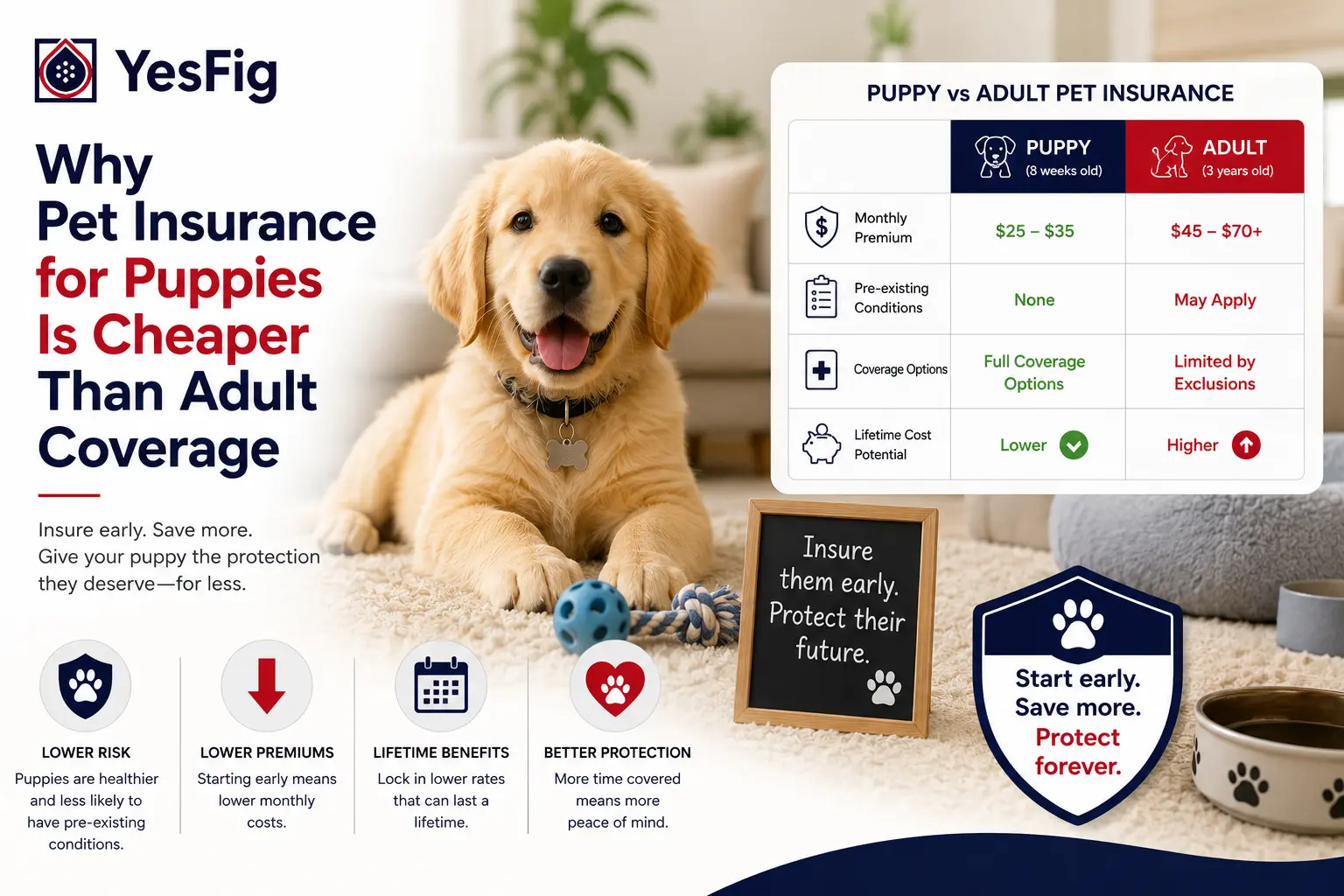
Why Pet Insurance for Puppies Is Cheaper Than Adult Coverage
Quick answer: Pet insurance for puppies is cheaper because younger pets are less likely to need care and have no pre-existing conditions yet, so insurers charge less and cover more. Enrolling early starts your premium from a lower base and locks in coverage for conditions that may appear as your dog ages.
Table of contents
- What pet insurance actually covers
- Why pet insurance for puppies costs less
- The pre-existing condition trap
- How much enrolling early can save you
- What to look for in pet insurance for puppies
- When to enroll your puppy
- Frequently asked questions
Maya just brought home Biscuit, an eight-week-old lab with oversized paws and zero sense of danger, to her apartment in Oakland. Between the chewed shoes and the first vet visit, someone mentioned she should insure him now, while he's young. She figured coverage for a tiny puppy would cost about the same as for any dog. It doesn't. Pet insurance for puppies is usually cheaper than adult coverage, and the reason behind it matters more than the few dollars a month.
Understanding why turns a vague "you probably should" into an easy decision. Here's what's actually going on with the price.
What pet insurance actually covers
Pet insurance works on a reimbursement model. You pay the vet, then your insurer pays you back a percentage of the covered bill after your deductible. Most plans fall into a couple of buckets.
- Accident and illness plans, the most common, cover injuries plus illnesses like infections, cancer, and digestive issues.
- Accident-only plans are cheaper but cover just injuries, not sickness.
- Wellness or routine care is usually an add-on for things like vaccines and checkups.
What every plan shares is one hard rule: it won't pay for pre-existing conditions, meaning anything that showed up before coverage began. Hold onto that, because it's the key to the whole puppy-pricing story.
New puppy and not sure where to start?
That's a great time to look, while everything is still coverable. Fig can explain how puppy coverage works in plain English, no jargon, before you commit. Start with the basics of pet insurance in California.
Why pet insurance for puppies costs less
Premiums are priced mostly on risk, and a healthy puppy is simply a lower risk to insure than an older dog. Three things drive the cheaper rate.
Fewer expected claims. Young dogs tend to need less medical care than seniors, so the insurer expects to pay out less, and the premium reflects that.
A clean health history. A puppy hasn't had time to develop the chronic conditions that make older pets expensive to cover. Nothing is excluded yet, which lowers the insurer's exposure.
Age-based pricing. Most insurers set premiums partly on the pet's age at enrollment and at each renewal. Start young and you start at the bottom of that curve rather than partway up it.
Put together, that's why a quote for Biscuit costs less than the same coverage for a seven-year-old dog. It's not a discount. It's a lower starting point. The same idea shows up across a pet insurance policy for almost any breed.
The pre-existing condition trap
This is the part that costs people the most, and it's the strongest reason to enroll early. Pet insurance never covers conditions that exist before your policy starts, and "exists" can include symptoms a vet noted before any formal diagnosis.
Wait until your dog is older and something has already appeared, like a knee issue, an allergy, or a heart murmur, and that condition is locked out of coverage for good. You can insure everything else, but not the thing your dog actually has.
Good to know: Pet insurance won't cover pre-existing conditions, meaning anything diagnosed or showing symptoms before your policy begins. Enrolling while your puppy is healthy is the one window where almost everything is still coverable. Yesfig offers pet coverage in California and five other states.
Enrolling a puppy flips this in your favor. Because they're a blank slate, the conditions that develop years later are far more likely to be covered, since the policy was already in place when they appeared.
Key takeaways
- Premiums are based largely on age and risk, so younger pets cost less to insure.
- Pre-existing conditions are never covered, which makes early enrollment valuable.
- Enrolling young starts from a lower base, though premiums still rise as your dog ages.
- Choose accident-and-illness coverage over accident-only for real protection.
How much enrolling early can save you
The savings come from two directions at once, and they compound over your dog's life.
First, the monthly premium starts lower simply because of age. Second, and bigger, is what stays coverable. A condition that develops at age six could mean thousands in vet bills over the years, and if it's covered because you enrolled as a puppy, that's the real payoff.
One honest caveat, because it matters: enrolling young does not freeze your price forever. Premiums still tend to rise as your dog ages, the same way they would for any pet. What early enrollment buys you is a lower starting point and a policy that was in place before problems appeared. That combination, not a frozen rate, is where the value lives.
What to look for in pet insurance for puppies
Cheaper doesn't mean you grab the first plan you see. A good puppy policy holds up when you actually need it. Check these five before you enroll.
- Accident and illness coverage, not accident-only, so sickness is included.
- Short, clearly stated waiting periods before coverage kicks in.
- Hereditary and congenital conditions covered, which matters for many breeds.
- A reimbursement percentage and deductible you're comfortable with at claim time.
- No restrictive per-condition caps that shrink the payout on a big claim.
Match those and the low price is a genuine win rather than a thin plan. As a renter, it's also worth knowing that dog-related liability, like a bite, may fall under a renters insurance policy rather than pet insurance, so the two cover different risks.
When to enroll your puppy
Sooner is better, full stop. Most insurers let you enroll a puppy as early as 6 to 8 weeks old, depending on the company, and there's little reason to wait once your puppy is home.
The one thing to plan around is waiting periods. Coverage doesn't start the instant you sign up; accidents may be covered within days, while illnesses and certain orthopedic issues can have longer waits. Enrolling early gets the clock running before anything happens, which is exactly the point. Yesfig Insurance, a brand of Focus Insurance Group based in Los Angeles, can help you sort the timing for your puppy.
Comparing puppy plans and getting lost in the fine print?
You don't have to guess. Yesfig can line up pet plans at matching coverage levels so you see what actually differs between them. Compare pet insurance options and pick with confidence.
Frequently asked questions
Why is pet insurance cheaper for puppies?
Puppies are a lower risk to insure. They tend to need less medical care than older pets and have no pre-existing conditions yet, so insurers expect smaller payouts and charge less. Because premiums are partly based on age at enrollment, starting young also means starting at the lower end of the pricing curve.
When can I enroll my puppy in pet insurance?
Most insurers allow enrollment as early as six to eight weeks old, though the exact minimum varies by company. There's usually no benefit to waiting. Enrolling early starts any waiting periods sooner and gets coverage in place before conditions can appear and become excluded as pre-existing.
Does pet insurance cover pre-existing conditions?
No. Pet insurance does not cover conditions that were diagnosed or showed symptoms before your policy began, and this applies at any age. That rule is exactly why enrolling a healthy puppy is valuable: with no prior conditions on record, far more of what develops later remains coverable under your policy.
Will my premium go up as my dog gets older?
Usually, yes. Pet insurance premiums tend to rise as your dog ages, since older pets are more likely to need care. Enrolling young doesn't freeze your rate, but it starts you from a lower base and keeps future conditions coverable, which is where the long-term value of early enrollment comes from.
What does puppy pet insurance usually cover?
A solid accident-and-illness plan covers injuries plus illnesses such as infections, cancer, and digestive problems, often including hereditary and congenital conditions if you enroll before they appear. Routine care like vaccines is typically an optional add-on. Always check waiting periods, the reimbursement percentage, and any payout limits before choosing a plan.
The cheapest time to start is now
Pet insurance for puppies is cheaper for a simple reason: a young, healthy dog is easy to cover, and nothing's been excluded yet. Enroll while that window is open and you lock in a lower starting rate plus protection for whatever comes later. Like Maya did for Biscuit, the move that feels early is usually the smart one.
Ready to lock in low rates while he's young?
Get a pet insurance quote with Yesfig in minutes. Enrolling now is the simplest way to start from a lower premium and keep future conditions coverable, and a licensed advisor can help if you have questions.
About the Author

Mathew Bahadori
CEO, Yesfig Insurance
Leading the company’s mission to make insurance more accessible, modern, and customer-focused. With a passion for innovation and personalized service, he continues to help individuals and families find smarter coverage solutions for life, auto, home, health, and business insurance.