
July 30, 2026
Pet Insurance for Cats: A Different Pricing Reality
Cat insurance is cheaper than dog insurance, but cats still get costly conditions. Learn how pet insurance for cats is priced, and why it's worth it.
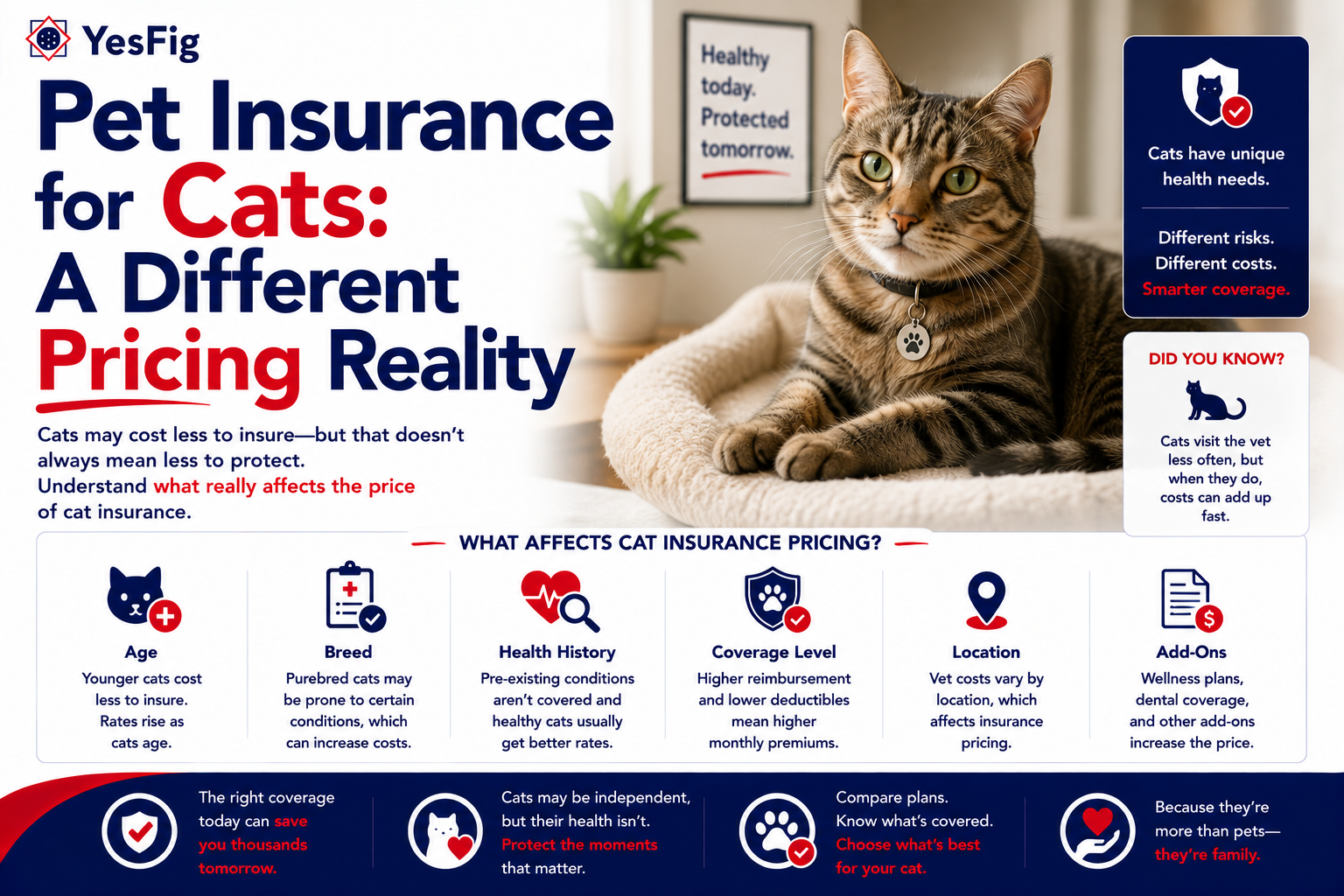
Pet Insurance for Cats: A Different Pricing Reality
Quick answer: Cat insurance generally costs less than dog insurance, because cats have fewer breed-specific conditions, lower vet costs, and less accident risk, especially indoors. But cats still develop expensive conditions like kidney disease, urinary blockages, and hyperthyroidism, and they hide illness well. So the cheaper premium makes coverage easy to justify, and enrolling early keeps future conditions covered.
Table of contents
- Cat insurance follows different rules than dog insurance
- Why pet insurance for cats costs less
- The catch: cats still get expensive conditions
- What pet insurance for cats actually covers
- What California cat owners should know
- Is cat insurance worth it for you?
- Frequently asked questions
Kira adopted a young domestic shorthair named Miso in Sacramento and assumed pet insurance would cost about what her friends paid for their dogs. It didn't, and the difference surprised her in a good way. Pet insurance for cats operates on a genuinely different pricing reality than dog insurance, generally costing less, which makes covering a cat easier to justify. The catch is that cheaper doesn't mean risk-free.
Understanding both sides helps you make a smart call. Here's why cat coverage costs less, why cats still need it despite the lower price, and how to insure yours the right way.
Thinking about insuring your cat?
That's worth exploring. Fig can explain how cat coverage is priced and show you what Yesfig pet insurance covers, with no pressure to enroll.
Cat insurance follows different rules than dog insurance
The headline is simple: cats are usually cheaper to insure than dogs. That's not a quirk of one insurer, it reflects real differences in risk and cost. For the same kind of accident and illness coverage, a cat's premium is often noticeably lower than a comparable dog's.
That changes the math for cat owners. Because coverage is more affordable, the barrier to insuring a cat is lower, and the value proposition is stronger. But the lower price can also lull owners into thinking cats barely need coverage, which is where the reality gets more nuanced. Cheaper to insure doesn't mean free of expensive problems, as Kira would learn.
Why pet insurance for cats costs less
A few real factors drive the lower price. First, cats tend to have fewer breed-specific hereditary conditions than many dog breeds, especially compared to high-risk dogs like bulldogs. Most cats are mixed-breed domestic shorthairs, which are among the lowest-risk pets to insure.
Second, veterinary care for cats is often less expensive than for dogs, since many treatments and medications scale with size. Third, cats, particularly indoor cats, generally face fewer accident risks than dogs that are walked, taken to parks, and exposed to more hazards. Together, these make cats a lower-risk, lower-cost group, which insurers price accordingly. A cat insurance policy reflects that more affordable reality.
The catch: cats still get expensive conditions
Here's the part that matters most, and where the lower price can mislead. Cats absolutely develop serious, costly health conditions. Common ones include chronic kidney disease, very common in older cats, hyperthyroidism, diabetes, cancer, dental disease, and urinary blockages, which can be a life-threatening emergency, especially in male cats.
These aren't minor. A urinary blockage can require emergency surgery running into the thousands, and managing kidney disease adds up over time. And cats are experts at masking illness, so problems are often caught later and are more serious when found. For Kira, skipping coverage because Miso seemed low-risk could turn one emergency into a devastating bill. The affordable premium is exactly what makes protecting against these worth it.
Good to know: Cats are experts at hiding illness, so conditions like kidney disease or a urinary blockage are often caught later and can be expensive to treat. A cheaper premium doesn't mean lower risk, which is exactly why coverage still pays off for cats.
Want affordable protection for your cat?
That's the sweet spot for cats. Yesfig can set up accident and illness coverage sized to protect against the conditions cats actually face. Compare pet insurance options in a few minutes.
What pet insurance for cats actually covers
Cat coverage works like all pet insurance, with the cat pricing reality layered on top. A standard accident and illness policy covers injuries and illnesses, including hereditary conditions, as long as they aren't pre-existing. So enrolling while your cat is young and healthy is what keeps future issues covered, since the same conditions become excluded once they appear.
Breed still matters, even among cats. Purebreds like Maine Coons, Persians, and Ragdolls have known hereditary risks, such as heart or kidney conditions, so they cost more to insure than mixed-breed cats, though generally still less than high-risk dogs. And you control the same three dials on any policy: your deductible, reimbursement percentage, and annual limit, which let you tune the premium to your budget. Routine care like vaccines needs a separate wellness add-on, just as it does for dogs.
What California cat owners should know
California adds useful context for cat owners. It's a relatively high-cost state for veterinary care, so even though cats are cheaper to insure than dogs, the emergency and specialty care they might need still gets expensive here, which makes coverage worthwhile.
There's a consumer protection too. California law requires pet insurers to clearly disclose what's covered and excluded, so you can compare cat plans on real terms. Keeping your cat indoors also lowers its risk, which supports both its health and your premium. Yesfig Insurance, a Los Angeles-based brand of Focus Insurance Group, offers pet coverage across California with the terms laid out up front.
Key takeaways
- Cats cost less to insure than dogs, thanks to lower risk and vet costs.
- The lower price makes coverage easy to justify for cat owners.
- Cats still get expensive conditions like kidney disease and urinary blockages.
- Enroll early, since hereditary and future conditions are only covered if not pre-existing.
Is cat insurance worth it for you?
For most cat owners, the affordable premium makes it an easy yes. Here's how to decide in three steps:
- Enroll early. Insure your cat while young and healthy, before any condition can appear and become pre-existing.
- Pick coverage that fits. Set your deductible, reimbursement, and limit to balance protection with the low premium cats enjoy.
- Weigh the premium against the risk. Compare the modest monthly cost to the thousands a urinary blockage or kidney disease could cost.
Do that and you get strong protection for one of the lower premiums in pet insurance. For more on choosing pet coverage, the Yesfig blog breaks it down without the jargon.
Frequently asked questions
Is cat insurance cheaper than dog insurance?
Generally, yes. Cats typically cost less to insure than dogs because they have fewer breed-specific hereditary conditions, their veterinary care is often less expensive, and they face fewer accident risks, especially indoor cats. For comparable accident and illness coverage, a cat's premium is usually noticeably lower than a similar dog's.
Is pet insurance worth it for cats?
For many owners, yes, especially given how affordable cat coverage is. Cats develop costly conditions like kidney disease, urinary blockages, and hyperthyroidism, and they hide illness well, so problems can be serious when found. The low premium makes protecting against those expensive possibilities an easy value, particularly if you enroll early.
What health conditions does cat insurance cover?
Accident and illness policies cover injuries and illnesses cats commonly face, including chronic kidney disease, hyperthyroidism, diabetes, urinary blockages, cancer, and dental disease, as long as they aren't pre-existing. Hereditary conditions are typically covered too if your cat was symptom-free when you enrolled. Routine care requires a separate wellness add-on.
Does my cat's breed affect insurance cost?
Yes. Most cats are mixed-breed domestic shorthairs, which are low-risk and inexpensive to insure. Purebreds like Maine Coons, Persians, and Ragdolls have known hereditary conditions, such as heart or kidney issues, so they cost more than mixed-breed cats. Even so, purebred cats generally cost less to insure than high-risk dog breeds.
Should I insure an indoor cat?
Often, yes. While indoor cats face fewer accident risks and cost less to insure, they still develop expensive illnesses like kidney disease, hyperthyroidism, and urinary problems as they age. Because coverage is affordable and cats hide illness so well, insuring an indoor cat, especially early, is usually a worthwhile and inexpensive safeguard.
Cats really do get a better deal on insurance, but the lower price is a reason to cover them, not to skip it. Kira enrolled Miso while he was young and healthy, chose a plan with a premium that fit easily, and knew a future emergency wouldn't blindside her budget. Take advantage of the affordable pricing, enroll early, and your cat is protected against the conditions that quietly add up.
Ready to insure your cat affordably?
Get a pet insurance quote in minutes with Yesfig. Coverage in California starts at $9/mo, and a licensed advisor can build a plan around your cat and your budget. Lower premiums, real protection.
About the Author

Mathew Bahadori
CEO, Yesfig Insurance
Leading the company’s mission to make insurance more accessible, modern, and customer-focused. With a passion for innovation and personalized service, he continues to help individuals and families find smarter coverage solutions for life, auto, home, health, and business insurance.