
July 8, 2026
Pet Insurance for Exotic Pets and Non-Traditional Animals
Can you insure a parrot, reptile, or rabbit? Learn how pet insurance for exotic pets works, why coverage is harder to find, and what to check first.
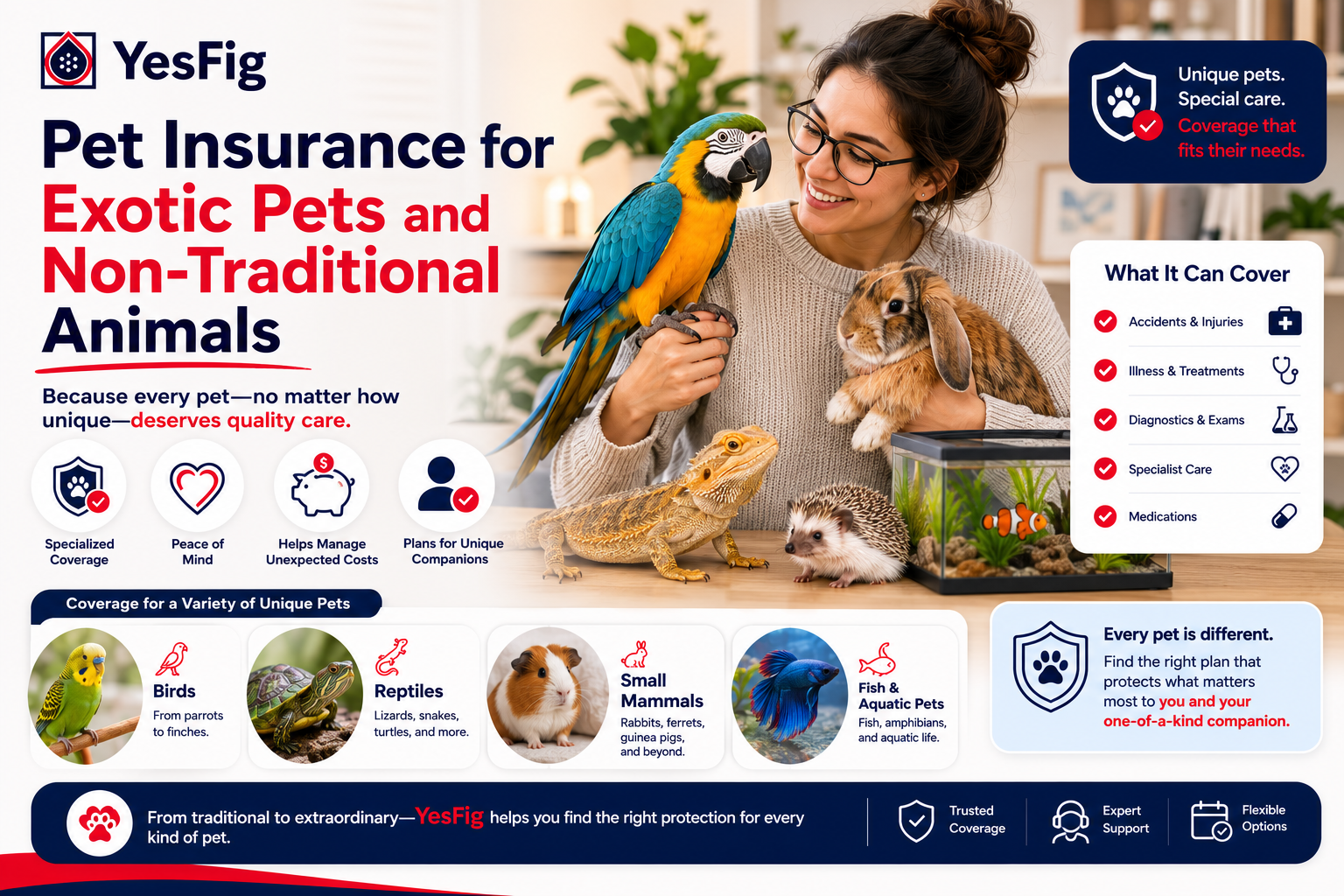
Pet Insurance for Exotic Pets and Non-Traditional Animals
Quick answer: You can insure many exotic pets, like birds, reptiles, and small mammals, but coverage is a specialized niche. Most pet insurers cover only dogs and cats, so exotic owners usually need a specialty provider for their species. Coverage resembles dog and cat plans, with pre-existing exclusions, and you must confirm your pet is legal to own.
Table of contents
- Can you insure an exotic pet?
- What pet insurance for exotic pets covers
- Why exotic pets especially need coverage
- The catches: species limits, legality, and pre-existing
- What California exotic pet owners should know
- How to find pet insurance for exotic pets
- Frequently asked questions
Kai's African grey parrot, Mango, needed an avian specialist in Sacramento, and the bill made him wish he'd looked into insurance sooner. When he tried, he ran into a surprise a lot of exotic owners hit: most pet insurers only cover dogs and cats. Finding pet insurance for exotic pets turned out to be a different, and narrower, search than he expected.
The short version is that coverage exists, but it takes more work to find and comes with its own rules. Here's how exotic pet insurance actually works, why it's worth considering despite the hassle, and what to check before you spend a dime, starting with whether your pet is even legal to own.
Can you insure an exotic pet?
Yes, but with a big caveat: it's a specialized corner of the market. The mainstream pet insurers most people know almost always limit coverage to dogs and cats. To insure a bird, reptile, rabbit, ferret, or other non-traditional animal, you usually need a specialty insurer that specifically covers exotics.
Even among those, coverage varies a lot by species. Some cover birds and reptiles but not amphibians, and some exclude certain animals entirely. So the real first question isn't just whether exotic insurance exists, it's whether a provider will cover your particular pet. That narrows the field quickly.
Good to know: Before shopping for coverage, confirm your pet is even legal to own where you live. California has strict exotic pet laws, and some popular animals like ferrets and hedgehogs are illegal to keep as pets here. You generally can't insure an animal you can't legally own.
What pet insurance for exotic pets covers
When you do find a policy, it tends to work like a dog or cat plan. Most cover accidents and, depending on the plan, illnesses, with a deductible, a reimbursement percentage, and an annual limit. Some exotic policies are accident-only, which are cheaper but leave illness uncovered, so read the fine print.
The familiar rules apply too. Pre-existing conditions are typically excluded, and there are waiting periods before coverage kicks in, just like standard pet insurance. If you also have a dog or cat, standard pet insurance covers those directly, while other animals usually require a specialty provider.
Not sure what's coverable for your animal?
That's the right thing to check first. Fig can explain how exotic coverage differs and help you confirm what Yesfig pet insurance covers for your specific pet, with no pressure.
Why exotic pets especially need coverage
Here's the irony: exotic pets are often the ones that need coverage most. Care for birds, reptiles, and small mammals is usually more specialized and expensive than dog or cat care, and far fewer vets are trained to provide it. An avian or reptile specialist can be hard to find and costly to see.
That's what caught Kai off guard with Mango. A single illness in an exotic pet can run into hundreds or thousands of dollars, with no coverage to soften it. If you have a more common pet alongside your exotic one, Yesfig pet insurance can cover the dog or cat, and it's worth pricing what protection you can put in place across your household.
The catches: species limits, legality, and pre-existing
Exotic coverage comes with more asterisks than standard pet insurance. Species restrictions are common, so a policy might cover parrots but not your particular lizard, or small mammals but not amphibians. Always confirm your exact animal is eligible before you count on anything.
Legality is the other big one. Some exotic pets are illegal to own in certain states or cities, and you can't insure an animal you're not allowed to keep. On top of that, the usual limits apply: pre-existing conditions are excluded and waiting periods delay coverage. Fewer providers also means less competition, so shop carefully and compare what you find.
Want help sorting out what's coverable?
That's worth a quick conversation. Yesfig can tell you what its pet coverage includes and help you understand your options for your specific animal. Explore Yesfig pet insurance in a few minutes.
What California exotic pet owners should know
California has some of the strictest exotic pet laws in the country, which shapes what you can own and insure. Animals that are legal elsewhere, including ferrets, hedgehogs, and sugar gliders, are illegal to keep as pets in California. Before you look for coverage, make sure your pet is legal here, because an illegal animal can't be insured.
For legal exotics, the same general rules apply: you'll likely need a specialty insurer, and coverage depends on the species. Yesfig Insurance, a Los Angeles-based brand of Focus Insurance Group, offers pet insurance across California, and a licensed advisor can point you in the right direction for your specific animal.
Key takeaways
- Exotic pet insurance exists but is a niche, since most insurers only cover dogs and cats.
- You'll usually need a specialty provider that covers your specific species.
- Confirm your pet is legal to own, especially in California, before insuring it.
- Exotic vet care is pricey and specialized, so coverage can be genuinely worth it.
How to find pet insurance for exotic pets
Finding coverage is doable if you go in the right order. Here's the approach in three steps:
- Confirm legality and find a vet. Make sure your pet is legal where you live, and locate an exotic vet who can treat it.
- Search specialty insurers. Look specifically for providers that cover your species, since most standard insurers won't.
- Compare and enroll early. Weigh accident-only against accident-and-illness plans, check the exclusions, and sign up before any condition appears.
That order saves you from chasing coverage that doesn't exist for your animal. For more on choosing pet coverage, the Yesfig blog breaks it down without the jargon.
Frequently asked questions
Can you get pet insurance for exotic pets?
Yes, but it's a specialized market. Most mainstream pet insurers cover only dogs and cats, so to insure a bird, reptile, rabbit, or other exotic, you usually need a specialty provider that covers your species. Coverage varies widely, and some animals are excluded, so confirm eligibility for your specific pet before assuming.
What does exotic pet insurance cover?
When available, it works much like a dog or cat plan, covering accidents and often illnesses, with a deductible, reimbursement percentage, and annual limit. Some policies are accident-only. Pre-existing conditions are typically excluded and waiting periods apply, just like standard pet insurance. What's covered depends heavily on the insurer and your pet's species.
Why is exotic pet insurance harder to find?
Because exotic pets are a small, specialized market that most insurers avoid. Treating birds, reptiles, and small mammals requires specialized veterinary care, and the risks are harder for insurers to price. As a result, only certain specialty providers offer it, and even they limit coverage to specific species. Fewer options means you have to search carefully.
Are there exotic pets you can't insure?
Yes. Insurers exclude many species, and coverage depends on the provider. More importantly, you can't insure an animal that's illegal to own where you live. California, for example, bans keeping ferrets, hedgehogs, and sugar gliders as pets. Always confirm both that your pet is legal and that a provider covers its species.
Is exotic pet insurance worth it?
It can be. Exotic vet care is often more expensive and specialized than dog or cat care, and a serious illness can cost hundreds or thousands. If you can find a policy that covers your species, insurance can protect you from those bills. Enroll early, since pre-existing conditions won't be covered later.
Insuring an exotic pet takes more legwork than covering a dog or cat, but it's far from impossible. Kai confirmed Mango was legal to keep, tracked down a specialty avian insurer, and enrolled before any new issue could appear, finally putting some protection behind those specialist bills. Go in the right order, and even a non-traditional pet can have a safety net.
Ready to protect the pets you can?
Get a pet insurance quote in minutes with Yesfig. Coverage for common pets in California starts at $9/mo, and a licensed advisor can tell you what's available for your specific animal. Cover what you can, and plan for the rest.
About the Author

Mathew Bahadori
CEO, Yesfig Insurance
Leading the company’s mission to make insurance more accessible, modern, and customer-focused. With a passion for innovation and personalized service, he continues to help individuals and families find smarter coverage solutions for life, auto, home, health, and business insurance.