
July 15, 2026
Why Some Pet Owners Pay $20/Month and Some Pay $80/Month
Two owners, wildly different premiums. Learn what drives pet insurance cost, which factors you can control, and how to get the coverage you want for less.
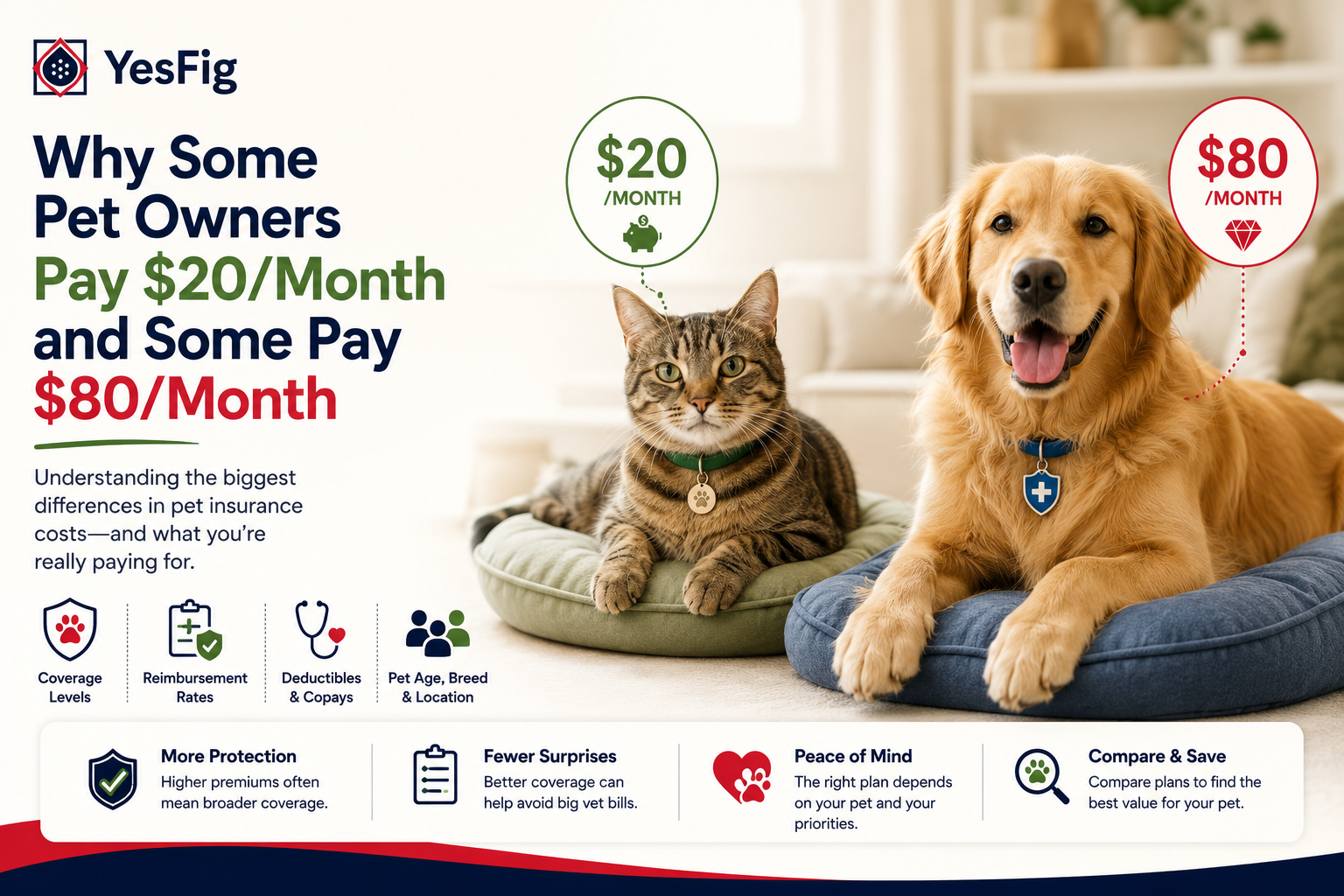
Why Some Pet Owners Pay $20/Month and Some Pay $80/Month
Quick answer: Pet insurance cost varies because of factors you can't change, like your pet's species, breed, age, and your location, and factors you can, like your deductible, reimbursement percentage, and annual limit. A young cat with a high deductible costs far less than an older purebred dog with rich coverage. Adjusting those three settings is how you control your price.
Table of contents
- Why two owners pay such different premiums
- The factors you can't change
- The three settings that control your pet insurance cost
- Accident-only vs accident and illness
- What California pet owners should know
- How to lower your pet insurance cost
- Frequently asked questions
Maya pays about $20 a month to insure her young cat in Sacramento. Her neighbor pays closer to $80 for his older bulldog. Same city, same idea, wildly different bills. If you've ever wondered why pet insurance cost swings so much between two seemingly similar owners, the answer isn't random. Every dollar of that gap traces back to a handful of specific factors.
Some of those factors you can't do anything about. Others you control completely, and that's where the real opportunity is. Here's what actually drives the price, and how to land the coverage you want at a number that works for your budget.
Why two owners pay such different premiums
Pet insurance is priced on risk and on how much coverage you choose, which is why two policies can look similar and cost very differently. Insurers ask two questions: how likely is this pet to need expensive care, and how much of that care will the policy pay for?
The answers split into two groups. The first group is about your pet and where you live, things you mostly can't change. The second is about how you build the policy, which is entirely up to you. Understanding both is what turns a confusing quote into a set of choices you can actually make.
Wondering what drives your quote?
That's worth understanding before you buy. Fig can explain what's behind your price and show you how Yesfig pet insurance is structured, with no pressure to enroll.
The factors you can't change
Start with your pet. Species matters, and cats generally cost less to insure than dogs, because their vet care tends to be cheaper. Breed matters too, since purebreds with known hereditary conditions, like bulldogs or German shepherds, carry higher risk and higher premiums than mixed breeds.
The biggest lever, though, is age. Young pets are cheap to insure because they're less likely to need care, and premiums climb as a pet gets older, often rising each year as they age. That's exactly why enrolling early locks in a better price and avoids pre-existing exclusions. Location rounds it out: vet costs vary by area, so where you live shapes your rate. That combination explains most of Maya's neighbor's higher bill, an older, hereditary-prone breed in a high-cost state.
The three settings that control your pet insurance cost
Here's where you take the wheel. Three settings on almost every policy decide your premium, and you choose all of them.
Your deductible is what you pay before reimbursement starts, and a higher one means a lower premium. Your reimbursement percentage, often 70, 80, or 90 percent, is how much of the covered bill you get back, and choosing a lower percentage lowers your cost. Your annual limit caps what the insurer pays per year, and a lower limit means a cheaper policy.
Those three dials are why the same pet can be quoted at very different prices. Turn them one way for maximum protection, the other way for a lower monthly cost. You can adjust a Yesfig pet insurance plan across these settings and see exactly how each choice moves your price.
Good to know: Your deductible, reimbursement percentage, and annual limit are the three dials you control. Raising the deductible, taking a lower reimbursement percentage, or setting a lower annual limit each lowers your premium, at the cost of paying more yourself when you claim.
Want to find your number?
That's what a quick quote is for. Yesfig lets you adjust your deductible, reimbursement, and limit to land on a premium that fits your budget. Compare pet insurance options in a few minutes.
Accident-only vs accident and illness
There's one more choice that swings the price a lot. Accident-only plans cover injuries like a broken leg or a swallowed toy, and nothing else. They're the cheapest option because they cover a narrow risk.
Accident and illness plans add coverage for illnesses like infections, cancer, and chronic conditions, which is where the big vet bills usually come from. They cost more, and for most owners they're the more useful policy. Some plans also let you add wellness coverage for routine care, which raises the price again. Each layer of protection adds cost, so pick the level that matches what you actually want covered.
What California pet owners should know
California is a relatively high-cost state for veterinary care, especially in major metros, and that feeds into premiums here. Coverage is still affordable, but expect location to be part of your price, particularly in urban areas.
The upside is transparency. California law requires pet insurers to clearly disclose how their coverage works, including deductibles, reimbursement, and limits, so you can compare the factors that drive your cost. Yesfig Insurance, a Los Angeles-based brand of Focus Insurance Group, offers pet coverage across California with those options laid out up front.
Key takeaways
- Pet insurance cost depends on species, breed, age, and location, which you can't change.
- You control your deductible, reimbursement percentage, and annual limit.
- Age is the biggest factor you can act on, so enrolling early locks in a lower price.
- Accident-only plans cost less; accident and illness plans cover far more.
How to lower your pet insurance cost
You have more control than the quote suggests. Here's the approach in three steps:
- Enroll while your pet is young. Age drives price more than almost anything, and early enrollment also avoids pre-existing exclusions.
- Adjust your three settings. Raise the deductible, or pick a lower reimbursement percentage or annual limit, to bring the premium down.
- Match coverage to your needs. Choose accident-only if that's all you want, or accident and illness for real protection, and skip extras you won't use.
Do that and you'll land on a price you chose rather than one you accepted. For more on picking pet coverage, the Yesfig blog breaks it down without the jargon.
Frequently asked questions
Why does pet insurance cost so much more for some pets?
Because pricing reflects risk and coverage level. Dogs generally cost more than cats, purebreds with hereditary conditions cost more than mixed breeds, older pets cost more than young ones, and vet prices vary by location. On top of that, a policy with a low deductible, high reimbursement, and high annual limit costs far more than a basic one.
What factors affect pet insurance cost?
Your pet's species, breed, and age, plus where you live, all shape the price and you can't change them. What you can control are your deductible, reimbursement percentage, and annual limit, along with whether you choose accident-only or accident and illness coverage. Those choices often move the premium more than anything else.
Does pet insurance get more expensive as my pet ages?
Usually, yes. Age is one of the biggest pricing factors, since older pets are more likely to need care, so premiums typically rise as your pet gets older. Enrolling while your pet is young means a lower starting price and avoids conditions becoming pre-existing later, which is why early enrollment is worth it.
How can I lower my pet insurance premium?
Raise your deductible, choose a lower reimbursement percentage, or set a lower annual limit, since each reduces your monthly cost. You can also pick accident-only coverage if that fits your needs, or skip wellness add-ons. Enrolling while your pet is young helps most of all. Just balance savings against what you'd pay when you claim.
Are cats cheaper to insure than dogs?
Generally, yes. Cats typically cost less to insure because their veterinary care tends to be less expensive and they have fewer breed-specific hereditary conditions than many dogs. Within dogs, mixed breeds usually cost less than purebreds prone to known health issues. Species and breed are among the biggest factors you can't change.
The gap between a $20 policy and an $80 one isn't a mystery, it's a stack of specific factors, and you control several of them. Maya's young cat and a high deductible put her at the low end, while her neighbor's older bulldog with rich coverage sits at the other. Know which dials you can turn, and you can build a policy that fits both your pet and your budget.
Ready to build a plan that fits your budget?
Get a pet insurance quote in minutes with Yesfig. Coverage in California starts at $9/mo, and a licensed advisor can adjust your deductible, reimbursement, and limit to hit the number you want. Your pet, your coverage, your price.
About the Author

Mathew Bahadori
CEO, Yesfig Insurance
Leading the company’s mission to make insurance more accessible, modern, and customer-focused. With a passion for innovation and personalized service, he continues to help individuals and families find smarter coverage solutions for life, auto, home, health, and business insurance.