July 23, 2026
Life Insurance Riders: Which Add-Ons Are Actually Worth It
Some life insurance riders are free, some are worth paying for, and some rarely are. See which add-ons actually earn their cost before you buy.
Life Insurance Riders: Which Add-Ons Are Actually Worth It
Quick answer: Life insurance riders are optional add-ons to your policy. The accelerated death benefit is often included free, so confirm you have it before paying. Waiver of premium, conversion, and child riders often earn their cost. Return of premium rarely does. The rule: if a rider's cost would buy meaningfully more coverage, buy the coverage.
Table of contents
- What life insurance riders actually are
- The rider you probably already have
- The life insurance riders usually worth paying for
- The riders that rarely pay off
- What California policyholders should know
- How to decide which riders you need
- Frequently asked questions
Talia was reviewing a term life quote in San Jose when she hit a menu of optional add-ons with names she didn't recognize, each with its own price. She had no idea which were essential and which were upsells. That's a common moment, because life insurance riders are rarely explained in plain terms, and the difference between a genuinely useful one and an expensive extra isn't obvious from the name.
Some are free and you should make sure you have them. A few are worth real money. Others sound appealing and rarely pay off. Here's how to tell them apart before you sign anything, so your policy fits your life instead of the sales sheet.
What life insurance riders actually are
A rider is an optional provision added to your policy that changes or expands what it does. Some are included automatically at no cost, some carry an extra premium, and availability varies quite a bit from one insurer to another.
Before evaluating any of them, it helps to hold one principle in mind. Your base coverage is what protects your family, and the amount of that coverage matters more than any add-on. A rider is a refinement, not a substitute for being adequately insured in the first place. Keep that order straight and most of these decisions get easy.
Not sure which add-ons you actually need?
That's worth talking through before you buy. Fig can explain what each rider does in plain English and show you how term life in California is structured, with no pressure.
The rider you probably already have
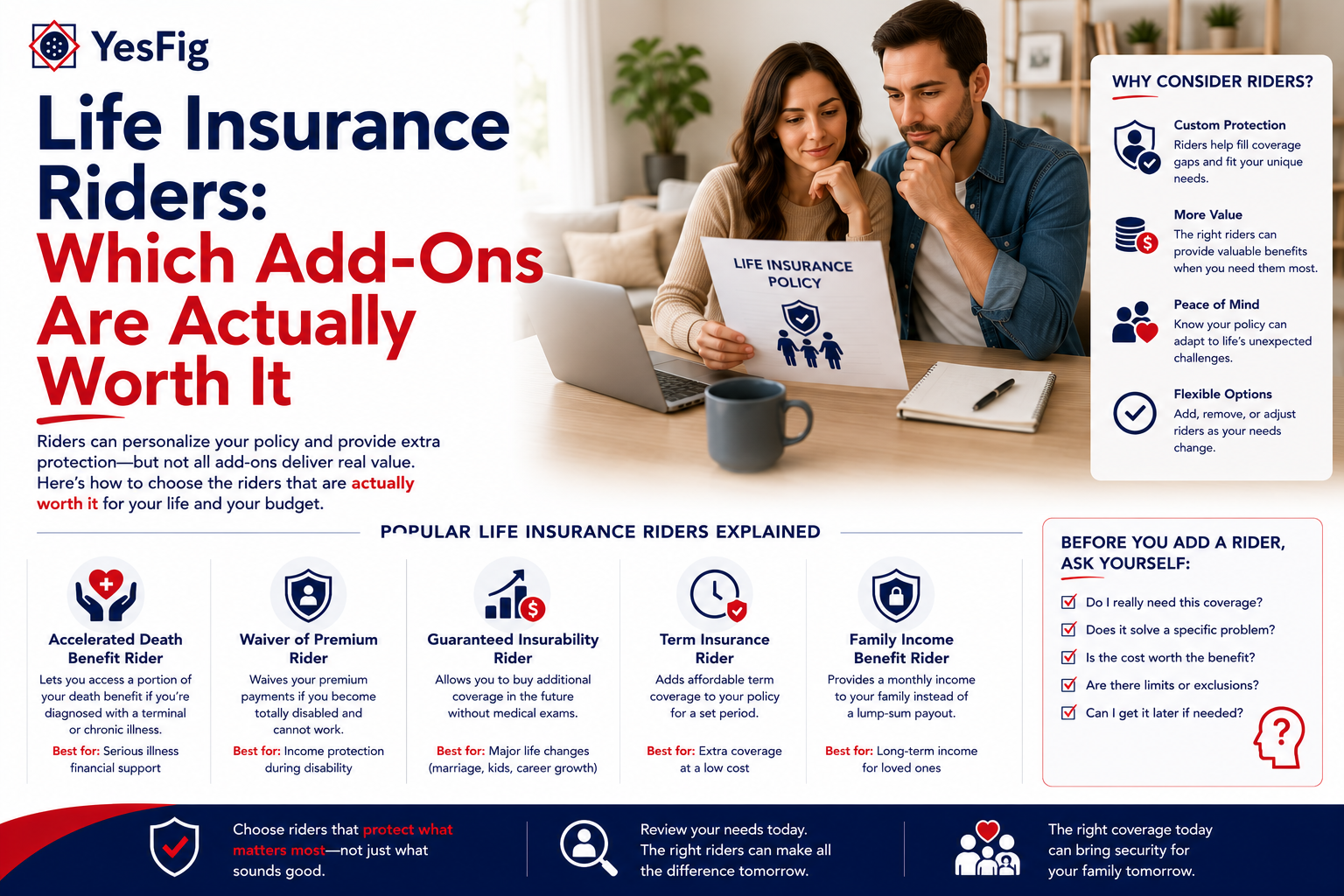
Start with the one most people don't realize is sitting in their policy. The accelerated death benefit, sometimes called a terminal illness rider, lets you access part of your own death benefit while you're still living if you're diagnosed with a qualifying terminal illness. The money can go toward treatment, bills, or anything else.
Here's the useful part: it's commonly included at no extra cost on term policies. So your first move isn't buying it, it's confirming your policy already has it and understanding the conditions, since definitions and payout limits vary. Whatever you draw early reduces what your beneficiaries receive later, which is a fair trade when you need it but worth knowing in advance.
Good to know: Before adding any paid rider, ask what it costs and what that same money would buy in additional base coverage. If the rider's premium would meaningfully raise your death benefit instead, take the coverage. A rider should never be the reason you're underinsured.
The life insurance riders usually worth paying for
A few earn their keep for the right person. Waiver of premium is the strongest candidate for most working adults. If you become disabled and can't work, it keeps your policy in force without you paying premiums, which protects your coverage at exactly the moment your income disappears. A disabling injury or illness is a real risk during your working years, and the rider typically costs a modest amount.
A conversion option lets you convert term coverage to permanent coverage later without a new medical exam, which is valuable precisely if your health declines. Guaranteed insurability works similarly, letting you buy more coverage at set points without requalifying, which suits younger buyers who expect kids or a mortgage ahead. A child rider adds a small amount of coverage for your children across one inexpensive rider. It isn't income replacement, since children don't earn income, it covers funeral costs and time away from work, and it can often be converted to a policy for your child later regardless of their health.
Want to see what your policy includes?
That's a quick review. Yesfig can walk you through which provisions come standard and which cost extra, so you're not paying for what you already have. Compare Yesfig term life in a few minutes.
The riders that rarely pay off
Return of premium is the one that sounds best and delivers least for most buyers. If you outlive your term, the insurer refunds the premiums you paid. The catch is that this rider raises your premium substantially, and you get that money back years later with no interest. For most people, buying cheaper term and investing the difference comes out ahead, so run the numbers before being charmed by "free" coverage.
Narrow riders deserve the same scrutiny. An accidental death rider pays extra only if death results from an accident, and accidents are a minority of deaths, so it's inherently limited protection. That doesn't make it useless: accidental death coverage is affordable and can sit on top of adequate term coverage as a supplement. It just shouldn't substitute for a properly sized base policy. Chronic illness and long-term care riders can be genuinely useful but are complex and reduce your death benefit, so they're worth reviewing with a professional rather than checking a box.
What California policyholders should know
California gives you a built-in second look. Every life policy comes with a free look period, generally at least 10 days, and 30 days for policies issued to people aged 60 and over. During that window you can review the policy and its riders in full and cancel for a refund if it isn't what you expected.
Use it deliberately. When your policy arrives, read the rider provisions, confirm which ones you're paying for, and check the conditions on your accelerated death benefit. Rider availability differs by insurer, so ask what's offered rather than assuming. Term life is the coverage Yesfig offers to California residents, and Yesfig Insurance, a Los Angeles-based brand of Focus Insurance Group, can explain exactly what comes with a policy.
Key takeaways
- The accelerated death benefit is often free, so confirm it rather than buying it.
- Waiver of premium protects your coverage if a disability stops your income.
- Conversion and guaranteed insurability matter if your health may change.
- Return of premium raises your cost substantially and rarely wins the math.
How to decide which riders you need
Cut through the menu with three questions:
- What's already included? Ask which provisions come standard, since paying for something your policy already has is the most common mistake.
- Does it protect the policy or my income? Waiver of premium and conversion protect your coverage itself, which is usually the strongest reason to add a rider.
- Would the money buy more coverage? If a rider's premium would meaningfully increase your death benefit, put it there instead.
Answer those and the right add-ons become obvious. For more plain-English coverage guidance, the Yesfig blog breaks it down without the jargon.
Frequently asked questions
What are life insurance riders?
Riders are optional provisions added to a life insurance policy that change or expand what it does. Some come included at no cost, like the accelerated death benefit, while others carry an extra premium. Availability varies by insurer, so ask which riders your policy offers and which are already built in.
Which life insurance riders are worth it?
Waiver of premium is valuable for most working adults, since it keeps your policy active if a disability stops your income. A conversion option and guaranteed insurability help if your health may change. A child rider is inexpensive if you have kids. Confirm your accelerated death benefit too, since it's usually free.
Is a return of premium rider worth it?
Usually not. It refunds your premiums if you outlive the term, but it raises your premium substantially and returns that money years later without interest. For most buyers, purchasing cheaper term coverage and investing the difference works out better. Run the numbers for your situation before paying extra for the refund.
What is a waiver of premium rider?
It keeps your life insurance policy in force without you paying premiums if you become disabled and can't work. Since a disabling illness or injury is a real risk during your working years, it protects your coverage at the moment your income stops. Definitions of disability vary, so read the conditions carefully.
Do I need a child rider on my life insurance?
It depends. A child rider adds modest coverage for all your children under one inexpensive provision. It isn't income replacement, since children don't earn income, but it covers funeral costs and time away from work. Many also let you convert it into a policy for your child later regardless of their health.
Riders are worth understanding precisely because a few are genuinely valuable and the rest are easy to overbuy. Talia confirmed her accelerated death benefit came standard, added waiver of premium, skipped return of premium, and put the savings toward a larger death benefit instead. Sort the free from the useful from the unnecessary, and your policy ends up stronger for less.
Ready to build a policy that fits?
Get a term life quote in minutes with Yesfig. Coverage in California starts at $9/mo, and a licensed advisor can explain what's included, what costs extra, and where your money does the most good. The right coverage first, the right add-ons second.
About the Author

Mathew Bahadori
CEO, Yesfig Insurance
Leading the company’s mission to make insurance more accessible, modern, and customer-focused. With a passion for innovation and personalized service, he continues to help individuals and families find smarter coverage solutions for life, auto, home, health, and business insurance.