July 30, 2026
Life Insurance for Small Business Owners and Partners
Business owners need two kinds of life insurance. Learn how life insurance for business owners funds buy-sell agreements, key person coverage, and loans.
Life Insurance for Small Business Owners and Partners
Quick answer: Business owners need personal life insurance to protect their family, plus business coverage to protect the company. Life insurance funds a buy-sell agreement so surviving partners can buy a deceased partner's share, provides key person coverage to help the business survive losing an owner or key employee, and can secure a business loan. Term life covers most of these affordably.
Table of contents
- Two kinds of life insurance every business owner needs
- How life insurance for business owners protects the company
- Buy-sell agreements: the key tool for partners
- Key person coverage and business loans
- What California business owners should know
- Choosing life insurance for business owners and partners
- Frequently asked questions
Rafael co-owns a small construction firm with a partner in Fresno, and like a lot of owners, he had personal life insurance but had never thought about what would happen to the business if either of them died. That blind spot is common and costly. Life insurance for business owners works on two levels, protecting your family and protecting your company, and partnerships in particular have a gap that only life insurance fills cleanly.
The business side isn't complicated once you see the pieces. Here's why owners need two kinds of coverage, how life insurance keeps a business intact when an owner dies, and what partners especially need to have in place.
Own a business and unsure what coverage you need?
That's worth mapping out. Fig can explain how the pieces fit and show you what term life in California costs, with no pressure to buy.
Two kinds of life insurance every business owner needs
The first kind is personal coverage, the same protection any family needs: replacing your income and covering your mortgage and debts if you die. For owners, this matters even more, because business debts you personally guaranteed can follow your estate to your family. So personal coverage is the foundation, and it comes first.
The second kind is business coverage, which protects the company itself rather than your household. This is where owners and partners have needs most people never consider: keeping the business running, letting partners stay in control, and paying off business debt if an owner dies. One protects the people you love, the other protects what you built, and most owners need both.
How life insurance for business owners protects the company
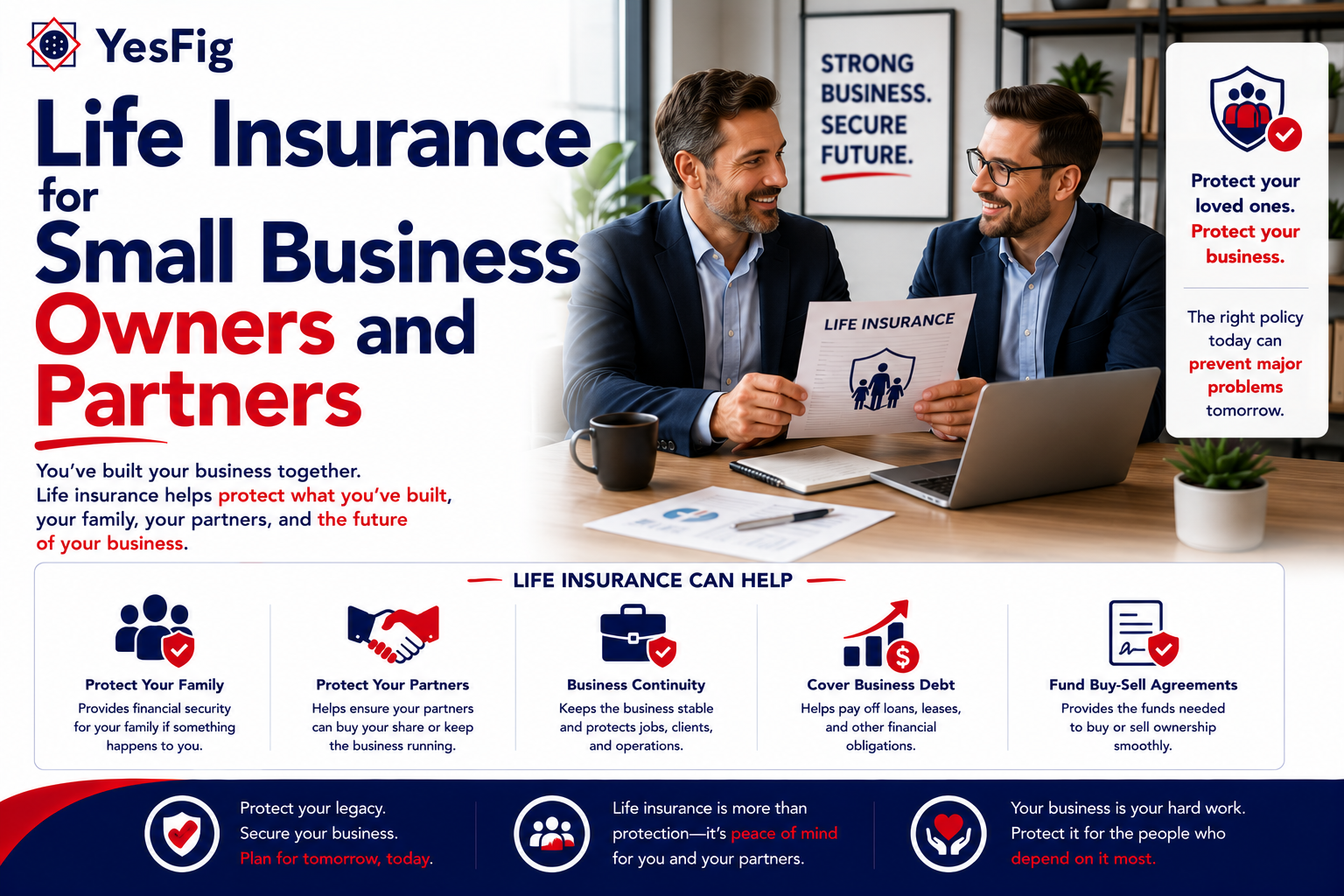
On the business side, life insurance does three main jobs. It funds a buy-sell agreement, giving surviving partners the cash to buy a deceased partner's share so the business stays in the right hands. It provides key person coverage, helping the business absorb the loss of an owner or vital employee. And it can secure a business loan, paying off debt so it doesn't sink the company or fall to a family.
Underlying all three is business continuity. An owner's death can freeze operations, spook creditors and customers, and leave no cash to bridge the gap. Life insurance provides that cash exactly when the business needs it most, funding a transition instead of a collapse. A term life policy can serve each of these purposes affordably.
Buy-sell agreements: the key tool for partners
For any business with more than one owner, this is the essential piece. A buy-sell agreement is a legal contract that spells out what happens to an owner's share if they die, and life insurance is what funds it. When a partner dies, the policy pays out, and the surviving partners use the proceeds to buy the deceased partner's share from their heirs.
That solves two problems at once. The surviving partners keep control of the business rather than suddenly co-owning it with the deceased's family, and the deceased partner's family receives fair cash value for a share they couldn't easily sell otherwise. There are two common structures: a cross-purchase, where each partner owns a policy on the others, and an entity purchase, where the business owns the policies. Which fits depends on your situation, so set the agreement up with an attorney, but fund it with life insurance.
Good to know: Without a funded buy-sell agreement, if a partner dies, their share can pass to their heirs, leaving you in business with a deceased partner's spouse or children. Life insurance funds the buyout so surviving partners keep control and the family gets fair value for the share.
Protecting a business you share with partners?
That's exactly what this coverage is for. Yesfig can provide the term life coverage that funds a buy-sell agreement between partners. Compare Yesfig term life in a few minutes.
Key person coverage and business loans
Two more uses round out the picture. Key person insurance is a policy the business owns on an owner or employee whose loss would seriously hurt the company, like a founder, a top salesperson, or a specialized expert. The business is the beneficiary, and the payout helps it survive the transition: covering lost revenue, recruiting and training a replacement, and reassuring creditors and customers while things stabilize.
Business loans are the other. Lenders often require life insurance as collateral for a business loan, and SBA loans frequently do. A collateral assignment directs part of the death benefit to the lender to pay off the loan balance if the owner dies, so the debt doesn't threaten the business or land on the family. One note: business-owned policies have specific tax rules, including notice and consent requirements for the death benefit to be received tax-free, so set these up with an accountant or attorney.
What California business owners should know
Term life is the coverage Yesfig offers to California residents, and it's an affordable way to fund the business needs above, from a buy-sell agreement to loan collateral, without the cost of permanent coverage.
One California detail is worth knowing. The state is a community property state, so business debts taken on during a marriage are often shared, which gives a spouse a direct stake in making sure those obligations are covered. And because buy-sell agreements and business insurance structures carry legal and tax implications, work with a California attorney and accountant to set them up correctly. Yesfig Insurance, a Los Angeles-based brand of Focus Insurance Group, offers term life across California to fund those plans.
Key takeaways
- Owners need personal coverage for their family and business coverage for the company.
- A buy-sell agreement funded by life insurance lets partners buy a deceased owner's share.
- Key person coverage helps a business survive the loss of an owner or vital employee.
- Lenders often require life insurance as collateral for a business loan.
Choosing life insurance for business owners and partners
Put it together in three steps:
- Cover yourself personally first. Protect your family and any personally guaranteed business debts with adequate personal coverage.
- Add business coverage for your structure. Fund a buy-sell agreement if you have partners, add key person coverage where the business depends on someone, and cover any business loans.
- Work with professionals on the setup. Have an attorney and accountant structure the buy-sell agreement and handle the tax details, then fund it with life insurance.
Do that and both your family and your business are protected if the unexpected happens. For more plain-English coverage guidance, the Yesfig blog breaks it down without the jargon.
Frequently asked questions
Do small business owners need life insurance?
Yes, usually two kinds. Personal life insurance protects your family and covers business debts you personally guaranteed, which can follow your estate. Business coverage protects the company itself, funding a buy-sell agreement between partners, providing key person protection, or securing a business loan. Most owners need both personal and business coverage in place.
What is a buy-sell agreement and how does life insurance fund it?
A buy-sell agreement is a legal contract specifying what happens to an owner's share of a business if they die or leave. Life insurance funds it: when a partner dies, the policy pays out, and the surviving partners use the proceeds to buy the deceased's share from their heirs. This keeps control with the partners and pays the family fairly.
What is key person insurance?
Key person insurance is a life insurance policy a business owns on an owner or employee whose death would significantly harm the company, such as a founder or top performer. The business is the beneficiary. The payout helps it survive the loss, covering lost revenue, recruiting a replacement, and reassuring creditors and customers during the transition.
Is life insurance required for a business loan?
Often, yes. Lenders frequently require life insurance as collateral for a business loan, and SBA loans commonly do. A collateral assignment directs part of the death benefit to the lender to pay off the loan if the owner dies. This protects the lender and keeps the debt from threatening the business or the owner's family.
Should business owners use term or permanent life insurance?
For most business needs, term life works well and costs far less. It affordably funds a buy-sell agreement during the years partners are building the business, provides key person coverage for a defined period, and matches loan collateral to a loan's term. Permanent coverage is sometimes used for lifelong buy-sell needs, but term suits most situations.
Protecting a business means thinking beyond your family to what happens to the company itself. Rafael added a buy-sell agreement with his partner, funded it with term policies on each other, and set the whole thing up with his accountant, so the firm they built together is protected no matter which of them the business loses. Cover yourself, cover the company, and get the structure right.
Ready to protect your business and your family?
Get a term life quote in minutes with Yesfig. Coverage in California starts at $9/mo, and a licensed advisor can help you fund a buy-sell agreement, key person coverage, or loan collateral with the right policy. Two kinds of protection, one plan.
About the Author

Mathew Bahadori
CEO, Yesfig Insurance
Leading the company’s mission to make insurance more accessible, modern, and customer-focused. With a passion for innovation and personalized service, he continues to help individuals and families find smarter coverage solutions for life, auto, home, health, and business insurance.