
May 30, 2026
Liability vs Full Coverage Auto Insurance: When Each One Actually Makes Sense
Liability vs full coverage car insurance: see what each covers, what it costs in California, and how to pick the right one for your car and budget.
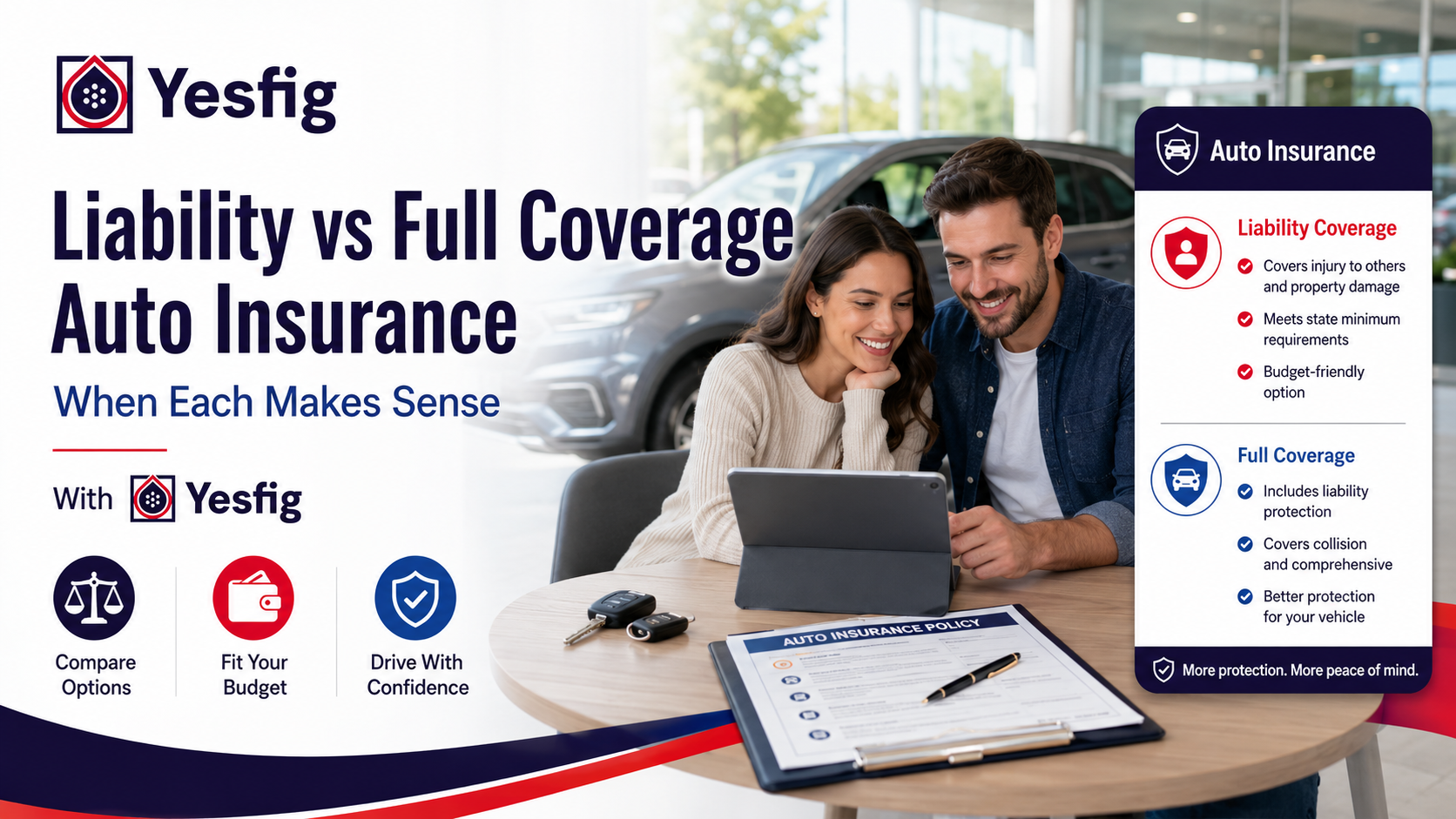
Liability vs Full Coverage Auto Insurance: When Each One Actually Makes Sense
Quick answer: Liability car insurance covers the injuries and damage you cause to others, and it's the legal minimum in California. Full coverage adds collision and comprehensive to protect your own car too. Liability fits older, paid-off, low-value cars. Full coverage fits newer, financed, or leased cars you couldn't easily replace out of pocket.
Table of contents
- What liability car insurance covers
- What full coverage actually means
- Liability vs full coverage: the main differences
- When liability-only makes sense
- When full coverage makes sense
- How to choose between liability vs full coverage
- California's minimum coverage rules
- Frequently asked questions
Marcus paid off his 2013 Honda Civic two years ago, and last month his renewal notice gave him pause. He's been buying full coverage out of habit, but the car isn't worth much anymore. Should he keep it, or drop to liability and pocket the difference?
That's the whole liability vs full coverage car insurance question in a nutshell. The right answer isn't the same for everyone. It comes down to what your car is worth, whether you still owe money on it, and how big a repair bill you could absorb without flinching. Here's how to tell which side of the line you're on.
What liability car insurance covers
Liability insurance pays for the injuries and property damage you cause to other people in an at-fault accident. It does not pay to fix your own car. That's the part most people miss.
It splits into two pieces. Bodily injury liability covers other drivers' and passengers' medical bills when you're at fault. Property damage liability covers their car, their fence, the storefront you backed into. Both are about protecting other people from your mistakes, and both are required to drive legally in California.
Liability is the cheapest way to stay legal and avoid a lawsuit. What it leaves exposed is your own vehicle, which is exactly where full coverage steps in.
Still mapping out what you need?
No pressure to decide right now. Fig can walk you through how each piece of a policy works in plain English, so you can explore your California car insurance options before you commit to anything.
What full coverage actually means
Here's a thing worth knowing: "full coverage" isn't an official policy type. It's shorthand for stacking liability together with two add-ons that protect your own car.
- Collision pays to repair or replace your car after a crash, whether you hit another vehicle, a guardrail, or a pole, regardless of fault.
- Comprehensive covers the non-crash stuff: theft, fire, vandalism, falling branches, hail, flooding, and the deer that wanders onto Highway 50 at dusk.
So full coverage really means liability plus collision plus comprehensive. It costs more because it's doing more, and it usually comes with a deductible, the amount you pay before Yesfig's coverage kicks in. A higher deductible lowers your premium but raises your out-of-pocket cost when you file a claim.
Good to know: "Full coverage" still has limits and exclusions. It doesn't cover routine maintenance, normal wear, or personal items stolen from inside the car. For those belongings, a renters insurance policy is usually the right tool, not your auto policy.
Liability vs full coverage: the main differences
The fastest way to see the gap is side by side.
| Liability | Full coverage | |
|---|---|---|
| Pays for others' injuries and property | Yes | Yes |
| Pays to fix your own car after a crash | No | Yes (collision) |
| Covers theft, fire, weather, vandalism | No | Yes (comprehensive) |
| Required by California law | Yes (minimum) | No |
| Required by a lender or leasing company | No | Usually yes |
| Best fit | Older, paid-off, low-value cars | Newer, financed, or leased cars |
The pattern is simple. Liability protects other people and your wallet from lawsuits. Full coverage protects all of that plus the car sitting in your driveway. Everything past this point is about figuring out which protection you actually need.
When liability-only makes sense
Liability-only is the smart, budget-friendly choice in a few clear situations.
- Your car is paid off and worth roughly $3,000 to $4,000 or less. At that point, full coverage premiums plus your deductible can creep close to what the car is even worth.
- You could replace the car out of pocket without it wrecking your finances.
- You're a low-mileage driver with a long clean record and a beater you'd shrug off losing.
This is Marcus's lane. His Civic is paid off and worth maybe $4,500. If a full-coverage claim would only ever pay out a few thousand dollars after his deductible, the math starts favoring liability and banking the savings. Car insurance through Yesfig Insurance starts at around $30/mo, and a liability-only policy sits at the lower end of that range.
Fig tip: A quick rule of thumb: if your annual full-coverage cost plus your deductible adds up to more than about 10% of your car's value, liability-only is worth a serious look.
Not sure your current policy is pulling its weight?
This is where switching pays off. Yesfig reviews what you've already got, maps the gaps, and shows you where you can trim cost or add protection. Compare your car insurance coverage in a few minutes and see how it stacks up.
When full coverage makes sense
Full coverage earns its higher premium when losing your car would genuinely hurt.
- You're financing or leasing. Lenders and leasing companies almost always require collision and comprehensive until the loan is paid off. This isn't optional, it's in the contract.
- Your car is new or still holds significant value. A total loss would mean a five-figure replacement you can't easily cover.
- You'd struggle to replace the car quickly if it were stolen or totaled, and you rely on it to get to work.
- You park or drive in higher-risk areas for theft, vandalism, or California wildfire and flood exposure.
If any of these describe you, full coverage isn't overspending. It's matching your protection to what you'd actually lose.
How to choose between liability vs full coverage
When you're stuck, run these three quick steps. They cut through most of the confusion.
- Find your car's value. Look up your make, model, and mileage on a free valuation tool. This is your anchor number.
- Add up the full-coverage cost. Take the annual premium difference between liability and full coverage, then add your deductible. That's your real cost to protect the car.
- Compare the two. If that cost is a small slice of the car's value, full coverage is worth it. If it's a big slice, liability-only likely wins. And if you're still making loan or lease payments, the choice is already made: keep full coverage.
That's the whole decision. Without the right call, the stakes are real but manageable: pick too little and a single bad accident becomes a repair bill you eat yourself; pick too much and you overpay for years. The goal is matching coverage to your actual situation, not guessing. You can find more breakdowns like this in the Yesfig insurance blog.
Key takeaways
- Liability covers damage you cause to others; full coverage also protects your own car.
- Liability is California's legal minimum; full coverage is not, but lenders and lessors usually require it.
- Liability-only fits older, paid-off, low-value cars you could replace yourself.
- Full coverage fits newer, financed, or leased cars you couldn't easily replace.
California's minimum coverage rules
You can't legally skip liability in California, no matter how old your car is. As of 2026, the state requires minimum liability limits of 30/60/15: $30,000 in bodily injury per person, $60,000 per accident, and $15,000 in property damage. These minimums rose at the start of 2025, so a policy written before then may be carrying outdated limits.
State minimums are a floor, not a recommendation. California medical and repair costs can blow past $15,000 in a heartbeat, and you're personally on the hook for anything your policy doesn't cover. Many drivers carry higher liability limits even when they skip full coverage, and that's often the wiser move. The California Department of Insurance sets these rules, and Yesfig Insurance can help you set limits that actually fit the risk you drive into every day.
Frequently asked questions
Is full coverage required by law in California?
No. California only requires liability insurance, currently 30/60/15 minimum limits as of 2026. Full coverage, meaning collision and comprehensive, is optional under state law. The catch is that if you finance or lease your car, your lender or leasing company will almost always require full coverage in the contract until the vehicle is paid off.
What does full coverage actually include?
Full coverage isn't a single product. It's liability plus two add-ons: collision, which pays to repair your car after a crash regardless of fault, and comprehensive, which covers theft, fire, vandalism, weather, and animal strikes. Together they protect both other people and your own vehicle, which is why full coverage costs more than liability alone.
When should I drop full coverage on my car?
Consider dropping it once your car is paid off and its value falls low enough that your yearly full-coverage cost plus deductible approaches what the car is worth. A common guideline is the 10% rule. If full coverage plus deductible tops roughly 10% of your car's value, liability-only usually makes more financial sense for an older vehicle.
Does liability insurance cover my own car?
No, and this surprises a lot of drivers. Liability only pays for the injuries and property damage you cause to other people. If you cause a crash and damage your own car, liability pays nothing toward your repairs. You'd need collision coverage for that, which is part of a full-coverage policy.
How much does car insurance cost with Yesfig?
Car insurance through Yesfig Insurance starts at around $30 a month, though your actual rate depends on your driving record, location, car, and the coverage you choose. Liability-only sits at the lower end and full coverage costs more. The fastest way to see a real number is to get a quick quote and compare your options.
So which one fits you?
Back to Marcus. He ran the three steps, saw that full coverage on a $4,500 paid-off Civic wasn't worth the premium, and switched to a solid liability policy with higher-than-minimum limits. Lower bill, protection where it actually counts, decision made. Picture that same clarity for yourself: the right coverage, no overpaying, and one less thing to second-guess.
Ready to lock in the right coverage?
Get a car insurance quote in minutes with Yesfig. Coverage starts at $30/mo, Fig can compare liability and full coverage side by side in real time, and a licensed advisor is there whenever you want a human in the loop. Yesfig Insurance is a brand of Focus Insurance Group, based in Los Angeles.
About the Author

Mathew Bahadori
CEO, Yesfig Insurance
Leading the company’s mission to make insurance more accessible, modern, and customer-focused. With a passion for innovation and personalized service, he continues to help individuals and families find smarter coverage solutions for life, auto, home, health, and business insurance.