
July 23, 2026
How to Handle a Car Insurance Claim Without Stress
Car insurance claims feel stressful because of uncertainty. Learn what to do at the scene, how the process works, and your rights in California.
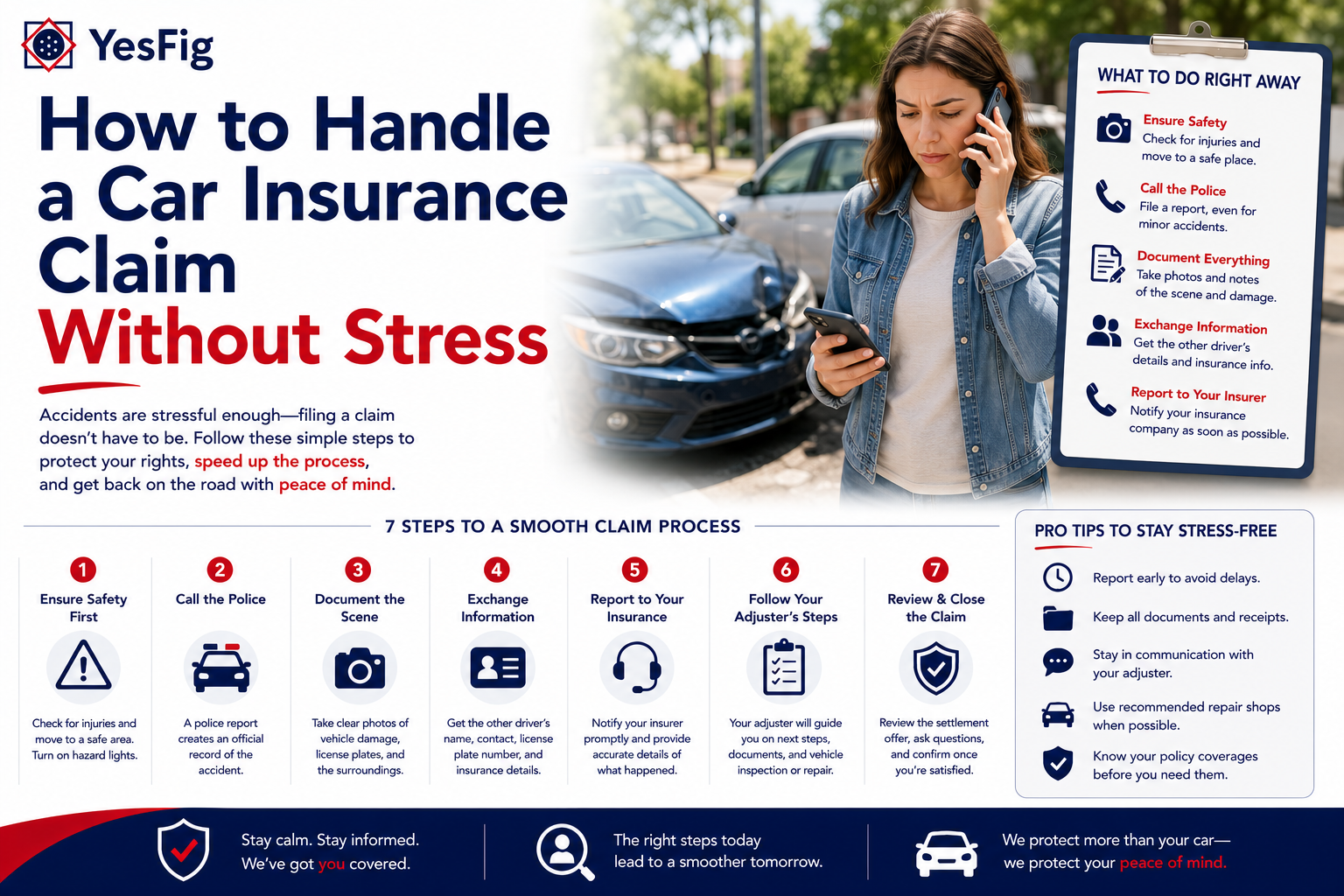
How to Handle a Car Insurance Claim Without Stress
Quick answer: Stay safe, call for help if anyone is hurt, then photograph everything and exchange information without speculating about fault. Report the claim promptly, keep a log of every call, and know which coverage applies. In California, insurers must acknowledge your claim within 15 days and you always choose your own repair shop.
Table of contents
- Why a car insurance claim feels stressful
- What to do at the scene
- How the car insurance claim process actually works
- The documentation that removes the stress
- What California drivers should know
- How to handle a car insurance claim smoothly
- Frequently asked questions
Jamal got rear-ended on a surface street in Glendale, and the collision itself lasted two seconds. The month that followed felt considerably longer, mostly because he had no idea what was supposed to happen next. That's the real source of anxiety in a car insurance claim: not the damage, but the uncertainty about the process and the worry that something will go wrong.
Both of those are fixable. A claim is a defined process with defined steps, and knowing them in advance turns it from an ordeal into paperwork. Here's what to do at the scene, how the process unfolds, and the habits that keep a claim moving smoothly.
Why a car insurance claim feels stressful
Two things drive the stress, and neither is the accident itself. The first is uncertainty: you don't know what happens next, how long it takes, what you'll pay, or whether you did something wrong at the scene. The second is the fear of a dispute, that fault will be assigned unfairly or your claim will be denied.
The antidote to both is unglamorous but effective. Preparation before you ever need it, meaning knowing your coverages, and documentation during, meaning a clear record of everything. Those two habits resolve most of what makes claims miserable, because a well-documented claim leaves far less room for disagreement.
Not sure what your policy would actually cover?
That's worth knowing before you need it. Fig can explain which coverages apply in which situations and show you what California car insurance includes, with no pressure to switch.
What to do at the scene
Safety comes first. Check on everyone, call 911 if there are injuries, and move vehicles out of traffic if they're drivable and it's safe to do so. A police report is worth having, and in some situations it's required.
Then gather information methodically. Exchange names, contact details, insurance information, license plate numbers, and driver's license details with the other driver, and collect contact info from any witnesses. Photograph everything: both vehicles from multiple angles, the damage up close, the wider scene, road conditions, signals, and any skid marks. On fault, stick to the facts of what happened when you talk to police and the other driver, since fault involves details and rules that get sorted out during the investigation, not on the roadside.
How the car insurance claim process actually works
Knowing the sequence removes most of the mystery. You report the claim to your insurer, ideally within a day or two, since policies generally require prompt notice and delays can complicate things. You'll get a claim number, which becomes your reference for everything after.
An adjuster is assigned to investigate, review the damage, and determine fault and coverage. Your vehicle gets inspected and an estimate is written, then repairs proceed and the insurer settles, minus your deductible if the claim is on your own collision or comprehensive coverage. If the repair cost exceeds the car's value, it's declared a total loss and you're paid the vehicle's actual cash value, which can be less than a loan balance, which is what gap coverage exists to bridge.
Want coverage that's clear before you need it?
That's the goal. Yesfig can walk through exactly what your policy covers and what a claim would look like. Compare your car insurance in a few minutes.
The documentation that removes the stress
This is the single highest-leverage habit in any claim. Keep a running log of every interaction: the date, who you spoke with, and what was said or promised. Save every email, and keep receipts for towing, rental cars, and anything else you spend because of the accident.
Also know which coverage applies before you file, since it shapes everything. Collision covers hitting another car or object, comprehensive covers theft, weather, and animal strikes, liability covers damage you cause to others, and uninsured motorist coverage steps in when the at-fault driver has no insurance or flees. One more practical point: if damage is close to or below your deductible, filing may not be worth it, since an at-fault claim can affect your rate.
Good to know: In California, your insurer cannot require you to use a specific repair shop. Insurers may recommend a shop from their network, often with a repair guarantee, but state rules require them to tell you that you have the right to choose your own. Take the recommendation if you like it, not because you have to.
What California drivers should know
California gives you unusually concrete rights during a claim. Under the state's fair claims regulations, your insurer generally must acknowledge your claim within 15 calendar days and accept or deny it within 40 days of receiving proof of claim. Those timelines give you something specific to hold them to if things stall.
A few more California specifics matter. The state uses pure comparative negligence, so fault can be split by percentage and you can still recover damages even if you were partly at fault. You must file an SR-1 form with the DMV within 10 days if an accident involves injury, death, or property damage over $1,000, which drivers routinely miss. And California has no PIP, so MedPay is the optional coverage that helps with medical bills regardless of fault. Yesfig Insurance, a Los Angeles-based brand of Focus Insurance Group, offers auto coverage across California.
Key takeaways
- Stress comes from uncertainty and dispute risk, both solved by documentation.
- At the scene, photograph everything and stick to the facts about what happened.
- In California, insurers must acknowledge a claim within 15 days.
- You always choose your own repair shop, whatever the insurer recommends.
How to handle a car insurance claim smoothly
Three habits carry you through almost any claim:
- Document everything, immediately. Photos at the scene, then a log of every call, name, and promise afterward.
- Report promptly and ask questions. Notify your insurer quickly, get your claim number, and ask your adjuster what happens next and when.
- Know your rights and coverages. Understand which coverage applies, choose your own repair shop, and hold your insurer to the state's timelines.
Do those and a claim becomes a process you're managing rather than one happening to you. For more on managing your coverage, the Yesfig blog breaks it down without the jargon.
Frequently asked questions
What should I do immediately after a car accident?
Check on everyone and call 911 if anyone is injured. Move vehicles out of traffic if it's safe. Exchange names, contact details, insurance information, and license plate numbers, and get witness contacts. Photograph both vehicles, the damage, and the wider scene. Stick to the facts when describing what happened.
How long do I have to file a car insurance claim?
Report it as soon as you reasonably can, ideally within a day or two. Most policies require prompt notice, and waiting can complicate your claim or give the insurer grounds to question it. Even if you're unsure whether you'll pursue the claim, notifying your insurer early keeps your options open.
How long does a car insurance claim take in California?
It varies with complexity, but California sets clear checkpoints. Under the state's fair claims regulations, insurers generally must acknowledge your claim within 15 calendar days and accept or deny it within 40 days after receiving proof of claim. Straightforward claims often move faster, while disputed fault or injuries take longer.
Can my insurance company make me use their repair shop?
No. In California, insurers may recommend a shop from their network, sometimes with a repair guarantee, but they cannot require you to use it, and they must inform you that you have the right to choose your own shop. Use their recommendation if it suits you, not because you feel obligated.
Should I file a claim for minor damage?
Not always. If the repair cost is close to or below your deductible, you'd receive little or nothing, and an at-fault claim can affect your future rate. Get a repair estimate first, then weigh it against your deductible. For damage involving another party or any injury, reporting is generally the safer move.
A claim is stressful mostly when it's unfamiliar, and that's the part you can fix ahead of time. Jamal photographed the scene, kept a log of every call, chose his own repair shop, and knew the timeline his insurer had to meet, which turned a frustrating month into a manageable one. Prepare before, document during, and a claim becomes something you handle rather than endure.
Ready for coverage you understand before you need it?
Get a car insurance quote in minutes with Yesfig. Coverage in California starts at $30/mo, and a licensed advisor can walk you through exactly what's covered and what a claim would look like. Clear coverage, fewer surprises.
About the Author

Mathew Bahadori
CEO, Yesfig Insurance
Leading the company’s mission to make insurance more accessible, modern, and customer-focused. With a passion for innovation and personalized service, he continues to help individuals and families find smarter coverage solutions for life, auto, home, health, and business insurance.