
July 30, 2026
How to File a Pet Insurance Claim Without Frustration
Pet insurance claims don't have to be a hassle. Learn how to file a pet insurance claim, the documents you need, and how to avoid delays and denials.
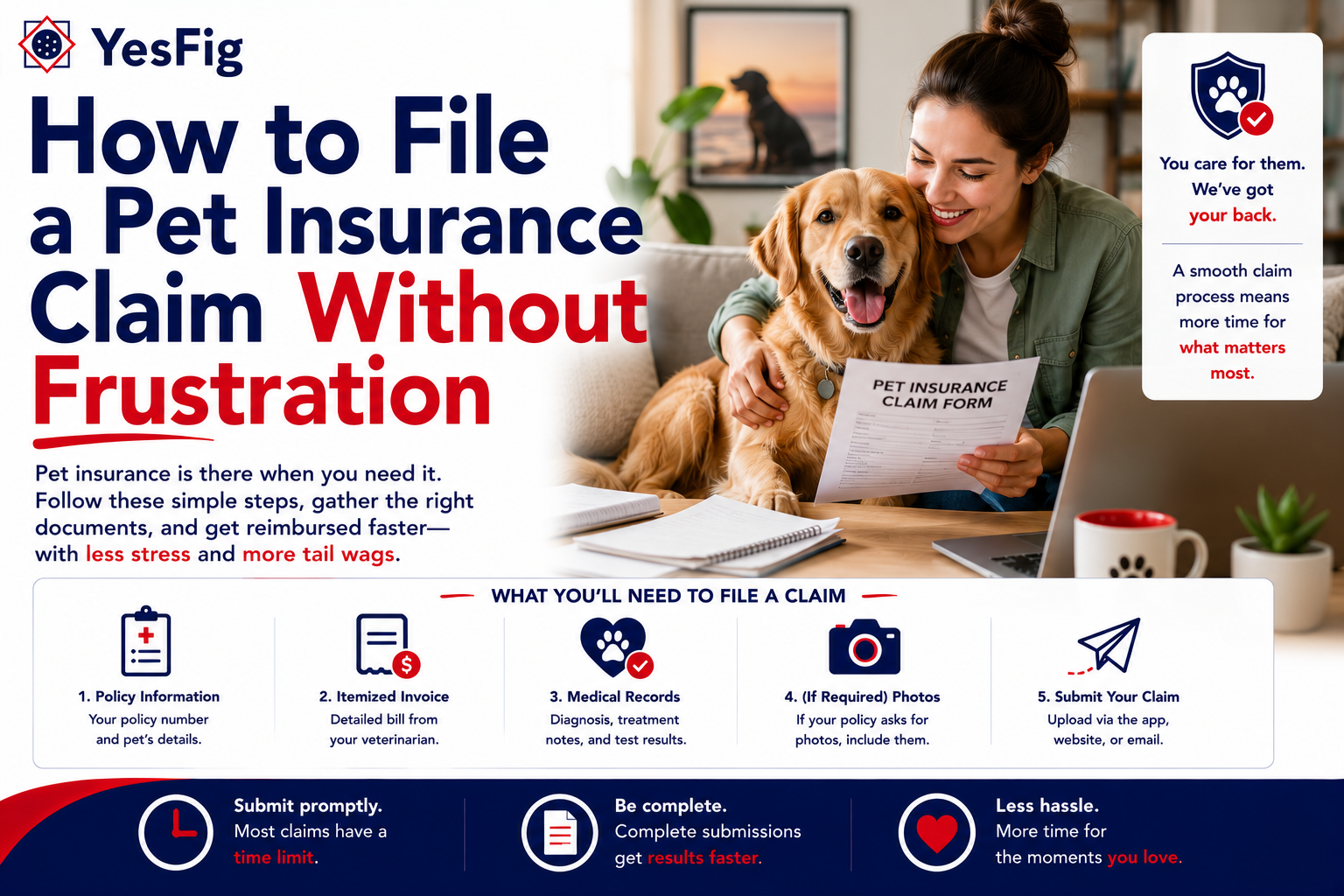
How to File a Pet Insurance Claim Without Frustration
Quick answer: To file a pet insurance claim, pay your vet bill, get an itemized invoice, then submit it with a claim form. For new conditions, include your pet's medical records so the insurer can check for pre-existing issues. You're reimbursed after your deductible, at your reimbursement percentage. Submit promptly to avoid missing the filing deadline.
Table of contents
- Why pet insurance claims feel frustrating
- How to file a pet insurance claim step by step
- The documentation that prevents delays
- How to file a pet insurance claim without delays
- What California pet owners should know
- How to file a claim smoothly every time
- Frequently asked questions
Theo's cat needed treatment in Sacramento, and filing his first pet insurance claim felt more confusing than it should have. He wasn't sure what to submit, why he had to pay the whole bill first, or how long he'd wait to get money back. Those questions are the usual sources of stress, and the good news is that learning to file a pet insurance claim the right way removes almost all of them.
Claims are frustrating mostly when you don't know the process, not because the process is hard. Here's why they feel that way, exactly how to file one, and the habits that keep your reimbursement moving instead of stalling.
Why pet insurance claims feel frustrating
Two things trip people up, and neither is complicated once you understand it. The first is the reimbursement model. Pet insurance works differently from human health insurance: you pay your vet the full bill upfront, then submit a claim and get reimbursed afterward, minus your deductible and at your reimbursement percentage. That upfront cost and the wait for repayment catch people off guard.
The second is delays from missing information. Most claim frustration comes from claims that stall because something was missing or incomplete, then bounce back for more documentation. Knowing what the insurer needs the first time is what turns a multi-week back-and-forth into a quick reimbursement. Both problems are avoidable once you know what to expect.
New to filing pet insurance claims?
That's worth understanding upfront. Fig can walk you through how claims work and show you what Yesfig pet insurance covers, with no pressure to enroll.
How to file a pet insurance claim step by step
The process is straightforward when you take it in order. First, pay your vet at the time of the visit and get an itemized invoice showing each service and charge. This is your core documentation.
Next, complete a claim form, which most modern insurers offer through an app or online portal, so you can often snap a photo of your invoice and submit in minutes. Then submit your claim with the itemized invoice and, when needed, your pet's medical records. Finally, the insurer reviews and reimburses, applying your deductible and reimbursement percentage and paying you by direct deposit or check. That's the whole flow: pay, document, submit, get reimbursed.
The documentation that prevents delays
This is where most stalled claims go wrong, so it's worth getting right. The single most important document is the itemized invoice, meaning a detailed bill listing each service and charge, not just a payment receipt showing a total. Insurers need those line items to process your claim.
For a new condition or your first claim, insurers often request your pet's medical records to confirm the issue isn't pre-existing. Having those ready, or authorizing your vet to send them, prevents a common delay. Finally, fill out the claim form completely, since missing details bounce claims back. Two things won't be covered no matter how you file: pre-existing conditions and claims during your policy's initial waiting period, so knowing your exclusions saves you from filing a claim that can't be paid.
Good to know: Ask your vet for an itemized invoice, not just a payment receipt, at the time of the visit. Insurers need the line-item detail to process your claim, and a summary receipt without it is one of the most common causes of delays.
Want claims that actually go smoothly?
That's the everyday experience with the right setup. Yesfig can set up coverage with a clear, app-based claims process. Compare pet insurance options in a few minutes.
How to file a pet insurance claim without delays
A few habits keep your reimbursement fast. Submit promptly, since most insurers have a filing deadline, often within 90 to 180 days of the service date, so don't sit on a claim. Use the app or portal rather than mail, since digital submission is faster and lets you track your claim's status.
Set up direct deposit so your reimbursement arrives quickly once approved. Know your policy before you file, including your deductible, reimbursement percentage, annual limit, and waiting periods, so you know what to expect and avoid doomed claims. And it's worth asking whether your insurer or vet offers direct payment, where the insurer pays the vet directly, which spares you the upfront cost entirely in some cases. Small steps, but they turn claims from a chore into a formality.
What California pet owners should know
California gives you a useful head start on filing correctly. State law requires pet insurers to clearly disclose your policy's terms, including your deductible, reimbursement, exclusions, and waiting periods, so the details that determine whether a claim goes smoothly are spelled out for you.
That transparency matters here, because California is a high-cost state for veterinary care, which makes the upfront cost of a claim larger and understanding the reimbursement flow more important. Knowing your terms in advance means fewer surprises when you file. Yesfig Insurance, a Los Angeles-based brand of Focus Insurance Group, offers pet coverage across California with those terms laid out up front.
Key takeaways
- Pet insurance is reimbursement-based, so you pay the vet first and get money back.
- The itemized invoice is essential, since a summary receipt causes delays.
- Include medical records for new conditions so the insurer can check for pre-existing issues.
- Submit promptly via app, since insurers have a filing deadline.
How to file a claim smoothly every time
Make it routine with three steps:
- Get the itemized invoice. Ask for a detailed, line-item bill at the visit, not just a receipt.
- Submit promptly through the app. File soon after the visit, attach any medical records, and use your insurer's portal to track it.
- Know your policy and use direct deposit. Understand your deductible, limits, and exclusions, and set up direct deposit for fast reimbursement.
Do that and filing becomes a quick formality rather than a source of stress. For more on getting the most from pet coverage, the Yesfig blog breaks it down without the jargon.
Frequently asked questions
How do I file a pet insurance claim?
Pay your vet bill and get an itemized invoice, then submit it with a completed claim form, usually through your insurer's app or online portal. For new conditions, include your pet's medical records. The insurer reviews the claim, applies your deductible and reimbursement percentage, and pays you by direct deposit or check.
Why do I have to pay the vet before pet insurance reimburses me?
Because pet insurance is reimbursement-based. You pay the full vet bill upfront, then submit a claim to get money back afterward, unlike human health insurance where the provider bills the insurer directly. This means you need to cover the bill upfront while your claim processes. Some insurers offer direct payment options, so it's worth asking.
Why do pet insurance claims get delayed or denied?
The most common reasons are missing documentation, like a summary receipt instead of an itemized invoice, or missing medical records the insurer needs to check for pre-existing conditions. Claims are also denied for pre-existing conditions, services during the waiting period, or non-covered routine care. Submitting complete documentation and knowing your policy prevents most issues.
How long do I have to file a pet insurance claim?
Most insurers set a filing deadline, often within 90 to 180 days of the date of service, though it varies by company, so check your policy. Submitting promptly is always best, since it avoids the deadline entirely and gets your reimbursement started sooner. Don't let invoices sit for weeks before filing.
What documents do I need to file a pet insurance claim?
You'll need an itemized invoice from your vet listing each service and charge, and a completed claim form. For a new condition or your first claim, insurers often request your pet's medical records to rule out pre-existing conditions. Having these ready, or authorizing your vet to send records, keeps your claim moving without delays.
Filing a pet insurance claim is far less stressful once you know the routine. Theo got an itemized invoice, submitted it through his insurer's app with his cat's records attached, and had his reimbursement in hand without a single follow-up. Understand the process and keep your documentation ready, and claims become a quick step rather than a headache.
Ready for coverage with easy claims?
Get a pet insurance quote in minutes with Yesfig. Coverage in California starts at $9/mo, and a licensed advisor can set up a plan with a clear, straightforward claims process. Protect your pet, and file with confidence.
About the Author

Mathew Bahadori
CEO, Yesfig Insurance
Leading the company’s mission to make insurance more accessible, modern, and customer-focused. With a passion for innovation and personalized service, he continues to help individuals and families find smarter coverage solutions for life, auto, home, health, and business insurance.