
July 30, 2026
How to Compare Group Health Quotes Across Carriers
The cheapest group health quote isn't always the best. Learn how to compare group health quotes across carriers on total cost, networks, and coverage.
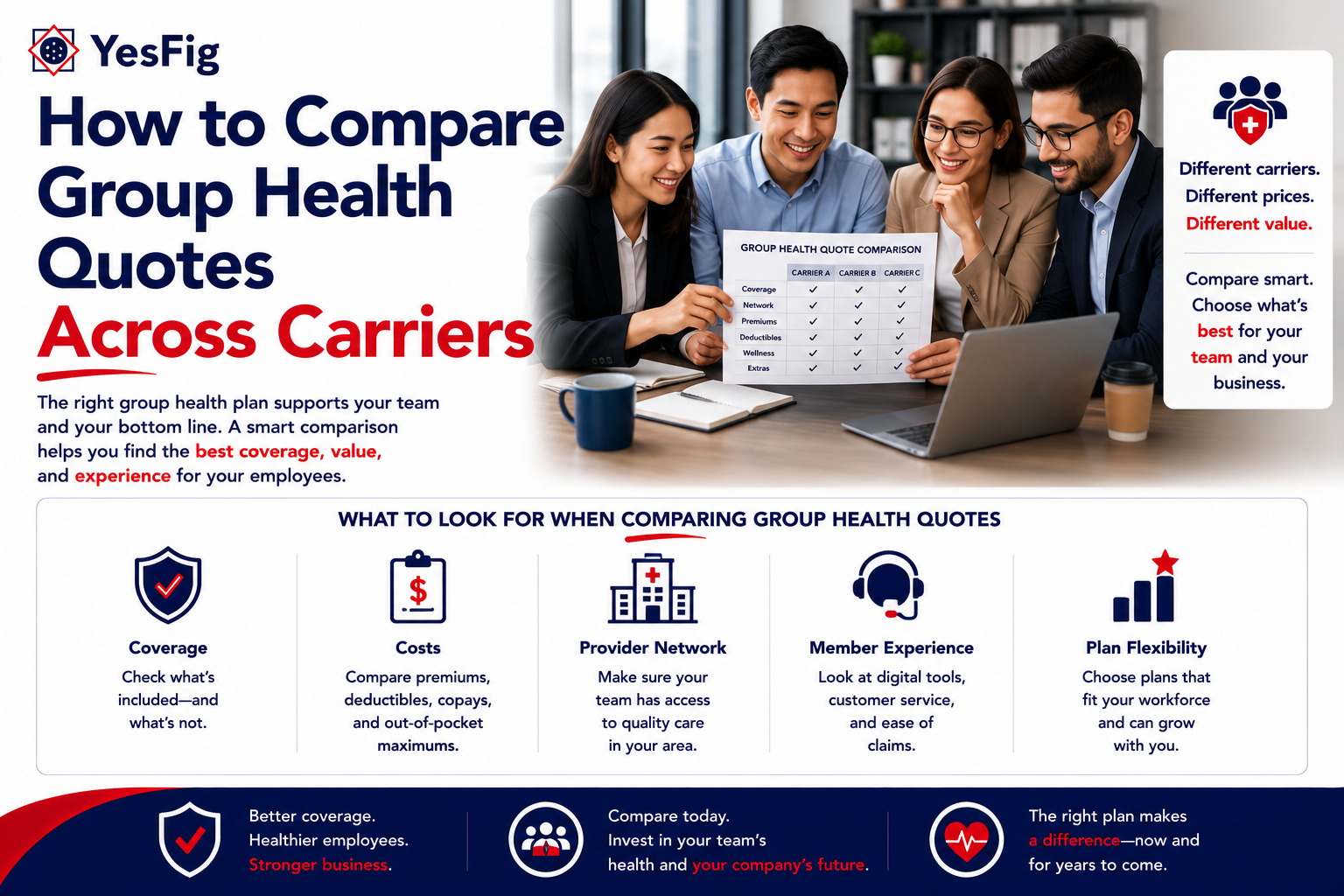
How to Compare Group Health Quotes Across Carriers
Quick answer: To compare group health quotes across carriers, look past the premium to total cost, meaning deductibles, copays, and out-of-pocket maximums, plus the employer and employee split. Check that your team's doctors are in each carrier's network and their medications are covered. Compare similar plan tiers side by side, and factor participation and contribution requirements.
Table of contents
- Why the cheapest group health quote can cost the most
- What to look at when you compare group health quotes
- Networks and formularies decide the real value
- How to compare group health quotes fairly
- What California employers should know
- How to run a smart group health comparison
- Frequently asked questions
Lorena runs a 12-person design agency in Fresno, and when the group health quotes came in, her eye went straight to the lowest monthly premium. It looked like the obvious winner. Then she looked closer and realized that "cheap" plan carried a high deductible and a narrow network that left out two of her team's doctors. Learning how to compare group health quotes properly is what separates a real bargain from one that quietly costs your employees more.
Premium is the easiest number to compare and the most misleading one on its own. Here's what actually matters across carriers, how to compare them fairly, and the details that decide whether a plan is a good value for your team.
Gathering quotes for your team?
That's the right moment to compare carefully. Fig can explain what to weigh across carriers and show you what group health coverage looks like, with no pressure.
Why the cheapest group health quote can cost the most
The trap is treating the monthly premium as the whole cost. Two plans with similar premiums can shift very different amounts onto your business and your employees through deductibles, copays, coinsurance, and out-of-pocket maximums. A low premium often means high cost-sharing, so employees pay more every time they use the plan.
That matters for more than money. A plan your team can't afford to use, or one that excludes their doctors, is a benefit in name only. For Lorena, the cheapest quote would have frustrated her staff and undercut the whole point of offering coverage. The real question isn't which quote is lowest, it's which delivers the most value for what you and your employees will actually pay.
What to look at when you compare group health quotes
Build your comparison around a few dimensions, not one. Start with cost, but the full picture: the premium, how it splits between employer and employee, and the plan's deductibles, copays, and out-of-pocket maximums that determine what using it costs.
Then weigh the rest. Provider networks determine whether your employees can keep their doctors and hospitals. Prescription coverage varies by carrier, so how each covers the medications your team needs matters. Plan types, like HMO versus PPO, differ in flexibility and referrals. And extras, such as telehealth, mental health coverage, and member support, add real value. Comparing an individual plan landscape works similarly, but group coverage adds the employer contribution and participation layer on top.
Networks and formularies decide the real value
Two factors quietly make or break a plan, and price can't fix either. The first is the network. A cheaper plan with a narrow network that excludes the doctors and hospitals your employees rely on is a false economy, because your team either can't use it or pays out-of-network rates. Check each carrier's network against the providers your people actually see.
The second is the formulary, each carrier's list of covered drugs and their tiers. A medication that's affordable on one carrier's plan can be expensive on another's, even at the same metal tier. If employees depend on specific prescriptions, comparing formularies across carriers can reveal a real difference in value. A quick, anonymous survey of which doctors and medications matter to your team makes this comparison far more accurate.
Good to know: Small-group premiums are based on your employees' ages, location, and family size, not their health. Carriers can't deny your group or raise your rate because someone has a medical condition, so an employee's health won't drive up your quote.
Want quotes you can actually compare?
That's what a clear comparison delivers. Yesfig can provide a group quote you can weigh against others on total cost, network, and coverage. Explore group health options in a few minutes.
How to compare group health quotes fairly
An apples-to-apples comparison is the only fair one. Compare similar plan designs across carriers, a Silver PPO against a Silver PPO, not a bare-bones plan from one carrier against a rich plan from another. Matching plan tiers and types is what makes the premiums meaningful.
Two practical points make your quotes accurate and comparable. First, provide each carrier the same census data, meaning your employees' ages, count, and location, so the quotes reflect the same group. Second, factor participation and contribution requirements: carriers typically require a minimum share of eligible employees to enroll and a minimum employer contribution toward premiums, and these can differ by carrier. A quote you can't qualify for isn't really a quote, so confirm you meet each carrier's requirements. A broker can gather multiple carrier quotes for you, which simplifies the whole comparison.
What California employers should know
California gives small employers helpful options. Covered California for Small Business is the state's group marketplace, and very small employers who buy through it may qualify for a federal small business health care tax credit if they have fewer than 25 employees, pay below a wage threshold, and contribute at least half of premiums. Thresholds change, so confirm current rules.
A few more California specifics matter when you compare. The state bans tobacco surcharges, so that factor won't vary your quotes here. California also offers a special enrollment window each year that relaxes minimum participation requirements, which helps groups that can't hit the usual threshold. And small-group coverage is community-rated, so employee health never affects your rate. Yesfig Insurance, a Los Angeles-based brand of Focus Insurance Group, offers group health across California.
Key takeaways
- Compare total cost, not premium, since cost-sharing shifts real dollars to employees.
- Networks and formularies decide whether a plan is usable, and price can't fix them.
- Compare similar plan tiers across carriers for a fair, apples-to-apples view.
- Factor participation and contribution requirements, since they affect eligibility.
How to run a smart group health comparison
A structured comparison takes the guesswork out. Here's the approach in three steps:
- Gather matched quotes. Get quotes for similar plan tiers and types across carriers, using the same census data for each.
- Weigh total cost and coverage. Compare premiums alongside deductibles and out-of-pocket costs, and check networks and drug formularies against your team's needs.
- Factor your employees and requirements. Consider what your staff actually needs, and confirm you meet each carrier's participation and contribution rules.
Do that and you choose real value, not just the lowest sticker price. For more on coverage and benefits, the Yesfig blog breaks it down without the jargon.
Frequently asked questions
How do I compare group health insurance quotes?
Compare total cost, not just premium, since deductibles, copays, and out-of-pocket maximums determine what using a plan costs. Check each carrier's provider network and drug formulary against your team's needs, weigh plan types like HMO versus PPO, and compare similar plan tiers side by side. Also factor the employer and employee cost split.
Should I choose the group health plan with the lowest premium?
Not automatically. A low premium often comes with high deductibles and cost-sharing, or a narrow network that excludes your employees' doctors, so it can cost more overall or go unused. Weigh the premium against total cost, network adequacy, and prescription coverage. The best value balances affordable cost with a plan your team can actually use.
What should I look for in a group health plan besides price?
Provider networks, prescription drug coverage, plan design, and plan type all matter. Confirm your employees' doctors and hospitals are in network and their medications are covered. Consider deductibles and out-of-pocket maximums, HMO versus PPO flexibility, and extras like telehealth and mental health coverage. Carrier service and ease of administration matter too.
Can a carrier raise my group health rate because an employee is sick?
No. Small-group health coverage is community-rated, so premiums are based on your employees' ages, location, and family size, not their health. A carrier cannot deny your group or increase your rate because an employee has a medical condition or files claims. This protection applies to ACA-compliant small-group plans.
How do I get group health quotes from multiple carriers?
You can work with a broker, who gathers quotes from several carriers at once, request quotes directly from carriers, or use your state's small business marketplace, such as Covered California for Small Business. Provide the same census data, your employees' ages, count, and location, to each source so the quotes are comparable.
Comparing group health quotes well is about looking past the number that's easiest to compare. Lorena lined up matched plans across carriers, checked that her team's doctors were in network, and chose a plan that cost a little more but her staff could actually use. Weigh total cost, coverage, and your employees' needs, and you'll pick a plan that's a genuine value rather than a false bargain.
Ready to compare a group plan for your team?
Get a group health quote for your business with Yesfig, available across California. Plans are priced around your team, and a licensed advisor can help you weigh it against other carriers on total cost, network, and coverage. A benefit your people value, chosen with clear eyes.
About the Author

Mathew Bahadori
CEO, Yesfig Insurance
Leading the company’s mission to make insurance more accessible, modern, and customer-focused. With a passion for innovation and personalized service, he continues to help individuals and families find smarter coverage solutions for life, auto, home, health, and business insurance.