
July 30, 2026
How to Add a New Driver to Your Auto Policy
Got a new teen driver or spouse? Learn how to add a driver to car insurance, who must be added, and how it changes your premium in California.
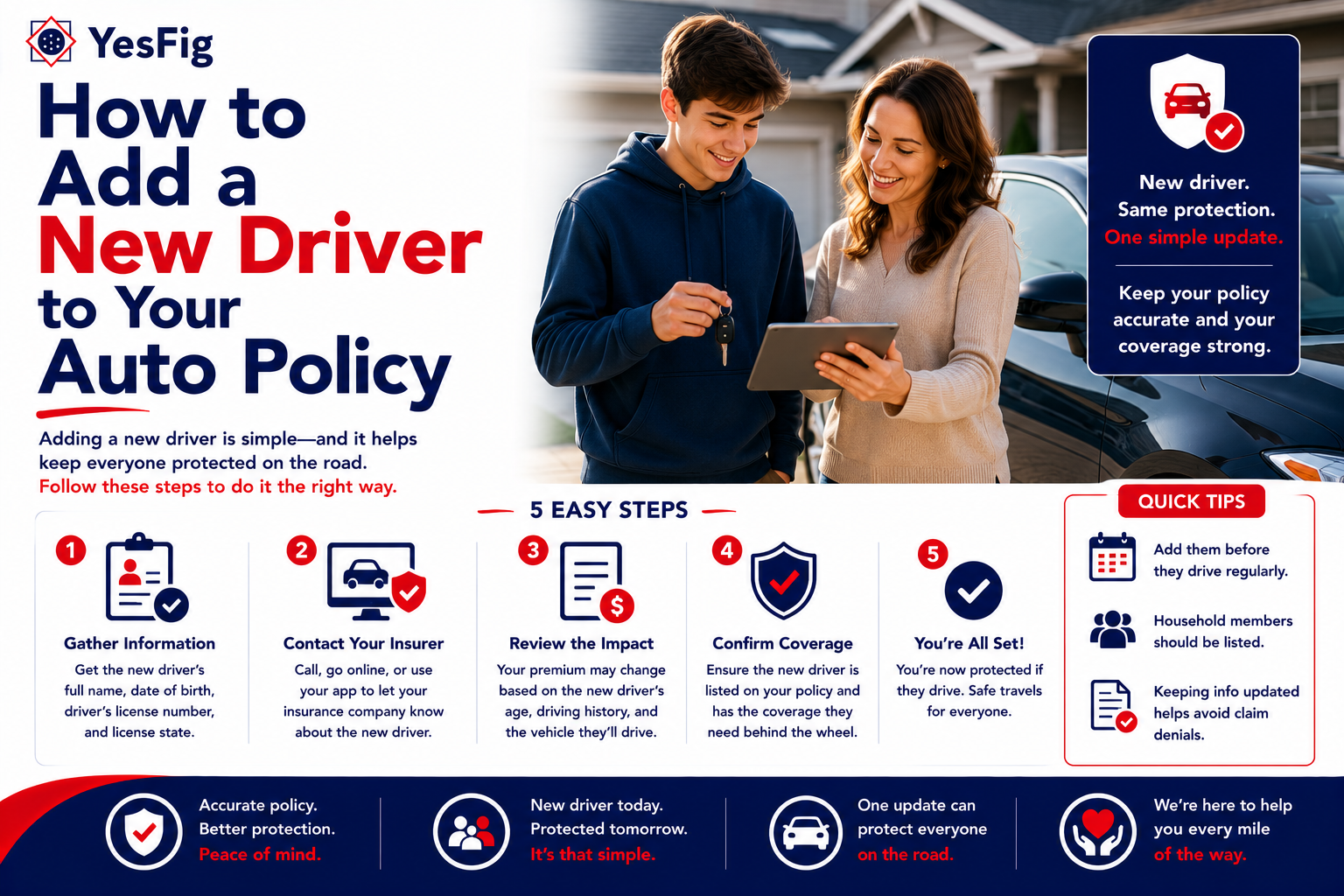
How to Add a New Driver to Your Auto Policy
Quick answer: Add anyone who lives in your household and regularly drives your car, like a new teen driver or spouse. Give your insurer the driver's name, date of birth, license number, and driving history, and your policy is re-rated. A teen raises your premium the most, while a clean-record adult adds little. Add regular drivers promptly to avoid a denied claim.
Table of contents
- Who needs to be on your auto policy
- When you must add a driver to car insurance
- How adding a driver changes your premium
- How to add a driver to car insurance
- What California drivers should know
- How to add a driver the right way
- Frequently asked questions
Tanya's teenage son just got his license in Sacramento, and she wasn't sure whether she needed to add him to her policy right away or whether he was already covered under hers. It's a common question with an important answer, because who's listed on your policy determines who's actually covered. Knowing when and how to add a driver to car insurance protects both your new driver and your own claims.
Getting it right is simple once you know the rules. Here's who belongs on your policy, why leaving someone off is risky, how a new driver affects your premium, and exactly how to add them.
Who needs to be on your auto policy
The general rule is straightforward: anyone who lives in your household and is of driving age, or who regularly drives your car, should be on your policy. That covers a teen who just got licensed, a new spouse, an adult child living at home, and a roommate who uses your car often.
There's a distinction worth knowing. A friend who borrows your car once in a while is usually covered under permissive use without being added, since occasional use is expected. But someone who drives your car regularly, especially a household member, needs to be listed. Insurers generally want to know about all drivers in your home, so they can price your policy for who's actually behind the wheel. A California car insurance policy should reflect everyone who regularly drives.
When you must add a driver to car insurance
A few life events are your cue to update your policy. A new teen driver getting their license is the most common, and the most important to add promptly. Marriage means adding your spouse, and a new household member who drives your car, like an adult child or a roommate, should be added too.
The reason to act quickly is real. If a household member drives your car and isn't on your policy, a claim after their accident can be denied or reduced, and you could be left paying. For Tanya, letting her son drive unlisted could turn a fender-bender into an uncovered loss. Adding regular drivers isn't just paperwork, it's what keeps your coverage valid.
Good to know: If a household member drives your car regularly and isn't listed on your policy, an accident could mean a denied or reduced claim. Insurers treat an undisclosed regular driver as hidden risk, so add anyone in your household who drives your car.
How adding a driver changes your premium
Your premium shifts based on the new driver's risk, not a flat fee. The biggest factor is their experience and record. A teen driver raises your premium significantly, since new drivers are statistically far more likely to have an accident, and that's the increase most parents brace for.
Other drivers affect it differently. An experienced adult with a clean record adds relatively little, and in some cases adding a low-risk driver, like a spouse with a good history, can even slightly lower your rate. A driver with violations or at-fault accidents raises it more. One money-saver worth knowing: adding a teen to your existing policy is usually cheaper than buying them a separate one, since they benefit from your policy's discounts.
How to add a driver to car insurance
The process itself is quick. Contact your insurer by phone, online, or through their app, and provide the new driver's information: their name, date of birth, driver's license number, and driving history. The insurer then re-rates your policy to include them and gives you an updated premium.
Do it promptly, as soon as the driver has their license or joins your household, rather than after they've been driving uninsured. While you're at it, ask about discounts that can offset a teen's cost, like good-student and driver-training discounts, and sometimes a telematics program that rewards safe driving. If a household member has a poor record and drives their own insured car, some states let you formally exclude them from your policy, though rules on this vary, so ask your insurer what's allowed where you live. You can review a California car insurance policy and add drivers with the right discounts applied.
What California drivers should know
California has specific rules worth knowing. The state expects you to list household drivers on your policy, and under Proposition 103, adding a driver re-rates your policy around that person's driving record, mileage, and experience, the mandatory factors California requires.
California is also restrictive about excluding drivers. Unlike many states that freely allow a named-driver exclusion, California generally requires that permissive and household drivers be covered, so excluding someone the way other states permit often isn't an option here, and you'd typically list and rate them instead. Confirm the specifics with your insurer. Teen driver discounts, like good-student and driver-training credits, are available to help. Yesfig Insurance, a Los Angeles-based brand of Focus Insurance Group, offers auto coverage across California.
Key takeaways
- Add anyone in your household of driving age or who regularly drives your car.
- Leaving a regular driver off risks a denied claim after an accident.
- A teen raises your premium most; a clean-record adult adds little.
- In California, household drivers generally must be listed, not excluded.
How to add a driver the right way
Keep it simple with three steps:
- Add anyone who regularly drives. List household members of driving age and anyone who uses your car often, especially a new teen or spouse.
- Gather their information. Have their name, date of birth, license number, and driving history ready for your insurer.
- Ask about discounts. Request good-student, driver-training, and multi-driver discounts to offset the added cost, especially for a teen.
Do that and your coverage matches who's actually driving, with no gaps or surprises. For more on managing your coverage, the Yesfig blog breaks it down without the jargon.
Frequently asked questions
Who do I need to add to my car insurance?
Add anyone who lives in your household and is of driving age, or who regularly drives your car. That includes a newly licensed teen, a spouse, an adult child at home, and a roommate who uses your car often. Occasional borrowers are usually covered under permissive use, but regular household drivers should be listed.
Do I have to add my teenager to my car insurance?
Yes, once they're licensed and driving your car. A teen driver in your household needs to be on your policy, and adding them promptly keeps your coverage valid. Leaving a licensed household driver off can lead to a denied claim after an accident. Adding a teen to your policy is also usually cheaper than a separate one.
How much does adding a driver raise my car insurance?
It depends on the driver's risk. A teen or inexperienced driver raises your premium significantly, since they're statistically higher risk. An experienced adult with a clean record adds relatively little, and a low-risk driver like a spouse can sometimes lower your rate. A driver with violations or accidents increases it more.
How do I add a driver to my car insurance policy?
Contact your insurer by phone, online, or through their app, and provide the driver's name, date of birth, license number, and driving history. The insurer re-rates your policy and gives you an updated premium. Do it promptly once the person is licensed or joins your household, and ask about any discounts that apply.
Can I exclude a driver in my household from my policy?
It depends on your state. Some states allow a named-driver exclusion, which formally removes a household member from coverage, often used when they have a poor record and their own insurance. However, California is restrictive about this and generally requires household and permissive drivers to be covered, so listing them is usually the route. Confirm with your insurer.
Adding a driver is really about keeping your coverage honest so it actually protects everyone who drives your car. Tanya added her son right after he got his license, applied a good-student discount to soften the cost, and knew he was fully covered from day one. List everyone who regularly drives, gather their details, and ask about discounts, and your policy stays valid and complete.
Ready to add a driver to your coverage?
Get a car insurance quote in minutes with Yesfig. Coverage in California starts at $30/mo, and a licensed advisor can add your new driver, apply every discount they qualify for, and keep your coverage complete. Everyone who drives, properly covered.
About the Author

Mathew Bahadori
CEO, Yesfig Insurance
Leading the company’s mission to make insurance more accessible, modern, and customer-focused. With a passion for innovation and personalized service, he continues to help individuals and families find smarter coverage solutions for life, auto, home, health, and business insurance.