
June 1, 2026
How Much Does Pet Insurance Actually Cost?
How much does pet insurance cost in California? Most owners pay $20 to $50 a month for dogs, less for cats. See what drives the price and how to save.
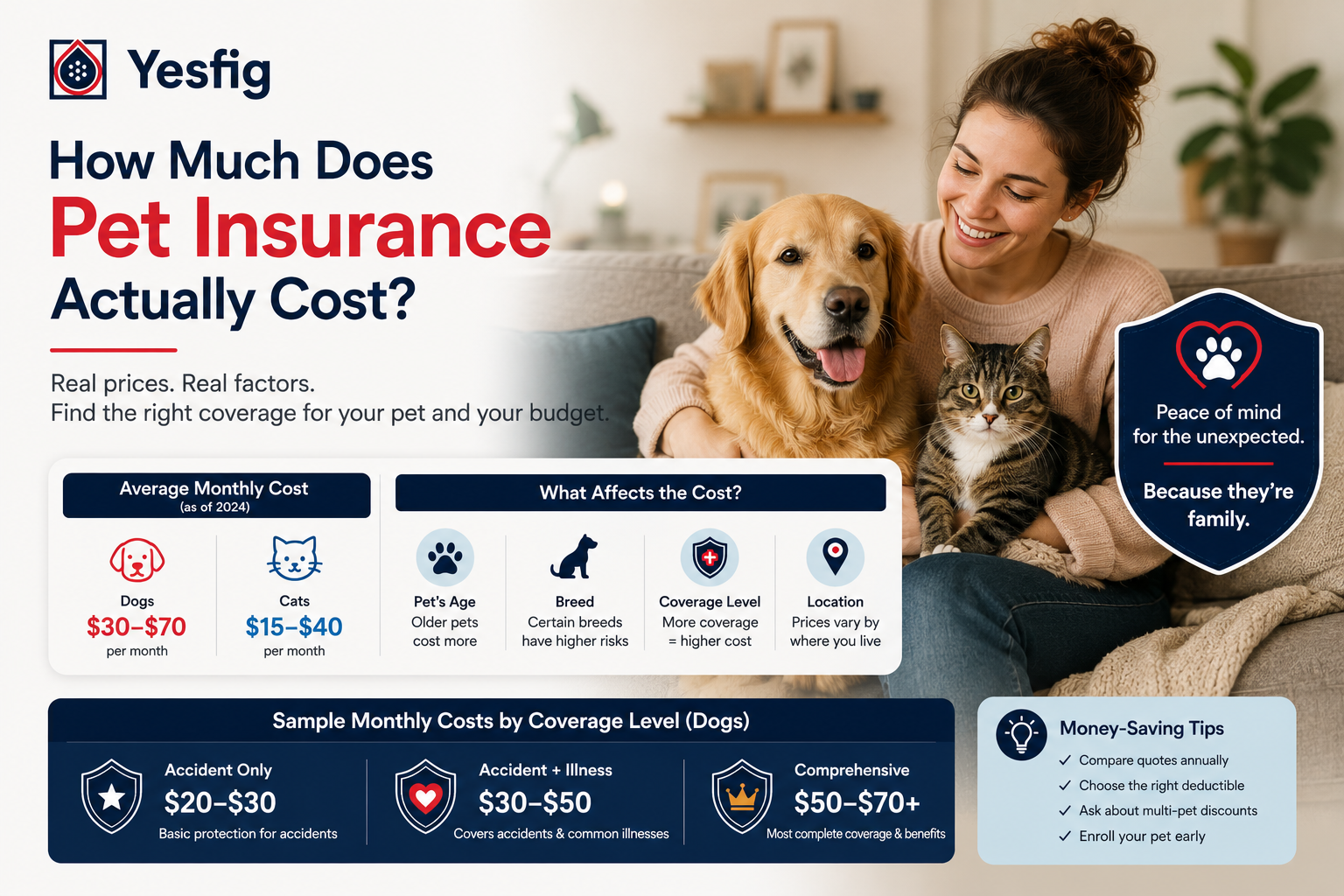
How Much Does Pet Insurance Cost in California?
Quick answer: In California, most pet owners pay about $20 to $50 a month for dog insurance and $10 to $30 a month for cats. Accident-only plans cost less, comprehensive plans cost more. Your exact price depends on your pet's species, breed, age, and where you live. Plans start around $9 a month.
Table of contents
- What does pet insurance cost on average?
- What affects your pet insurance cost?
- Dog insurance vs. cat insurance: why the gap?
- What you actually get for the money
- How to lower your pet insurance cost
- Is pet insurance worth the cost?
- Frequently asked questions
Dana just brought home Biscuit, a rescue lab with a lot of energy and no off switch. Somewhere between the first vet visit and the new dog bed, the question landed: what happens to the budget if Biscuit eats something he shouldn't? That's usually when pet insurance enters the picture, along with a confusing spread of prices.
Quotes can swing from a few dollars to more than sixty a month, so it's fair to wonder what's normal. Here's the honest breakdown of pet insurance cost in California, in real numbers, so you can budget the way Dana is trying to and pick a plan that fits your pet.
What does pet insurance cost on average?
Most California pet owners pay between $20 and $50 a month to insure a dog, and roughly $10 to $30 a month for a cat. Accident-only plans sit at the low end. Comprehensive accident-and-illness plans run higher, especially for breeds prone to health issues.
Industry data backs that spread. The North American Pet Health Insurance Association (NAPHIA) puts the national average for accident-and-illness coverage near $53 a month for dogs and about $32 a month for cats. California tends to run a touch above average, because vet care here costs more than in many states.
Those are averages, not your quote. A young mixed-breed cat in Fresno and an older purebred dog in San Francisco can be priced very differently. Yesfig Insurance, a brand of Focus Insurance Group, lists pet plans starting around $9 a month, which is the floor, not the typical full-coverage price.
Good to know: Veterinary costs in California run higher than the national average, which nudges premiums up. Same plan, pricier zip code.
New to all this? Start with the basics
Pet insurance has its own vocabulary, and guessing gets expensive. See how pet coverage works and let Fig explain the parts in plain English before you compare a single quote.
What affects your pet insurance cost?
Five things move your pet insurance cost more than anything else, and knowing them helps you read a quote instead of just reacting to the number.
- Species and breed: Dogs cost more than cats, and large or purebred dogs like Great Danes and Bulldogs cost more than mixed breeds because of known health risks.
- Age: Premiums climb as your pet ages, since older animals file more claims. A puppy is the cheapest version of your pet to insure.
- Where you live: Vet prices in Los Angeles and the Bay Area push premiums above what you'd pay in a smaller California town.
- Coverage type: Accident-only is the cheapest tier, accident-and-illness costs more, and wellness add-ons cost more still.
- Deductible and reimbursement: A higher deductible lowers your monthly cost, and a lower reimbursement percentage does the same.
Dog insurance vs. cat insurance: why the gap?
Cats are cheaper to insure than dogs, and it comes down to risk. Dogs get into more trouble, literally. They eat socks, tear ligaments, and tangle with other dogs, so claims run higher and more often.
Breed matters inside each species too. A French Bulldog can cost noticeably more to insure than a mixed-breed pup because of well-documented breathing and spine issues. Cats skew lower across the board, though senior cats and a few breeds carry higher kidney and dental risk.
If you're also sorting out renters or homeowners coverage, keeping your policies in one place can make the whole budget easier to see and manage.
Key takeaways
- Expect roughly $20 to $50 a month for dogs and $10 to $30 for cats in California.
- Breed, age, and location drive most of the price difference.
- Accident-only is the budget pick; accident-and-illness is the common choice.
- A higher deductible lowers your monthly premium.
Already paying for a plan? See if it still fits
Premiums creep up at renewal, and coverage you picked two years ago may not match your pet now. Review your pet insurance side by side with Yesfig and find out whether you're overpaying for what you've already got.
What you actually get for the money
Price only makes sense next to coverage, so here's what each tier actually buys. Accident-only plans cover the emergencies: a broken leg, a swallowed toy, a run-in with a car. They're the cheapest option and a solid floor when budget is tight.
Accident-and-illness plans add the big stuff, like cancer, infections, and chronic conditions, which is where most large vet bills come from. This is the tier most owners choose, and it's the one that protects you against the bills that actually hurt.
Some insurers offer wellness add-ons for routine care like vaccines and checkups. Those raise your monthly cost and mostly smooth out predictable spending rather than protect against surprises. The Yesfig insurance blog breaks down the coverage tiers in more depth if you want to compare them line by line.
How to lower your pet insurance cost
You have real control over the number. Here's a simple plan that works for most owners:
- Insure early. Premiums are lowest when your pet is young and healthy, before any condition can be labeled pre-existing.
- Pick the right tier, not the biggest one. Match coverage to your pet's real risk instead of buying every available add-on.
- Adjust your deductible. A higher deductible trims the monthly premium, as long as you can cover a one-time chunk if something happens.
Comparing carriers is the other big lever. The same dog can get very different quotes from different insurers, so getting a pet insurance quote from more than one place is some of the easiest money you'll ever save.
Is pet insurance worth the cost?
For most owners, yes, and the math is simple. A single emergency, like a swallowed object that needs surgery, can run $3,000 to $5,000 in California. Insurance turns that into a predictable monthly line item you barely notice on your statement.
Without it, a sudden bill can force a hard choice between your savings and your pet, and that's exactly the situation a policy exists to prevent. The Los Angeles-based team at Yesfig built its pet coverage around that one job: making the unexpected affordable.
With a plan in place, the worried-budget version of Dana relaxes. Biscuit eats the occasional sock, the vet handles it, and the bill is mostly covered. That's the real payoff: not having to think about it.
Frequently asked questions
How much does pet insurance cost per month in California?
Most California owners pay about $20 to $50 a month for a dog and $10 to $30 for a cat, depending on breed, age, and coverage. Accident-only plans cost less, and comprehensive accident-and-illness plans cost more. Plans through Yesfig start around $9 a month.
Does pet insurance cover pre-existing conditions?
No. Almost no pet insurer covers conditions your pet already had before the policy started, which is why buying early matters. A condition diagnosed before coverage begins stays excluded. Insuring a young, healthy pet locks in lower rates and sidesteps the pre-existing problem entirely.
Is pet insurance worth it for an older pet?
It can be, though premiums are higher and more conditions may count as pre-existing. For senior pets, accident coverage often still pays off, since emergencies are unpredictable at any age. Compare a few quotes and weigh the monthly cost against a likely $3,000-plus emergency bill.
What does pet insurance not cover?
Standard exclusions include pre-existing conditions, cosmetic procedures, and breeding costs. Routine care like vaccines is only covered if you add a wellness plan. Read the policy details so you know your deductible, reimbursement rate, and any breed-specific limits before you buy.
Is cat insurance cheaper than dog insurance?
Usually, yes. Cats file fewer and smaller claims than dogs, so their premiums run lower, often $10 to $30 a month in California. Dogs cost more because they get injured more often, and some breeds carry known health risks that raise the price.
The short version
Pet insurance cost isn't really one number, it's a range you can steer. Know what drives the price, match the plan to your pet, and you'll land somewhere that protects both your dog or cat and your bank account.
Ready to protect your pet?
Get a pet insurance quote in minutes with Yesfig. Coverage starts around $9 a month, and a licensed advisor is there if you'd rather talk it through with a human.
About the Author

Mathew Bahadori
CEO, Yesfig Insurance
Leading the company’s mission to make insurance more accessible, modern, and customer-focused. With a passion for innovation and personalized service, he continues to help individuals and families find smarter coverage solutions for life, auto, home, health, and business insurance.