
June 8, 2026
How Much Auto Insurance Do You Actually Need?
How much auto insurance do you need in California? See the 2026 state minimums, why they fall short, and the coverage limits that actually protect you.
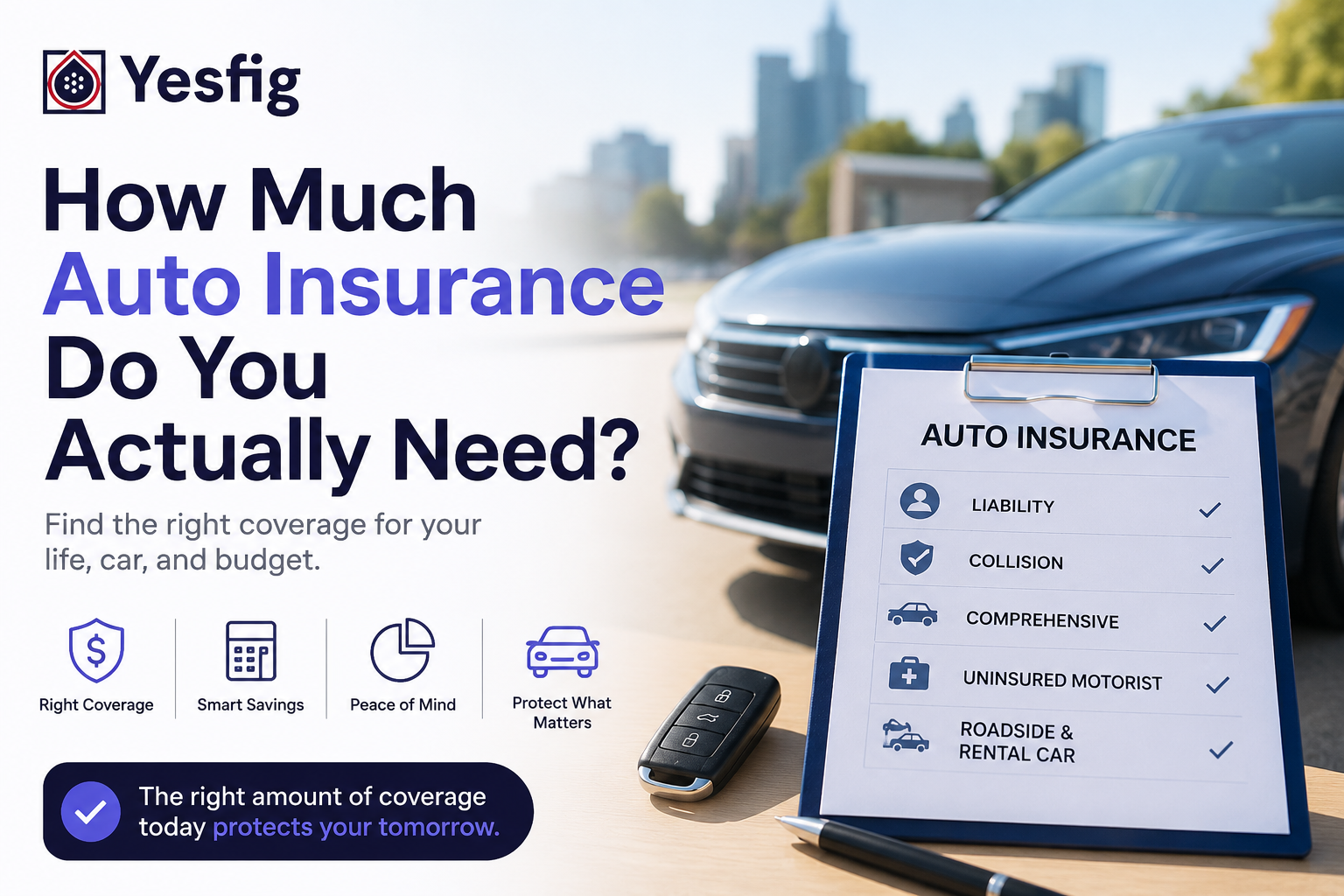
How Much Auto Insurance Do You Actually Need?
Quick answer: California requires at least 30/60/15 in liability coverage as of 2026, but that minimum rarely covers a serious crash. Most drivers are better protected with higher liability limits (commonly around 100/300/100), uninsured motorist coverage, and collision and comprehensive if the car is financed or still worth protecting.
Table of contents
- What auto insurance actually covers
- California's minimum coverage, and why it's not enough
- How much auto insurance do you need? A simple way to decide
- The coverage limits most California drivers should consider
- How much auto insurance do you need if you lease or finance a car?
- When to revisit your coverage
- Frequently asked questions
Carla in Long Beach is renewing her auto policy, and the cheapest quote on the screen is the bare state minimum. It's tempting. But she's also got a paid-off Civic, a little savings, and a nagging feeling that "cheapest" and "enough" aren't the same thing. If that's you, the real question isn't which quote is lowest. It's how much auto insurance do you need to protect what you've actually built.
The honest answer: more than the minimum, less than you fear, and the right amount depends on you. Here's how to land on a number you can trust.
What auto insurance actually covers
Before you pick a number, it helps to know what each part of a policy does. An auto insurance policy is really a bundle of separate coverages, and you decide how much of each to carry.
- Liability pays for injuries and damage you cause to others. It's the part the state requires, and it's split into bodily injury and property damage.
- Collision pays to repair or replace your car after a crash, no matter who's at fault.
- Comprehensive covers non-crash damage: theft, fire, vandalism, a tree limb, a deer.
- Uninsured/underinsured motorist (UM/UIM) protects you when the other driver has no insurance or not enough.
Liability is about protecting your assets from other people's claims. Collision and comprehensive are about protecting your own car. Most people need a mix, and the smart move is matching each coverage to your real risk.
Not sure which coverages you even need?
Totally normal, and a good place to start. Fig can break down what each part of an auto policy does in plain English, so you're choosing on purpose instead of guessing. Get the basics on auto insurance in California before you settle on a number.
California's minimum coverage, and why it's not enough
California law sets a floor for liability coverage, and it's lower than most people realize. Carrying only the minimum is legal, but it leaves you exposed the moment a crash gets serious.
Good to know: As of 2026, California requires minimum auto liability of 30/60/15: $30,000 for injury to one person, $60,000 per accident, and $15,000 for property damage. Those limits rose from the old 15/30/5 in 2025, but they still run out fast in a real collision.
Think about what a single hospital stay or a totaled SUV costs today. If you injure someone and the bills pass your $30,000 per-person limit, you can be personally on the hook for the rest. That's the gap the minimum quietly leaves open.
How much auto insurance do you need? A simple way to decide
You don't need a spreadsheet. You need to answer three questions in order. This is the path Carla worked through before she clicked renew.
- Add up what you'd have to protect. Savings, home equity, future wages. Set your liability limits high enough to shield it, because that's what a lawsuit comes after.
- Add uninsured/underinsured motorist coverage. Another driver's lack of insurance shouldn't become your financial problem.
- Decide on collision and comprehensive based on your car's value and whether you still owe money on it.
Three questions, and the work is mostly being honest about the first one.
Key takeaways
- The state minimum is the legal floor, not the safe amount.
- Liability protects your assets, so carry more than the minimum if you have anything to lose.
- Uninsured motorist coverage matters in California, where plenty of drivers carry none.
- If you lease or finance, collision, comprehensive, and gap coverage are usually worth it.
The coverage limits most California drivers should consider
If the minimum is the floor, what's a sensible target? Many insurance pros point to 100/300/100 as a strong baseline: $100,000 per person, $300,000 per accident, and $100,000 in property damage. It costs more than 30/60/15, but usually far less than people expect, and it changes what a bad day can do to you.
Uninsured motorist coverage deserves a real look in California. Industry estimates regularly put the state among those with the most uninsured drivers on the road. If one of them hits you, UM coverage is what stands between you and your own savings.
One more lever: bundling. Pairing your car policy with a renters insurance policy or homeowners coverage often trims both premiums, which can free up room to carry higher, safer limits for about the same total spend.
Think you might be paying for the wrong coverage?
It happens a lot. Yesfig reviews your current auto policy, maps where you're over- or under-covered, and shows you where the money is actually going. Compare your auto coverage in a few minutes and see if your limits match your life.
How much auto insurance do you need if you lease or finance a car?
This is where the answer shifts. If you lease or finance, your lender almost always requires collision and comprehensive, because they're protecting their stake in the car, not just yours. Skipping them usually isn't an option.
The piece people miss is gap insurance. A new car loses value the moment you drive it off the lot, so if it's totaled early in the loan, your payout may be less than what you still owe. Gap coverage pays that difference, and it's worth it on most newer financed vehicles.
If your car is paid off and older, the math flips. Once the car's value drops low enough, paying for collision can cost more over time than the car would ever pay back. At that point, dropping it can be a reasonable call.
When to revisit your coverage
Your coverage shouldn't sit untouched for years. The right amount changes as your life does. It's worth a quick review after any of these:
- You pay off the car or buy a new one
- Your savings or home equity grow (more to protect means more liability)
- You move, change your commute, or add a driver
- Your renewal premium jumps for no obvious reason
A check once a year is plenty. If anything looks off, you can adjust it directly, or talk to a licensed Yesfig advisor who can help you set limits that fit. Yesfig Insurance, a brand of Focus Insurance Group based in Los Angeles, writes auto coverage for drivers in California and five other states, so the guidance stays grounded in your actual rules.
Frequently asked questions
Is the state minimum auto insurance enough in California?
For most drivers, no. The 2026 minimum of 30/60/15 keeps you legal, but a serious crash can blow past those limits quickly, leaving you to pay the rest out of pocket. If you have savings, wages, or a home to protect, higher liability limits are usually the safer choice.
How much liability coverage should I have?
Enough to cover what you could lose in a lawsuit. Many experts suggest at least 100/300/100, meaning $100,000 per person, $300,000 per accident, and $100,000 in property damage. The more assets you have, the higher your limits should climb, since liability is what shields your savings and future income.
What is uninsured motorist coverage and do I need it?
Uninsured/underinsured motorist coverage pays for your injuries when an at-fault driver has no insurance or too little. California has a notable share of uninsured drivers, so it's strongly worth carrying. It's usually inexpensive relative to the protection it provides, and it covers a gap you can't control on your own.
Do I need full coverage if my car is paid off?
Not always. Once a car is paid off and its value has dropped, collision and comprehensive may cost more over time than the car is worth. If you could comfortably replace it out of pocket, dropping those coverages can make sense. If not, keeping them is the safer move.
How much does more auto insurance cost?
Often less than people assume. Jumping from the state minimum to stronger liability limits frequently adds a modest amount per month, not double the premium. Bundling, a clean driving record, and the right deductible all push the cost down. Quotes start around $30/mo, though your actual rate depends on your profile.
The number that lets you stop worrying
How much auto insurance you need comes down to one idea: carry enough that a single bad day can't undo years of work. Set liability to protect your assets, add uninsured motorist coverage, and match collision and comprehensive to your car. Do that, and like Carla, you get to renew with confidence instead of a shrug.
Ready to get the right number locked in?
Get an auto insurance quote with Yesfig in minutes. Coverage starts around $30/mo, and a licensed advisor can help you set limits that fit your life, not just the legal minimum.
About the Author

Mathew Bahadori
CEO, Yesfig Insurance
Leading the company’s mission to make insurance more accessible, modern, and customer-focused. With a passion for innovation and personalized service, he continues to help individuals and families find smarter coverage solutions for life, auto, home, health, and business insurance.