
July 16, 2026
How Auto Insurance Premiums Are Actually Calculated
Wondering what really drives your car insurance rate? See how auto insurance premiums are calculated, what California bans, and how to pay less.
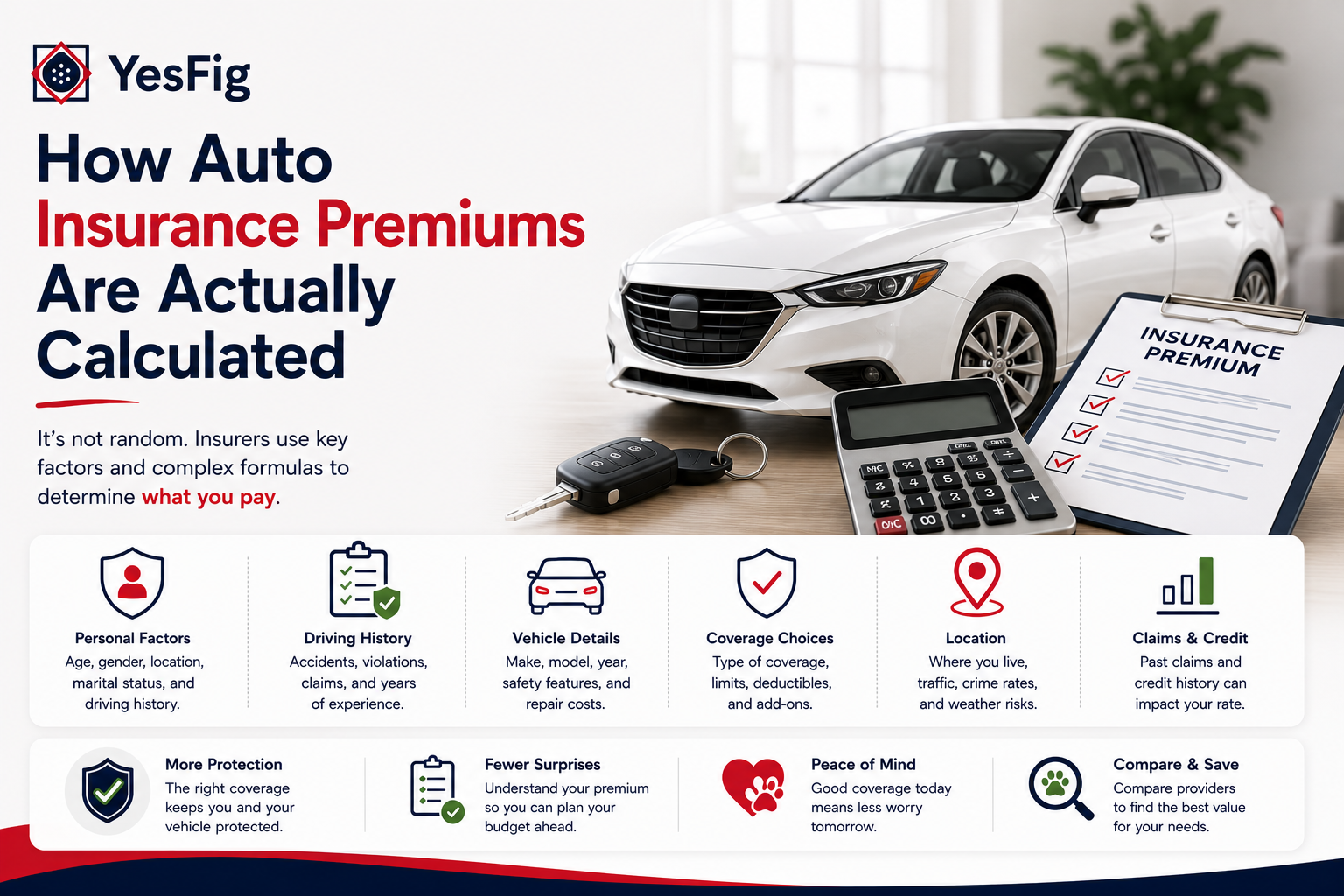
How Auto Insurance Premiums Are Actually Calculated
Quick answer: Auto insurance premiums are calculated by pricing your risk, then adding your coverage choices. Most states use your driving record, age, vehicle, location, mileage, and often your credit. California is different: state law requires insurers to weight your driving record, annual mileage, and years of experience above all other factors, and bans credit scores and gender entirely.
Table of contents
- What your premium actually is
- How auto insurance premiums are calculated in most states
- How auto insurance premiums are calculated in California
- What California bans from your rate
- The Good Driver Discount is a legal right
- How to influence what you pay
- Frequently asked questions
Ines got two quotes for the same car and the same coverage in Riverside, and they were hundreds of dollars apart. Neither company explained why. That black box frustrates a lot of drivers, because how auto insurance premiums are calculated feels like a secret formula nobody will show you.
It isn't a secret, though, and in California it's more transparent than almost anywhere else, because state law dictates a lot of it. Here's what actually goes into your rate, why California's rules break from the national playbook, and which pieces you can actually move.
What your premium actually is
Your premium is a price for risk. Insurers start with the cost of covering a pool of similar drivers, then adjust up or down based on how likely you are to file a claim and how much that claim would cost. Everything else is detail on top of that idea.
Two things drive the final number. The first is your risk profile, made of factors like your record and your car. The second is your coverage choices, meaning your liability limits, whether you carry comprehensive and collision, and your deductible. The first is about you, the second is about what you're buying, and both matter.
Not sure what's driving your quote?
That's worth knowing before you buy. Fig can break down what's behind your number and show you what a California car insurance policy includes, with no pressure to switch.
How auto insurance premiums are calculated in most states
Across most of the country, insurers weigh a familiar list. Your driving record is the big one, since tickets and at-fault accidents predict future claims. Your age and experience matter, which is why new drivers pay more. Your vehicle counts too, because an expensive car costs more to repair or replace.
Then come location, since local repair costs, theft, and claim rates vary by area, annual mileage, because more driving means more exposure, and your coverage choices. In most states, insurers also use a credit-based insurance score, which is a real and heavily weighted factor almost everywhere. That last one is where California parts ways with the rest of the map.
How auto insurance premiums are calculated in California
California is the exception, and it's written into law. Under Proposition 103, insurers here must build your rate around three mandatory factors, in this order of importance:
- Your driving safety record
- Your annual miles driven
- Your years of driving experience
The order isn't decorative. Any other factor an insurer wants to use, like your vehicle type or where you live, is an optional factor that must carry less weight than each of the three mandatory ones. That's why ZIP code can't dominate your California rate the way it might elsewhere. Your record, your mileage, and your experience come first, by law. So California car insurance is priced around the things that actually reflect how you drive.
Good to know: California also uses a prior approval system, meaning insurers must get the Insurance Commissioner's approval before changing rates. That's another Proposition 103 feature, and it's why rate changes here face public scrutiny that most states don't require.
What California bans from your rate
The list of what California doesn't allow is just as useful. Credit-based insurance scores are prohibited for auto insurance here, so unlike in most states, working on your credit won't lower your car insurance rate. Gender is also barred as an auto rating factor in California.
California further prohibits insurers from penalizing you for a lack of prior insurance, which in many states can raise your rate. Put together, these rules mean the national advice you'll read about improving your credit to save on car insurance simply doesn't apply here. Focus on your record and mileage instead, and if you rent, bundling with renters insurance is a legitimate way to trim your total.
Want to see your rate under California's rules?
That's a quick check. Yesfig prices your coverage around your record, mileage, and experience, and applies the discounts you qualify for. Compare your car insurance in a few minutes.
The Good Driver Discount is a legal right
Here's the most actionable thing in California law. If you qualify as a good driver, insurers must offer you a discount of at least 20 percent off what you'd otherwise be charged. It isn't a marketing promotion, it's a legal entitlement, and insurers generally can't refuse to sell to a qualified good driver.
Qualifying generally means you've been licensed for about three years, have no more than one point on your record, and haven't been principally at fault in an accident causing injury or death. If that's you, make sure the discount is actually on your policy. Plenty of drivers qualify and never confirm they're getting it.
Key takeaways
- Your premium prices your risk plus your coverage choices.
- California law requires record, mileage, and experience to outweigh all other factors.
- California bans credit scores and gender from auto rates, unlike most states.
- Qualified California drivers are legally entitled to a Good Driver Discount of at least 20%.
How to influence what you pay
Knowing the formula tells you where to push. Here's the approach in three steps:
- Protect your record. It's the top-weighted factor in California, so a clean record does more than anything else.
- Report your mileage accurately. Mileage is the second mandatory factor, so if you drive less than you used to, make sure your insurer knows.
- Claim your discounts. Confirm your Good Driver Discount if you qualify, then stack bundling and other savings, and compare a few insurers.
Do that and you're working the factors that actually count, instead of the ones that don't. For more on managing your coverage and cost, the Yesfig blog breaks it down without the jargon.
Frequently asked questions
How are auto insurance premiums calculated?
Insurers price the risk that you'll file a claim, then add the cost of the coverage you choose. Most states weigh your driving record, age and experience, vehicle, location, annual mileage, and often a credit-based insurance score. Your liability limits, deductible, and whether you carry comprehensive and collision then shape the final premium.
What factors affect car insurance rates in California?
California law requires insurers to weight three mandatory factors above all others, in order: your driving safety record, your annual miles driven, and your years of driving experience. Other factors, like your vehicle or location, can be used but must carry less weight than each of those three. That's unique to California.
Does credit affect car insurance in California?
No. California prohibits insurers from using credit-based insurance scores to set auto rates, unlike most other states where credit is a significant factor. So improving your credit won't lower your car insurance premium in California. Focus instead on your driving record, your annual mileage, and claiming every discount you qualify for.
What is California's Good Driver Discount?
It's a legal entitlement, not a promotion. Insurers must offer qualifying drivers a rate at least 20 percent below what they'd otherwise be charged. You generally qualify if you've been licensed about three years, have no more than one point on your record, and weren't principally at fault in an injury accident. Confirm it's applied to your policy.
Why do two insurers quote different prices for the same coverage?
Because each company weighs the allowed factors differently and has its own claims data and costs. Even in California, where the mandatory factors are set by law, insurers still apply optional factors and discounts in their own way. That's why comparing a few quotes for identical coverage often reveals meaningful price differences.
Your premium isn't a mystery, it's a formula, and in California a lot of it is public law. Ines learned her record and mileage mattered most, confirmed her Good Driver Discount was applied, and stopped worrying about a credit score that couldn't affect her rate anyway. Understand what actually counts, and you can stop guessing and start improving the pieces you control.
Ready for a rate built on what actually matters?
Get a car insurance quote in minutes with Yesfig. Coverage in California starts at $30/mo, and a licensed advisor can price it around your record and mileage while confirming every discount you qualify for. No black box, just your rate.
About the Author

Mathew Bahadori
CEO, Yesfig Insurance
Leading the company’s mission to make insurance more accessible, modern, and customer-focused. With a passion for innovation and personalized service, he continues to help individuals and families find smarter coverage solutions for life, auto, home, health, and business insurance.