
July 21, 2026
Homeowners Insurance and Mortgage Lenders: What's Actually Required
Homeowners insurance isn't required by law, but your mortgage lender requires it. Learn the real homeowners insurance requirements and their limits.
Homeowners Insurance and Mortgage Lenders: What's Actually Required
Quick answer: Homeowners insurance isn't required by law, but if you have a mortgage, your lender requires it to protect their investment. Lenders typically require dwelling coverage equal to the cost to rebuild your home, and flood insurance if you're in a high-risk flood zone. Their minimum protects the lender, so you'll want liability and personal property coverage for yourself.
Table of contents
- Is homeowners insurance actually required?
- What homeowners insurance requirements your lender sets
- When flood insurance is required too
- Do homeowners insurance requirements cover everything you need?
- What California homeowners should know
- How to meet your lender's requirements the right way
- Frequently asked questions
Wes was closing on his first house in Sacramento when his lender told him he needed homeowners insurance before the loan could fund. He assumed it was the law, like car insurance, and wasn't sure how much he actually had to buy. The answer is more nuanced than most first-time buyers expect, and understanding it saves you from both underinsuring and overpaying. Here's what's really behind homeowners insurance requirements.
The short version: no law forces you to insure your home, but your mortgage lender will. Here's why they require it, exactly what they can and can't demand, and why their minimum isn't enough to protect you.
Is homeowners insurance actually required?
Legally, no. Unlike auto insurance, which most states mandate, homeowners insurance isn't required by law. If you owned your home outright, you could technically go without it, though that would be a serious gamble.
The moment you have a mortgage, though, it becomes required, just not by the government. Your lender requires it as a condition of the loan, because your home is the collateral securing their money. If the house burned down uninsured, they'd lose their security, so they insist you carry coverage to protect their investment. That's why "required" here means required by your contract, not by statute.
Buying a home and unsure what you need?
That's worth sorting out before closing. Fig can explain what your lender will require and show you what California homeowners insurance covers, with no pressure.
What homeowners insurance requirements your lender sets
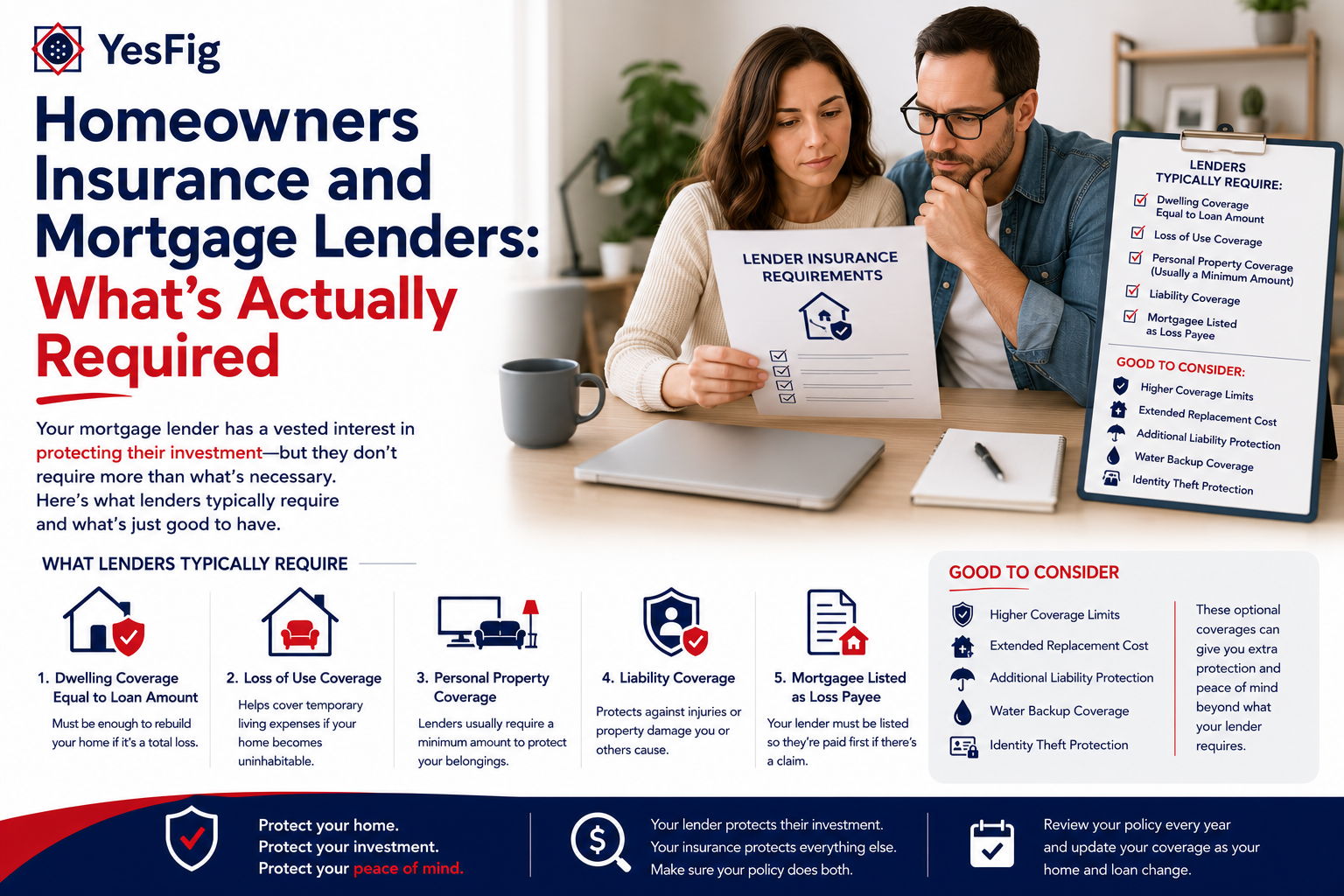
Lenders focus on one thing: protecting the home as collateral. So the core requirement is dwelling coverage, and the amount matters. Lenders generally require enough to cover the cost to rebuild your home, not its market value or purchase price.
That distinction trips people up. You insure the structure's rebuild cost, since that's what it would take to replace the home, and you don't insure the land, which isn't at risk of burning down. Your lender is also named as the mortgagee on the policy, so they're notified of changes and are a payee on claims for structural damage. And they'll require proof of insurance at closing and at each renewal. What they generally don't dictate is your liability or personal property amounts, because those protect you, not their collateral.
When flood insurance is required too
Standard homeowners insurance doesn't cover flooding, and here's where a second requirement can kick in. If your home sits in a FEMA-designated high-risk flood zone and you have a federally backed mortgage, your lender must require separate flood insurance. This is a specific, common requirement that catches buyers off guard.
Flood coverage is its own policy, available through the National Flood Insurance Program or private insurers. Even if you're not in a high-risk zone and it isn't required, flooding is a real risk that homeowners insurance excludes, so it's worth considering anyway. Your lender will tell you if your property triggers the requirement, but it's smart to check your flood zone before you buy.
Do homeowners insurance requirements cover everything you need?
Here's the trap that leaves homeowners underprotected. Your lender only cares about the dwelling, because that's their collateral. Meeting their minimum protects the structure and their investment, but it says nothing about protecting you.
A proper policy does more. You need liability coverage if someone is injured on your property, personal property coverage for your belongings, and loss of use coverage for temporary housing after a covered event. A standard homeowners policy includes all of that, so meeting the lender's dwelling requirement usually means buying a full policy that protects you too. The mistake is buying only enough to satisfy the lender and leaving yourself exposed everywhere else. Since you likely have a car, bundling with auto insurance can lower the cost of doing it right.
Good to know: If you let your homeowners insurance lapse, your lender can buy force-placed insurance and bill you for it. It's usually far more expensive than a standard policy and only protects the lender's interest, not your belongings or liability. Never let your coverage lapse.
What California homeowners should know
California adds important context. Homeowners insurance still isn't legally required here, but your lender requires it with a mortgage, and California's flood zones can trigger the flood insurance requirement just like anywhere else.
The bigger California issue is wildfire. In high-risk fire areas, coverage can be harder to find as some insurers pull back, but lenders still require it. The California FAIR Plan exists as an insurer of last resort for homeowners who can't find coverage on the open market, so options remain even in tough areas. Note that earthquake coverage is not lender-required and is handled by a separate policy. Yesfig Insurance, a Los Angeles-based brand of Focus Insurance Group, offers homeowners coverage across California.
Key takeaways
- Homeowners insurance isn't required by law, but your mortgage lender requires it.
- Lenders require dwelling coverage equal to your home's rebuild cost, not market value.
- Flood insurance is required in a high-risk zone with a federally backed mortgage.
- The lender's minimum protects them, so add liability and personal property for yourself.
How to meet your lender's requirements the right way
Doing this properly protects both the lender and you. Here's the approach in three steps:
- Insure to rebuild cost. Set your dwelling coverage to what it would cost to rebuild your home, which satisfies the lender and truly protects the structure.
- Add flood if required. Check your flood zone, and get a separate flood policy if your lender requires it or your risk warrants it.
- Protect yourself, not just the loan. Include solid liability, personal property, and loss of use coverage, rather than buying only the lender's minimum.
Do that and your policy works for you, not just the bank. For more on protecting your home, the Yesfig blog breaks it down without the jargon.
Frequently asked questions
Is homeowners insurance required by law?
No. Unlike auto insurance, homeowners insurance is not required by law in any state. However, if you finance your home with a mortgage, your lender requires it as a condition of the loan, since the home is collateral. If you own your home outright, coverage is optional but still strongly recommended.
How much homeowners insurance does a mortgage lender require?
Lenders typically require dwelling coverage equal to the cost to rebuild your home, not its market value or purchase price. You insure the structure's replacement cost, not the land, which isn't at risk. Lenders generally don't dictate your liability or personal property limits, since those protect you rather than their collateral in the home.
Is flood insurance required with a mortgage?
Only in certain cases. If your home is in a FEMA-designated high-risk flood zone and you have a federally backed mortgage, your lender must require separate flood insurance. Standard homeowners insurance never covers flooding. Even outside high-risk zones, flood coverage is worth considering, since flooding is a real risk your home policy excludes.
What happens if I let my homeowners insurance lapse?
Your lender will buy force-placed insurance and charge you for it. This coverage is usually far more expensive than a standard policy, and it only protects the lender's interest in the structure, not your belongings, liability, or living expenses. Letting coverage lapse is costly and leaves you exposed, so always keep your policy active.
Can my lender choose my homeowners insurance company?
No. You choose your own insurer, as long as the policy meets your lender's requirements for coverage amount and names them as the mortgagee. Lenders can't force you to use a specific company. This means you're free to compare insurers and find the best rate while still satisfying your loan's conditions.
Understanding what's required turns a confusing closing step into a straightforward one. Wes learned he needed to insure his home's rebuild cost, checked that he wasn't in a flood zone, and chose a full policy that protected his belongings and liability, not just the bank's collateral. Meet the lender's requirement the right way, and your home is protected for you first.
Ready to meet your lender's requirements the right way?
Get a homeowners insurance quote in minutes with Yesfig. Coverage in California starts at $25/mo, and a licensed advisor can size your dwelling coverage to satisfy your lender while making sure you're protected too. Required coverage, done right.
About the Author

Mathew Bahadori
CEO, Yesfig Insurance
Leading the company’s mission to make insurance more accessible, modern, and customer-focused. With a passion for innovation and personalized service, he continues to help individuals and families find smarter coverage solutions for life, auto, home, health, and business insurance.