July 24, 2026
Open Enrollment: What to Know Before You Pick a Plan
Open enrollment is your once-a-year window to change health plans. Learn the deadlines, why auto-renewal is risky, and what to check before you pick.
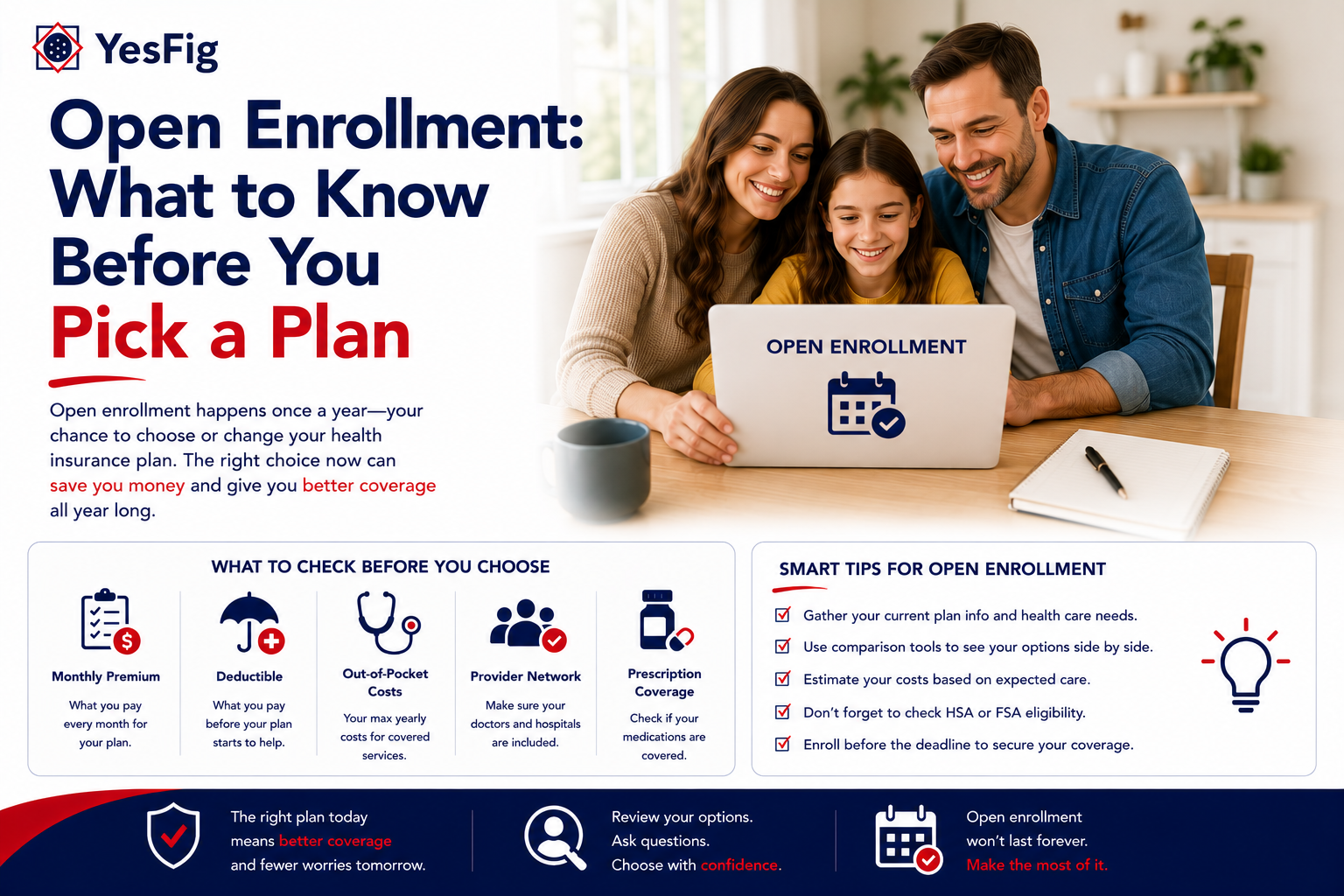
Open Enrollment: What to Know Before You Pick a Plan
Quick answer: Open enrollment is the annual window when you can enroll in or change a health plan. In California, it generally runs November 1 through January 31, longer than the federal window. Enrolling by December 15 usually means coverage starts January 1. Don't auto-renew without comparing, since plans, networks, and subsidies change every year.
Table of contents
- What open enrollment is and why the window matters
- The auto-renewal trap
- What to check before you pick a plan
- When you can enroll outside open enrollment
- What California residents should know
- How to approach open enrollment
- Frequently asked questions
Beatriz let the deadline pass in Torrance two years running, figuring her plan would simply continue as it was. It did continue, but her deductible had climbed and one of her doctors had left the network, and she found out in March. That's the quiet risk of open enrollment: the window closes whether or not you looked, and the plan waiting for you on the other side may not be the one you thought you had.
A little attention during those weeks pays off for the entire year. Here's how the window works, why coasting through it is riskier than it feels, and exactly what to compare before you choose a plan.
What open enrollment is and why the window matters
Open enrollment is the annual period when you can sign up for a health plan, switch plans, or drop coverage. Outside that window, you generally can't buy a marketplace plan at all unless a qualifying life event opens a special window for you.
Two dates drive everything. The window itself, which in California generally runs from November 1 through January 31, and the earlier deadline for January 1 coverage, usually December 15. Enroll after that and your coverage typically starts February 1 or later, leaving a gap. Dates shift from year to year, so confirm the current ones rather than relying on memory.
Not sure which plan fits you this year?
That's exactly what the window is for. Fig can walk you through your options and show you what California health plans look like, with no pressure to enroll.
The auto-renewal trap
Here's the part that catches people like Beatriz. If you do nothing, you're usually auto-renewed into your current plan, or moved into a similar one if yours was discontinued. That feels like the safe default, and it often isn't.
Plans change every year. Your premium can rise, your deductible and copays can shift, doctors can leave the network, and medications can move to a different formulary tier. On top of that, your subsidy is recalculated annually against new benchmark plans, so even an identical plan can cost you a different amount. Doing nothing is a decision, just one you're making without the information.
Good to know: Auto-renewal keeps your coverage active but not necessarily your costs or your doctors. Every year, check three things before letting it ride: whether your premium and deductible changed, whether your providers are still in network, and whether your prescriptions are still covered at the same tier.
What to check before you pick a plan
Compare on total annual cost, not the monthly premium. Add your premium, your deductible, and your expected copays across a realistic year of care, then look at the out-of-pocket maximum, which caps what you'd pay in a bad year. A cheap premium with a high deductible can easily cost more overall if you use care regularly.
Then check the two details that cause the worst surprises. Confirm your doctors, specialists, and hospital are in network for the specific plan, not just with the insurer generally. And look up every medication you take on the plan's formulary, including its tier, since a drug can be technically covered and still expensive. If you get coverage at work, an employer's group health plan has its own enrollment window and its own network to check the same way.
Want help comparing plans side by side?
That's what a real comparison shows. Yesfig can line up plans on premium, network, and coverage so the tradeoffs are visible. Compare California health coverage in a few minutes.
When you can enroll outside open enrollment
Missing the window isn't always final. A qualifying life event opens a Special Enrollment Period, generally giving you about 60 days to enroll or change plans. Common qualifying events include losing other coverage, getting married, having or adopting a child, and moving to a new area.
A few other paths stay open. Medi-Cal in California and Medicaid elsewhere have no enrollment window, so you can apply any time if you qualify by income. Employer coverage follows your employer's own schedule, and starting a new job typically triggers its own enrollment period. If none of those apply, though, you're generally waiting until the next open enrollment.
What California residents should know
California runs its own marketplace, Covered California, and gives residents a longer runway than the federal window, generally through January 31. That extra time is genuinely useful, but the December 15 deadline for January 1 coverage still applies.
Three more California points matter. The state has an individual mandate, so going without coverage can mean a state tax penalty, which most states don't impose. Standardized benefit designs mean plans at the same metal tier share the same deductible and copays across insurers, so you're comparing premium and network rather than fine print. And cost-sharing reductions are only available on Silver plans, which can make Silver a better value than Gold if your income qualifies. Yesfig Insurance, a Los Angeles-based brand of Focus Insurance Group, can help you compare California plans.
Key takeaways
- Open enrollment in California generally runs November 1 through January 31.
- Enroll by December 15 for coverage that starts January 1.
- Auto-renewal carries forward your plan, not your old costs, network, or drug tiers.
- A qualifying life event opens a special window of about 60 days.
How to approach open enrollment
Give it an hour and you're set for the year. Here's the approach in three steps:
- Start early in the window. Aim to decide before December 15 so your coverage begins January 1 without a gap.
- Re-verify network and formulary. Confirm your doctors and prescriptions for the specific plan you're considering, even if you're staying put.
- Recheck your subsidy and compare. Update your income estimate, then weigh total annual cost across a few plans instead of renewing by default.
Do that and you choose your coverage instead of inheriting it. For more on comparing plans, the Yesfig blog breaks it down without the jargon.
Frequently asked questions
When is health insurance open enrollment?
In California, open enrollment through Covered California generally runs from November 1 through January 31, which is longer than the federal window used by many states. To have coverage start January 1, you typically need to enroll by December 15. Dates can shift year to year, so confirm the current deadlines.
What happens if I miss open enrollment?
You generally can't buy a marketplace plan until the next window, unless you qualify for a Special Enrollment Period through a life event like losing coverage, marrying, having a child, or moving. Medi-Cal has no enrollment window, so you can apply any time if you qualify by income.
Should I just let my health plan auto-renew?
It's risky. Auto-renewal keeps you covered, but plans change annually: premiums and deductibles shift, providers leave networks, drug tiers move, and your subsidy is recalculated. An identical-looking plan can cost more or drop your doctor. Review your options each year rather than renewing by default, even if you end up staying.
What is a Special Enrollment Period?
It's a window outside open enrollment, usually about 60 days, triggered by a qualifying life event. Common examples include losing other health coverage, getting married, having or adopting a child, and moving to a new area. You'll typically need documentation of the event, and the window is limited, so act promptly.
How do I choose the right plan during open enrollment?
Compare total annual cost, meaning premium plus deductible plus expected copays, and check the out-of-pocket maximum rather than shopping on premium alone. Then confirm your doctors are in network and your medications are on the formulary at an affordable tier. If your income qualifies for cost-sharing reductions, look at Silver plans.
Open enrollment rewards an hour of attention and quietly punishes autopilot. Beatriz now blocks time in November, re-checks her network and prescriptions, and compares her renewal against a couple of alternatives before deciding. Treat the window as a yearly checkup for your coverage, and you'll never find out in March what changed in January.
Ready to pick your plan with confidence?
Get a health insurance quote in minutes with Yesfig. Coverage in California starts at $50/mo, and a licensed advisor can compare plans on total cost, network, and prescriptions, and check what your income qualifies for. One window, one good decision.
About the Author

Mathew Bahadori
CEO, Yesfig Insurance
Leading the company’s mission to make insurance more accessible, modern, and customer-focused. With a passion for innovation and personalized service, he continues to help individuals and families find smarter coverage solutions for life, auto, home, health, and business insurance.