June 6, 2026
How to Pick a Health Insurance Plan as a Freelancer
Self-employed in California? Here's how to pick health insurance for freelancers, compare plans and costs, and find coverage that fits a variable income.
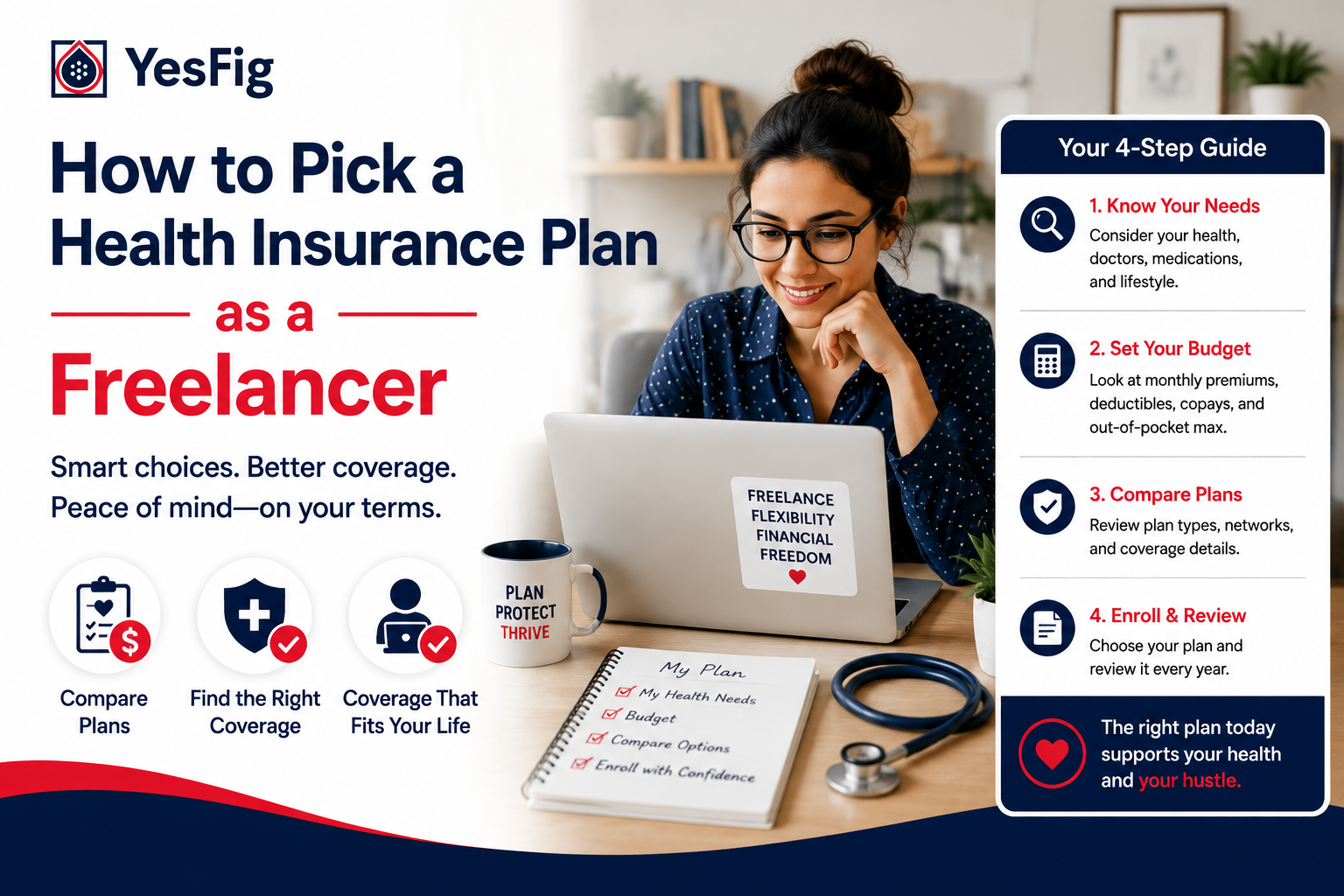
How to Pick Health Insurance for Freelancers in California
Quick answer: To pick health insurance as a freelancer in California, shop the Covered California marketplace or compare private plans, estimate your annual income to check for subsidies, then weigh four things: monthly premium, deductible, out-of-pocket maximum, and whether your doctors are in network. Plans start around $50 a month.
Table of contents
- Why health insurance for freelancers works differently
- Where freelancers in California buy coverage
- What to compare when you pick a plan
- How much does health insurance for freelancers cost?
- A simple 3-step plan to choose your coverage
- When you can enroll, and what to do if you miss it
- Frequently asked questions
Sam left a salaried design job in Oakland last spring to go freelance, and the work has been good. The thing that keeps getting pushed to next week? Health insurance. No HR portal, no employer picking up most of the premium, just a blank marketplace and a wall of acronyms. If that sounds familiar, you're where most new freelancers land.
Here's the good news: buying health insurance for freelancers isn't actually harder than an employer plan, it's just on you to choose. And it mostly comes down to comparing four numbers and one network. Once you know what to look at, it stops feeling like a gamble.
Why health insurance for freelancers works differently
When you have a W-2 job, your employer usually covers a big share of your premium and handles the paperwork. As a freelancer, that share is gone and so is the payroll deduction. You buy an individual plan and pay the premium yourself.
That sounds worse than it is. Two things work in your favor: California's marketplace offers income-based subsidies that can cut your premium sharply, and the self-employed can often deduct their health insurance premiums at tax time. The quiet risk of waiting is simple, though. One trip to the ER while uninsured can cost more than a year of premiums, which is the real reason not to leave this on the to-do list.
Where freelancers in California buy coverage
Most self-employed people in California shop through Covered California, the state's official health insurance marketplace. It's the only place you can claim premium tax credits, the income-based subsidies that lower your monthly cost, so if your income qualifies, start there.
You can also buy private plans off the exchange, directly from an insurer or through a broker. These won't carry subsidies, but they sometimes offer networks or plan designs the exchange doesn't. Comparing both sides is where help pays off. Yesfig Insurance, the Los Angeles-based brand of Focus Insurance Group, lets you compare California health insurance plans so you can see the tradeoffs in one place.
Still mapping out your options?
That's exactly what Fig is for. Get plain-English answers on tiers, networks, and subsidies before you commit to anything, and browse more guides on the Yesfig blog while you compare.
What to compare when you pick a plan
Once you're looking at real plans, ignore the noise and compare these five things:
- Monthly premium: what you pay every month, whether or not you use care.
- Deductible: what you pay out of pocket before the plan covers most costs.
- Out-of-pocket maximum: the most you'll pay in a year, your worst-case ceiling.
- Network: which doctors, specialists, and hospitals are covered. Check that your current doctors are in it.
- Prescriptions: whether the drugs you take are on the plan's formulary, and at what cost.
California plans are sorted into metal tiers: Bronze, Silver, Gold, and Platinum. Lower tiers like Bronze have cheaper premiums but higher deductibles, so you pay less monthly and more when you actually need care. Higher tiers flip that. If you're young, healthy, and rarely see a doctor, Bronze or Silver often makes sense. If you have ongoing prescriptions or expect regular visits, the math usually favors Gold.
Good to know: If your income qualifies, Silver plans through Covered California can unlock extra cost-sharing reductions that lower your deductible and out-of-pocket costs, a benefit you only get on Silver. For freelancers with moderate income, it's often the sweet spot.
Want to see how the plans actually compare?
Yesfig reviews the options side by side, maps what each tier really costs you, and flags the gaps before you sign anything. Compare your health insurance options in a few minutes.
How much does health insurance for freelancers cost?
Costs vary a lot by age, location, tier, and income, but Yesfig health plans start around $50 a month, and subsidies can push your net cost lower. Treat any quote as a starting point, not a guarantee, since your final premium depends on your profile.
Two money-savers freelancers often miss. First, premium tax credits through Covered California scale with income, so a leaner year can mean a bigger subsidy. Second, the self-employed health insurance deduction lets many freelancers deduct their premiums on their federal taxes, which lowers the real cost again. A tax pro can confirm what you qualify for.
Health coverage is the priority, but if people depend on your freelance income, it's worth looking at a term life policy too, which Yesfig offers to California residents.
A simple 3-step plan to choose your coverage
You don't need to master insurance to make a good call. Here's the whole process:
- Estimate your annual income and check Covered California to see if you qualify for subsidies.
- Compare a few plans on premium, deductible, out-of-pocket max, and network, using the metal tiers to narrow down fast.
- Pick the plan that fits how you actually use care, enroll, and set the premium to autopay so it's handled.
That's it. If you'd rather not do it alone, a licensed Yesfig advisor can compare plans with you and answer the questions a chatbot can't.
Fig tip: Freelance income swings month to month, so estimate your annual income as honestly as you can when you apply. Guess too high and you miss subsidy money. Guess too low and you may owe some back at tax time. Update Covered California whenever your income shifts mid-year.
When you can enroll, and what to do if you miss it
For 2026 coverage, Covered California open enrollment runs from November 1 through January 31, longer than the federal window. If you want coverage starting January 1, enroll by mid-December.
Miss it? You can still sign up during a special enrollment period if you have a qualifying life event, like losing other coverage, moving, getting married, or having a baby. Going freelance right after leaving a job that had coverage usually counts, so don't assume you're locked out. Check your eligibility rather than going uninsured for months.
Frequently asked questions
Can freelancers get health insurance in California?
Yes. Freelancers and self-employed people in California buy individual health plans, most often through Covered California, the state marketplace. If your income qualifies, you can get premium subsidies that lower your monthly cost. You can also buy private plans off the exchange, though those don't include subsidies.
How much does health insurance cost for self-employed people?
It depends on your age, location, plan tier, and income. Yesfig health plans start around $50 a month, and income-based subsidies can lower that further. Treat any figure as a starting point, since your final premium reflects your specific profile and the level of coverage you choose.
Can I deduct health insurance premiums if I'm self-employed?
Often, yes. The self-employed health insurance deduction lets many freelancers deduct their premiums on their federal income taxes, which lowers the real cost of coverage. Eligibility depends on your business income and whether you could get coverage another way, so confirm the details with a tax professional.
What if my freelance income changes during the year?
Report the change to Covered California as soon as you can. Your subsidy is based on your estimated annual income, so a higher- or lower-earning year affects what you qualify for. Updating mid-year helps you avoid owing money back, or missing credits you're entitled to, when tax season comes.
Can I buy health insurance outside of open enrollment?
Only if you qualify for a special enrollment period. Life events like losing job-based coverage, moving, marrying, or having a baby open a window to enroll. Leaving a job to freelance often counts. Without a qualifying event, you'll usually need to wait for the next open enrollment period.
Coverage that fits the way you work
Picking a health plan as a freelancer comes down to a few clear numbers and one honest income estimate. Do that once, and the worry that's been sitting on your to-do list turns into a line item you stop thinking about. Sam picked a Silver plan, set it to autopay, and got back to the part of freelancing that actually pays the bills.
Ready to get covered?
Get a health insurance quote in minutes with Yesfig. Plans start at $50 a month, subsidies may bring that down, and a licensed advisor from Yesfig Insurance, a brand of Focus Insurance Group, is there if you want a human in the loop.
About the Author

Mathew Bahadori
CEO, Yesfig Insurance
Leading the company’s mission to make insurance more accessible, modern, and customer-focused. With a passion for innovation and personalized service, he continues to help individuals and families find smarter coverage solutions for life, auto, home, health, and business insurance.