July 30, 2026
Group Health Insurance for Startups in Their First Year
Not sure if your startup can offer health benefits? Learn how group health insurance for startups works in year one, from eligibility to options.
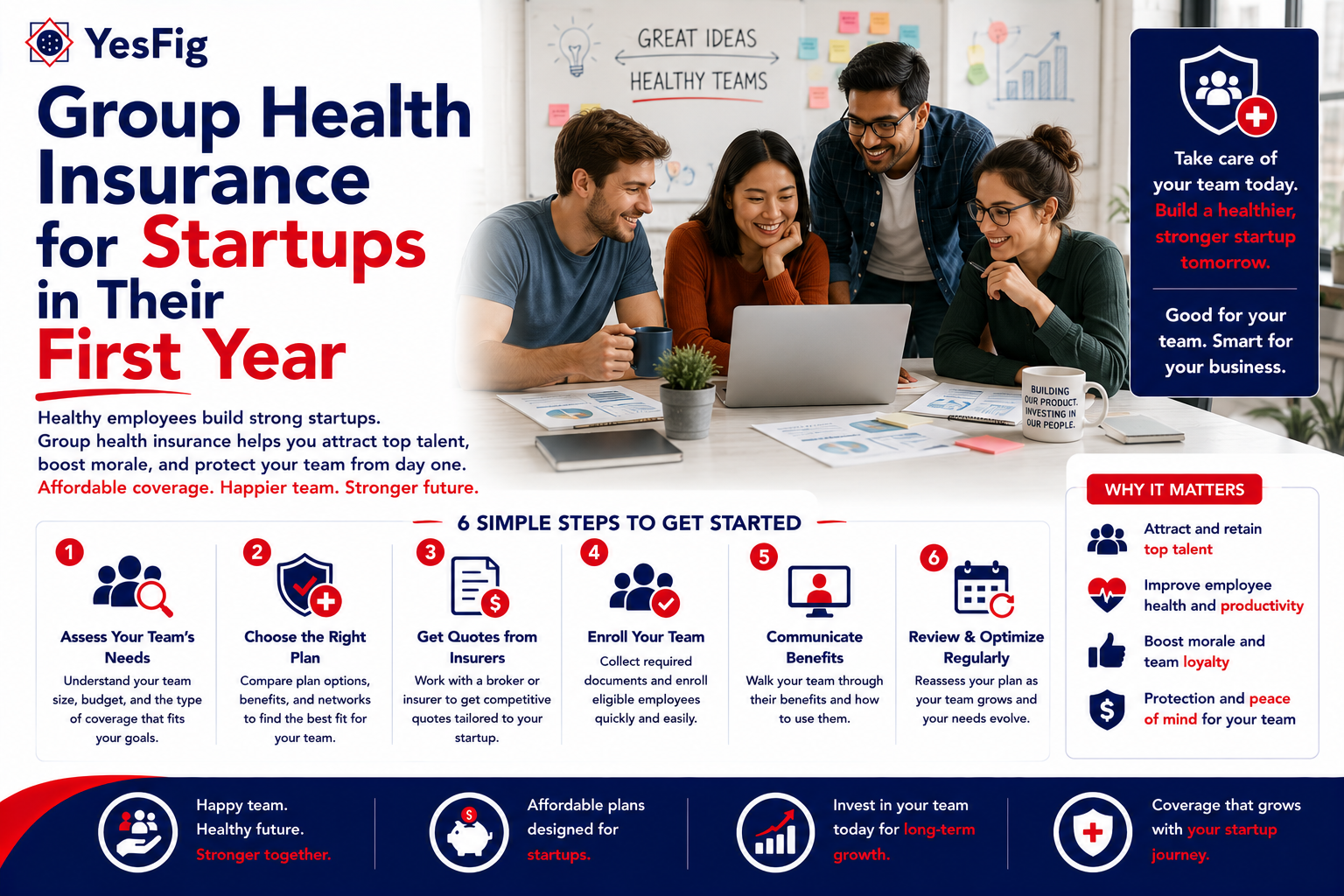
Group Health Insurance for Startups in Their First Year
Quick answer: First-year startups aren't required to offer health insurance unless they have 50 or more full-time employees, so most offer it by choice to compete for talent. A young company can buy small-group coverage once it has W-2 employees, and small-group plans are community-rated, so a founder or employee's health can't raise your rate. Startups can also use an HRA instead.
Table of contents
- Do startups need group health insurance?
- Can a first-year startup even get group health?
- Why startups aren't penalized for their team's health
- Group plan or HRA: a startup's options
- What California startups should know
- How to set up group health insurance for startups
- Frequently asked questions
Jonas co-founded an 8-person software startup in Fresno, and as he worked to keep his early hires from being poached by bigger companies, he kept hitting the same question: could a company this young and small even offer health benefits, and did it have to? The answers surprised him, and they're good news for founders. Group health insurance for startups is more accessible in year one than most first-time founders expect.
Understanding the rules helps you decide with confidence. Here's whether a startup is required to offer coverage, whether a first-year company can get it, and the options for doing it affordably.
Do startups need group health insurance?
For most startups, the answer is no, not by law. The ACA's employer mandate to offer health coverage applies only to Applicable Large Employers, meaning businesses with 50 or more full-time equivalent employees. A first-year startup is almost always well under that, so offering group health is a choice, not a legal requirement.
Startups offer it anyway for one big reason: talent. Health benefits are a major factor for candidates, and a startup competing against established companies for good people often needs them to win and keep hires. Without benefits, Jonas risked losing his early team to larger employers who offered coverage. So the decision isn't about compliance, it's about building a company people want to work for. A group health plan is one of the strongest recruiting tools a small company has.
Can a first-year startup even get group health?
Yes, and you don't need years of history to qualify. What you generally need is to be a legitimately formed business with at least one W-2 employee beyond the owner, since small-group coverage is designed for companies of roughly one to 50 employees. A first-year startup with employees on payroll can absolutely qualify.
There are a couple of conditions. Carriers usually require a minimum share of eligible employees to enroll and a minimum employer contribution toward premiums, often around half of the employee-only cost. You'll provide basic details about your team, like ages, count, and location, to get a quote. Being new isn't the barrier founders assume it is, having W-2 employees and being able to contribute is what matters.
Why startups aren't penalized for their team's health
Here's a protection that matters a lot for a small team. Small-group coverage is community-rated, meaning your premium is based on your employees' ages, location, and family size, not their health. A carrier can't deny your startup or raise your rate because a founder or an employee has a medical condition.
That's a big deal when your team is small. In a group of eight, one person with a serious health issue could otherwise seem to threaten the whole plan's affordability, but community rating and guaranteed issue for small groups mean that isn't how it works. Your startup gets coverage on the same terms regardless of who's on the team, which removes a fear many founders don't realize is unfounded.
Good to know: Small-group coverage is community-rated, so a carrier can't deny your startup or raise your rate because a founder or employee has a health condition. Premiums are based on ages, location, and family size, not anyone's health, so a small team with a sick member isn't penalized.
Building a team and want to offer benefits?
That's worth exploring early. Fig can explain how startup coverage works and show you what group health options look like for a small team, with no pressure.
Group plan or HRA: a startup's options
Startups have two solid paths. The first is a traditional small-group plan, which you buy through a carrier, a broker, or the small business marketplace, and which may qualify a small startup for a federal tax credit if it has fewer than 25 employees, pays below a wage threshold, and contributes at least half of premiums. Thresholds change, so confirm the current rules.
The second is an HRA, or Health Reimbursement Arrangement, where instead of a group plan you reimburse employees tax-free for individual coverage. An ICHRA works for companies of any size and a QSEHRA for small employers without a group plan, and both give startups a fixed budget and flexibility. Employees on that path buy their own individual plans. HRAs need proper setup to stay compliant, so work with a professional or specialized administrator. Either route can work, so choose based on your budget and how much administration you want.
What California startups should know
California is friendly to early-stage companies on this front. Covered California for Small Business is the state's group marketplace, and it's where a qualifying startup accesses the small business tax credit. California also allows very small groups, including businesses with as few as one eligible employee, which makes coverage accessible even for a tiny startup.
Two more helpful points. California offers a special enrollment window each year that relaxes participation requirements, which helps a small team that can't hit the usual enrollment threshold, and the state bans tobacco surcharges, so that won't affect your rate. Because coverage is community-rated here too, your team's health never changes your premium. Yesfig Insurance, a Los Angeles-based brand of Focus Insurance Group, offers group health across California.
Key takeaways
- Startups under 50 full-time employees aren't required to offer health coverage.
- Most offer it anyway to compete for talent, and a first-year company can qualify.
- Small-group plans are community-rated, so your team's health can't raise your rate.
- Choose between a group plan and an HRA, and check for the small business tax credit.
How to set up group health insurance for startups
Getting started takes a few clear steps:
- Confirm you can qualify. Make sure you have at least one W-2 employee and can meet the minimum employer contribution.
- Get quotes or consider an HRA. Gather your team's basic details and get group quotes through a broker or the marketplace, or explore an HRA for more flexibility.
- Plan to scale. Choose an approach that grows with you, and remember that reaching 50 full-time employees brings the coverage requirement into play.
Do that and you can offer a benefit that helps you compete, even in year one. For more on coverage and benefits, the Yesfig blog breaks it down without the jargon.
Frequently asked questions
Do startups have to offer health insurance?
Only if they have 50 or more full-time equivalent employees, which triggers the ACA's employer mandate. Most first-year startups are well under that, so offering health coverage is optional. Startups typically offer it by choice to attract and retain talent, since benefits are a major factor for candidates weighing offers from larger companies.
Can a first-year startup buy group health insurance?
Yes. A young company can qualify for small-group coverage once it's a legitimately formed business with at least one W-2 employee beyond the owner. You don't need years of history. Carriers require a minimum share of employees to enroll and a minimum employer contribution, but being new isn't a barrier by itself.
Can a startup be denied group health coverage if an employee is sick?
No. Small-group health coverage is community-rated and guaranteed issue, so a carrier cannot deny your startup or raise your rate because a founder or employee has a medical condition. Premiums are based on employees' ages, location, and family size, not their health, which protects small teams where one person's condition might otherwise seem to matter.
Is a group plan or an HRA better for a startup?
It depends on your priorities. A traditional group plan offers guaranteed coverage and may qualify for a small business tax credit. An HRA, like an ICHRA or QSEHRA, reimburses employees tax-free for individual coverage and gives you a fixed budget and flexibility, but requires proper setup. Weigh cost, administration, and control before deciding.
How much does group health insurance cost for a startup?
It depends on your team's ages, location, family sizes, the plan level you choose, and how much you contribute. Small startups may qualify for a federal tax credit that lowers the cost. Because pricing is specific to your group, the best way to know is to get a quote based on your actual team.
Offering health benefits as a young startup is far more achievable than most founders assume. Jonas confirmed his 8-person company qualified, learned his team's health couldn't raise his rate, and weighed a group plan against an HRA before choosing what fit his budget. Understand the rules, pick the approach that works for your stage, and you can offer a benefit that helps you build the team you want.
Ready to offer benefits your team will value?
Get a group health quote for your startup with Yesfig, available across California. Plans are priced around your team, and a licensed advisor can help you weigh your options and find what fits your budget. A benefit that helps you compete, from year one.
About the Author

Mathew Bahadori
CEO, Yesfig Insurance
Leading the company’s mission to make insurance more accessible, modern, and customer-focused. With a passion for innovation and personalized service, he continues to help individuals and families find smarter coverage solutions for life, auto, home, health, and business insurance.