
July 3, 2026
Auto Insurance for High-Mileage Drivers and Commuters
Auto insurance for high-mileage drivers costs more, but you can manage it. See how mileage affects your rate and how to save without cutting coverage.
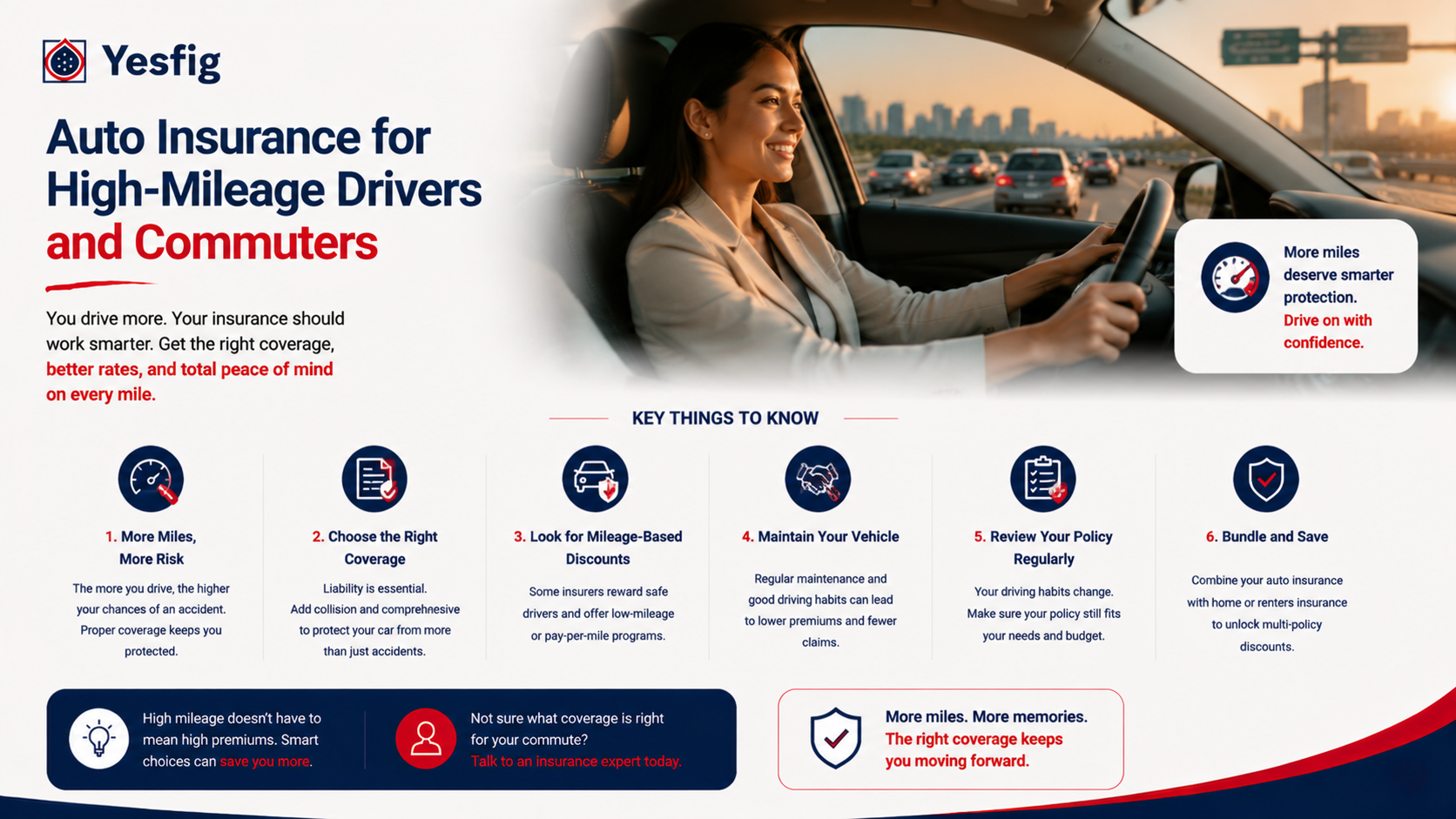
Auto Insurance for High-Mileage Drivers and Commuters
Quick answer: High-mileage drivers and commuters usually pay more for auto insurance, because more miles mean more risk of an accident. In California, annual mileage is even a required rating factor. You can lower your rate without cutting coverage by reporting mileage accurately, joining a safe-driver program, bundling policies, and shopping around. Avoid pay-per-mile plans, which favor low-mileage drivers.
Table of contents
- Why high-mileage drivers pay more
- What auto insurance for high-mileage drivers really costs
- The levers that lower your rate without cutting coverage
- Why pay-per-mile is usually the wrong fit
- What California commuters should know
- How to choose auto insurance for high-mileage drivers
- Frequently asked questions
Andre commutes 40 miles each way outside Sacramento, which adds up to around 25,000 miles a year and a car insurance bill that stings a little more than his neighbor's. If you rack up serious miles or spend rush hour on the freeway, you've probably noticed the same thing. Auto insurance for high-mileage drivers almost always costs more, and there's a real reason behind it.
The good news is that higher mileage doesn't mean you're stuck overpaying. There are smart ways to bring the number down while keeping every bit of your coverage. Here's why the miles matter, what you can do about it, and one product high-mileage drivers should usually skip.
Why high-mileage drivers pay more
The logic is straightforward: the more time you spend on the road, the more chances there are for something to go wrong. Insurers price your policy on risk, and mileage is a direct measure of how much you're exposed. A driver logging 25,000 miles a year simply has more opportunities for an accident than one driving 6,000.
How you use your car matters too. Insurers classify vehicles as pleasure, commute, or business use, and a long daily commute lands you in a pricier bucket than someone who only drives on weekends. None of this is a penalty for being a bad driver, it's just math based on exposure.
Not sure how much your miles are costing you?
That's worth pinning down. Fig can break down how mileage and commute factor into your rate and show you what a California car insurance policy covers, with no pressure to switch.
What auto insurance for high-mileage drivers really costs
There's no single price, since your rate depends on your mileage, your driving record, your location, and your coverage. But high-mileage drivers should expect to pay more than low-mileage ones for the same policy, all else equal. In California, that connection is especially direct, because state rules make annual mileage one of the main factors insurers must use.
That said, the increase is manageable, and it starts from a reasonable base. You can compare California car insurance built around your real mileage and coverage needs, then work the levers that bring it down. The goal isn't to pay like a low-mileage driver, it's to pay the lowest fair rate for the miles you actually drive.
Good to know: If you also drive for rideshare or delivery, a standard personal auto policy usually won't cover you while you're working. High-mileage commuters who do gig work need rideshare or commercial coverage, or a claim during a shift could be denied.
The levers that lower your rate without cutting coverage
Here's where high-mileage drivers get their money back. Start by reporting your mileage accurately, since underreporting to snag a lower price can void a claim later. Then look at a usage-based program: if you're a safe driver, telematics can reward good habits and offset some of the mileage cost.
From there, stack the standard savings. Ask for every discount, from safe-driver to defensive-driving courses, and consider bundling your auto with another policy like renters insurance for a multi-policy discount. Shopping around helps too, since insurers weigh mileage differently. And where you can, trimming even a few thousand miles a year, through carpooling or remote days, nudges the rate down, especially in California.
Want to see your real high-mileage rate?
A quick comparison shows you where you stand. Yesfig prices your coverage around your actual mileage and finds the discounts you qualify for, so you're not overpaying for the miles you drive. Compare your car insurance in a few minutes.
Why pay-per-mile is usually the wrong fit
You'll see pay-per-mile insurance advertised as a money-saver, and for the right driver it is. The catch is that those plans charge partly by the mile, which makes them a great deal for people who barely drive and an expensive one for anyone who doesn't.
For a high-mileage driver or a long commuter, pay-per-mile usually costs more than a traditional policy, not less. The miles that make it cheap for a weekend driver work against you. Stick with a standard policy priced for your mileage, and put your energy into discounts and safe-driving programs instead.
What California commuters should know
California commuters have a specific reason to pay attention to mileage. State law makes your annual miles driven one of the primary factors insurers use to set auto rates, alongside your driving record and years of experience. That means reducing or accurately reporting your mileage has a bigger, more direct effect on your premium here than in many other states.
The practical takeaway is to keep your record clean, report your commute honestly, and revisit your mileage if your driving changes, like shifting to a hybrid schedule. Yesfig Insurance, a Los Angeles-based brand of Focus Insurance Group, writes auto coverage across California and prices it around the miles you actually drive.
Key takeaways
- High-mileage drivers pay more because more miles mean more accident risk.
- In California, annual mileage is a required auto rating factor.
- Lower your rate with accurate reporting, safe-driver programs, discounts, and bundling.
- Skip pay-per-mile plans, which favor low-mileage drivers, and keep full coverage.
How to choose auto insurance for high-mileage drivers
Pulling it together, here's the approach in three steps:
- Report your mileage honestly. Give insurers your real annual miles and commute so quotes are accurate and claims stay valid.
- Stack every discount. Add safe-driver, telematics, and bundling savings, and compare a few insurers before choosing.
- Keep enough coverage. More miles mean more exposure, so don't trim your liability or comprehensive and collision just to save.
Do that and you pay a fair rate for the road you cover, without leaving yourself exposed. For more on managing coverage and cost, the Yesfig blog breaks it down without the jargon.
Frequently asked questions
Does high mileage increase car insurance rates?
Usually, yes. The more miles you drive, the greater your chance of an accident, so insurers charge high-mileage drivers more than low-mileage ones for the same coverage. In California, annual mileage is one of the main required rating factors, which makes the effect especially direct for commuters who log heavy miles.
How can high-mileage drivers lower their car insurance?
Report your mileage accurately, then stack savings that don't cut coverage: safe-driver and defensive-driving discounts, usage-based programs if you drive well, and bundling multiple policies. Shopping around helps, since insurers weigh mileage differently. Reducing your miles through carpooling or remote days can lower your rate too, especially in California.
Is pay-per-mile insurance good for high-mileage drivers?
No. Pay-per-mile plans charge partly based on how far you drive, which makes them cheap for low-mileage drivers and expensive for anyone who drives a lot. If you're a commuter or high-mileage driver, a traditional policy priced for your mileage usually costs less. Focus on discounts and safe-driving programs instead.
Does my commute distance affect my car insurance?
Yes. Insurers classify how you use your car, and a long daily commute puts you in a higher-cost category than pleasure-only driving. A longer commute also means more miles and more time in traffic, both of which raise your risk. Report your commute accurately so your quote reflects your real driving.
Do I need special coverage if I drive for rideshare or delivery?
Yes. A standard personal auto policy usually excludes driving for rideshare or delivery, so a claim during a shift could be denied. If you do gig work on top of a long commute, you need rideshare or commercial coverage. Ask your insurer to add the right protection before you start working.
Driving a lot of miles will always cost a bit more, but it doesn't have to cost a fortune. Andre reported his commute honestly, joined a safe-driver program, bundled his policies, and kept his full coverage, landing a fair rate for someone who lives on the freeway. Work the levers that fit your driving, and high mileage stops feeling like a penalty.
Ready for a rate that fits your miles?
Get a car insurance quote in minutes with Yesfig. Coverage in California starts at $30/mo, and a licensed advisor can price it around your real mileage while finding every discount you qualify for. A fair rate for the road you actually drive.
About the Author

Mathew Bahadori
CEO, Yesfig Insurance
Leading the company’s mission to make insurance more accessible, modern, and customer-focused. With a passion for innovation and personalized service, he continues to help individuals and families find smarter coverage solutions for life, auto, home, health, and business insurance.