
June 11, 2026
Auto Insurance for Teen Drivers: How to Keep Premiums Reasonable
Auto insurance for teen drivers is pricey but manageable. Add them to your policy, stack discounts, and choose the right car to keep premiums down.
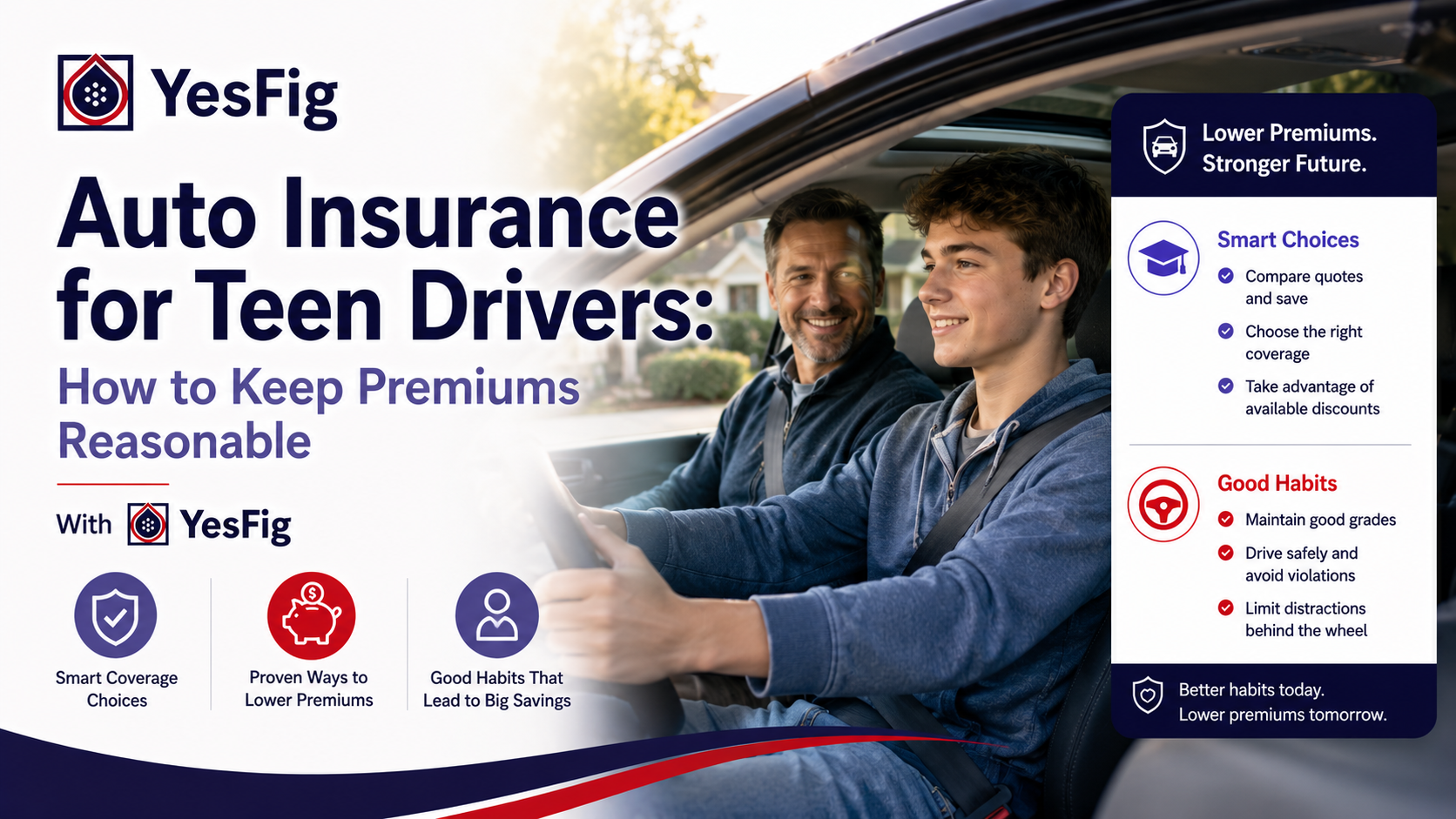
Auto Insurance for Teen Drivers: How to Keep Premiums Reasonable
Quick answer: Auto insurance for teen drivers is costly because of inexperience and higher crash risk, but you can keep it reasonable. Add your teen to your existing policy rather than buying a separate one, stack discounts like good student and driver's ed, put them on a safe used car, and review the rate yearly.
Table of contents
- Why auto insurance for teen drivers costs so much
- Add your teen to your policy, don't buy a separate one
- Discounts that lower auto insurance for teen drivers
- The car your teen drives matters
- How to keep auto insurance for teen drivers reasonable over time
- What California's licensing rules mean for your rate
- Frequently asked questions
Hector just watched his 16-year-old, Leo, pass the road test in Riverside, beaming in the driver's seat. Then the insurance quote landed, and Hector nearly asked for the keys back. If you've added a teen to a policy lately, you know the feeling. Auto insurance for teen drivers is genuinely expensive, but the sticker shock hides a useful truth: a lot of that cost is in your control.
The price isn't a fixed punishment for having a new driver in the house. It's a starting point you can work down with a handful of smart moves. Here they are.
Why auto insurance for teen drivers costs so much
It comes down to risk, and the numbers aren't kind to new drivers. Teens have the least experience behind the wheel and the highest crash rates of any age group, so insurers price that in. The premium isn't personal; it's the math of inexperience.
Two things drive the cost. First, a teen is statistically more likely to file a claim, which raises the expected payout. Second, those claims can be serious, since new drivers are still learning to judge speed, distance, and hazards.
The good news is that the same math rewards lower risk. Every signal that your teen is a careful, trained driver pulls the premium back down, which is exactly what the rest of this guide is about.
Staring at a teen-driver quote in disbelief?
You're not alone, and you have more options than the number suggests. Fig can walk you through what's driving the cost and where the discounts hide, in plain English. Start with the basics of auto insurance in California.
Add your teen to your policy, don't buy a separate one
This is the single biggest lever, so start here. Adding a teen to your existing policy is almost always far cheaper than buying them a standalone one. A separate policy means a new driver with no history paying full freight on their own, which is the most expensive way to insure a teen.
On your policy, your teen benefits from your clean record, your existing discounts, and the multi-car structure. You can even assign them to the lowest-risk vehicle in the household to soften the impact further.
Standalone teen policies usually only make sense in specific situations, like a teen who owns a car titled in their own name. For most families, keeping everyone on one California auto insurance policy is the cheaper, simpler path.
Discounts that lower auto insurance for teen drivers
Teen premiums come loaded with discounts, but only if you ask for them. Stack as many as apply:
- Good student discount. Many insurers reward a B average or better, since good students tend to be lower-risk drivers.
- Driver's education or training. Completing an approved course can lower the rate and make your teen safer at the same time.
- Telematics or usage-based programs. These track real driving habits, and a careful teen can earn a meaningful discount.
- Distant-student discount. If your teen goes away to school without a car, you may pay less while they're gone.
- Multi-policy discount. Bundling auto with a homeowners policy often trims the whole bill.
No single discount erases the teen premium, but layered together they can take a real bite out of it. Always confirm each one is actually applied to your policy.
Key takeaways
- Adding a teen to your policy is almost always cheaper than a separate one.
- Good student, driver's ed, and telematics discounts add up fast.
- A safe, moderate used car costs far less to insure than a sporty or new one.
- Premiums drop as your teen builds a clean record, so review yearly.
The car your teen drives matters
The vehicle you hand your teen affects the premium as much as the driver does. A fast, flashy, or brand-new car is expensive to insure, because it costs more to repair or replace and tempts riskier driving.
The cheaper-to-insure choice is usually a safe, moderate used car: good crash-test ratings, modest horsepower, and a value that doesn't demand expensive collision coverage. A sensible sedan beats a sporty coupe on premium almost every time.
If your teen will drive an older car outright, you can also weigh whether full collision and comprehensive coverage is worth it relative to the car's value. Matching the coverage to the car keeps you from overpaying.
How to keep auto insurance for teen drivers reasonable over time
The first-year premium is the peak, not the permanent state. A few habits keep it falling:
- Protect the clean record. Tickets and at-fault accidents are what undo every discount, so safe driving is the best rate strategy there is.
- Revisit the deductible. Raising it lowers the premium, as long as you keep enough set aside to actually pay it after a claim.
- Review the policy every year. As your teen gains experience, ask for a fresh rate and re-check that all discounts still apply.
Treated this way, teen coverage gets less painful each year. The goal is to ride out the expensive early stretch while doing everything that shortens it.
What California's licensing rules mean for your rate
California's licensing system is built to ease teens into driving gradually, and that structure can work in your favor on price.
Good to know: Under California's graduated licensing rules, new teen drivers face restrictions in their first year, including limits on late-night driving and on carrying young passengers without a licensed adult present. Fewer risky miles can mean fewer claims and steadier premiums. Yesfig writes auto coverage in California and five other states.
Completing the required driver training and supervised practice hours isn't just a legal hoop. It produces a more capable driver, which is exactly what insurers reward. Yesfig Insurance, a brand of Focus Insurance Group based in Los Angeles, can help you structure the policy around where your teen is in that process.
Not sure you're getting every discount you qualify for?
That's where money quietly leaks. Yesfig can review your policy and check that every teen-driver discount is actually applied, then compare your options. Compare your auto coverage and see what you're missing, or bring questions to a licensed Yesfig advisor.
Frequently asked questions
Why is auto insurance so expensive for teen drivers?
Teens have the least driving experience and the highest crash rates of any age group, so insurers expect more frequent and more serious claims. That risk is priced into the premium. It isn't a penalty so much as a reflection of the odds, which is also why proven safe driving and training can bring the cost down.
Is it cheaper to add a teen to my policy or get them their own?
Adding a teen to your existing policy is almost always cheaper. A standalone policy means a brand-new driver with no history paying full price alone. On your policy, your teen benefits from your clean record, your discounts, and a multi-car structure. Separate policies usually only make sense when the teen owns a car in their own name.
What discounts can lower a teen driver's insurance?
Several can stack together. Good student discounts reward a B average or better, driver's education and training courses can lower the rate, and telematics programs reward careful driving habits. A distant-student discount may apply if your teen attends school away without a car, and bundling auto with home coverage often reduces the overall bill.
What kind of car is cheapest to insure for a teen?
A safe, moderate used car with strong crash-test ratings and modest horsepower. These cost less to repair or replace and discourage risky driving, so they carry lower premiums. New, fast, or luxury vehicles are the most expensive to insure. For an older car, you can also weigh whether full collision coverage is worth its value.
When does teen car insurance start to go down?
Gradually, as your teen gains experience and keeps a clean record. The first year is typically the most expensive, and rates tend to ease in the years that follow if there are no tickets or at-fault accidents. Reviewing the policy each year and confirming all discounts still apply helps capture those reductions as they come.
The expensive years are temporary
Auto insurance for teen drivers starts high, but it isn't fixed. Put your teen on your policy, stack every discount, choose a sensible car, and protect that clean record, and the premium falls year over year. Like Hector did for Leo, you can turn an alarming first quote into a manageable line in the budget.
Ready to add your teen without the sticker shock?
Get an auto insurance quote with Yesfig in minutes. Coverage starts around $30/mo, and a licensed advisor can help you structure the policy to keep a new driver as affordable as possible.
About the Author

Mathew Bahadori
CEO, Yesfig Insurance
Leading the company’s mission to make insurance more accessible, modern, and customer-focused. With a passion for innovation and personalized service, he continues to help individuals and families find smarter coverage solutions for life, auto, home, health, and business insurance.