
July 8, 2026
Why Accidental Death Coverage Pairs Well With Term Life
Term life covers most causes of death. Accidental death coverage cheaply stacks an extra payout for accidents. See why the two pair so well in California.
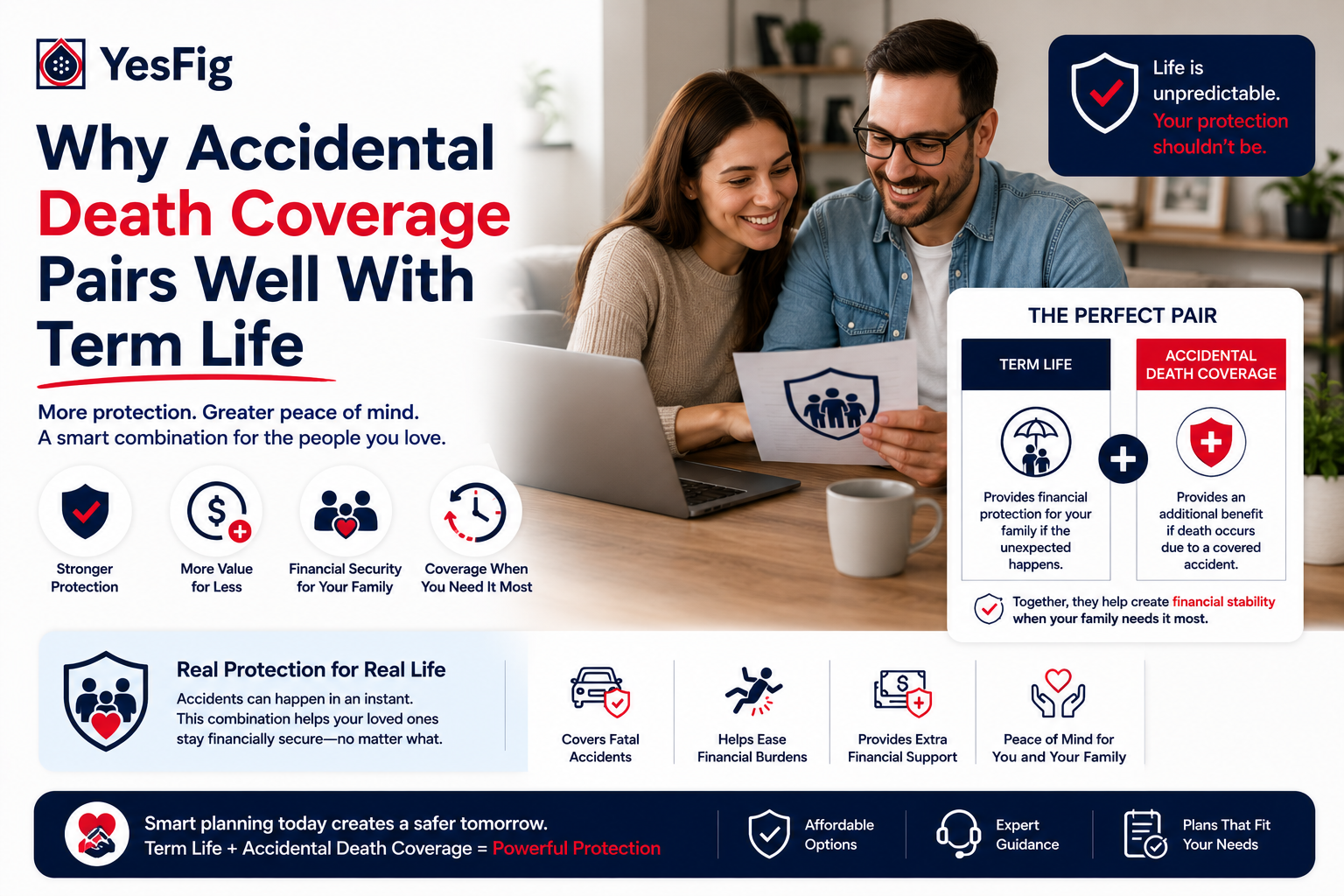
Why Accidental Death Coverage Pairs Well With Term Life
Quick answer: Accidental death coverage pairs well with term life because it adds an extra payout if you die in a covered accident, on top of your term life benefit. It's inexpensive because it only covers accidents. It complements term life rather than replacing it, since it pays nothing for death from illness.
Table of contents
- Term life vs. accidental death: what's the difference?
- What accidental death coverage actually is
- How accidental death boosts your term life payout
- Why it's a complement, not a replacement
- What California buyers should know
- How to pair accidental death coverage with term life
- Frequently asked questions
Devin, 34, already had term life insurance in San Diego when his provider offered him something called accidental death coverage. He wasn't sure if it was a smart add-on or a redundant upsell. It's a common spot to be in, because most people don't realize how accidental death coverage and term life do two different jobs, and why they work so well side by side.
The short answer is that term life is your comprehensive base, and accidental death is a cheap way to boost your payout for one specific, and surprisingly common, kind of death. Here's how each one works, why pairing them makes sense, and the one thing accidental death can never do on its own.
Term life vs. accidental death: what's the difference?
The two get confused constantly, but the difference is simple. Term life insurance pays your beneficiaries if you die during the policy term from almost any cause, whether that's an illness, a natural cause, or an accident. It's broad protection for a set number of years.
Accidental death coverage is narrower. It pays out only if your death results from a covered accident, like a car crash or a fall, and pays nothing if you die of an illness. That narrow focus is exactly why it costs so little. Term life, by contrast, is the comprehensive base most people build their protection around.
New to how these fit together?
That's worth untangling. Fig can explain the difference in plain English and show you how term life coverage works as the foundation, with no pressure to add anything.
What accidental death coverage actually is
Accidental death coverage, sometimes sold as accidental death and dismemberment, pays a benefit if you die in a covered accident. The dismemberment part adds a payout for serious accidental injuries, like the loss of a limb or eyesight. Illness and natural causes aren't covered, only accidents.
Because it insures a narrower risk, it's cheap, and it usually requires little or no medical exam. That makes it easy to add to your coverage quickly. It's not meant to stand alone, though, which is where pairing it with term life comes in.
How accidental death boosts your term life payout
Here's the part that makes the pairing click. If you have both and die in a covered accident, your beneficiaries typically receive your term life benefit plus your accidental death benefit. The two payouts stack, giving your family a larger total when the loss is accidental.
That matters more than it might seem, because accidents are among the leading causes of death for younger, healthy adults, exactly the people who buy term life. For Devin, adding accidental death coverage meant a bigger payout for the kind of event most likely to affect someone his age, at a very low extra cost.
Good to know: With both policies, a covered accidental death pays out both benefits, stacking the term life amount and the accidental death amount. That extra coverage costs very little precisely because it only applies to accidents, a narrower risk than all causes of death.
Want to boost your payout for less?
That's exactly what this pairing does. Yesfig can add affordable accidental death coverage on top of your term life, so an accident means a bigger benefit for your family. Explore accidental death coverage in a few minutes.
Why it's a complement, not a replacement
This is the part to get right. Accidental death coverage only pays for accidents, and most deaths, including from illnesses like heart disease or cancer, are not accidents. Lean on accidental death alone, and an illness could leave your family with nothing.
That's why it belongs on top of term life, never instead of it. Term life is the foundation that covers you no matter how you pass, and accidental death is the affordable booster for accident risk specifically. Start with term life coverage in California as your base, then add accidental death to strengthen it, not the other way around.
What California buyers should know
Both pieces of this pairing are available to California residents. Yesfig offers term life and accidental death coverage in California, and both are priced to be affordable, so adding the accidental death layer usually costs very little on top of your term policy.
Because they're separate coverages, you can size each one to fit your needs and budget. Yesfig Insurance, a Los Angeles-based brand of Focus Insurance Group, can set up term life as your base and add accidental death coverage for California residents who want the extra protection against accident risk.
Key takeaways
- Term life covers death from almost any cause; accidental death covers only accidents.
- Together, a covered accidental death pays both benefits, stacking the payouts.
- Accidental death is cheap because its risk is narrow, so it's a low-cost booster.
- It complements term life and should never replace it, since illness isn't covered.
How to pair accidental death coverage with term life
Setting up the pairing is simple. Here's the approach in three steps:
- Start with term life. Choose a term life policy sized to protect your family from any cause of death.
- Add accidental death coverage. Layer on an accidental death benefit for extra protection against accidents, which costs little.
- Check the exclusions. Read what counts as a covered accident, since policies exclude certain situations.
Do that and you get broad protection plus a boosted payout for accidents, all at a modest cost. For more on building your coverage, the Yesfig blog breaks it down without the jargon.
Frequently asked questions
What is the difference between term life and accidental death coverage?
Term life insurance pays your beneficiaries if you die during the term from almost any cause, including illness, natural causes, or an accident. Accidental death coverage pays only if death results from a covered accident, and nothing for illness. Term life is broad protection, while accidental death is a narrow, low-cost add-on.
Does term life insurance already cover accidental death?
Yes. Term life pays out for almost any cause of death during the term, including accidents. Accidental death coverage doesn't replace that, it adds a second, separate payout on top when the death is accidental. So pairing them stacks extra benefit for accidents, not overlapping coverage for the same dollars.
Is accidental death coverage worth it if I have term life?
It can be, because it cheaply boosts your total payout for accidents, which are a leading cause of death for younger adults. Since it only covers accidents, it costs little to add. Just treat it as a supplement to term life, not a substitute, because it pays nothing if you die of an illness.
Can I buy accidental death coverage instead of life insurance?
You can, but it's risky as your only coverage. Accidental death pays only for accidental death, so if you die of an illness, which is how most deaths occur, your family receives nothing. For real protection, term life should be your base, with accidental death added on top for extra accident coverage.
How much does accidental death coverage cost?
It's one of the cheaper coverages, because it insures only accidental death, a narrower risk than all causes. The exact price depends on your benefit amount and provider, but it usually adds only a little to your term life premium. That low cost is a big part of why the two pair so well.
The smartest way to think about accidental death coverage is as a cheap upgrade, not a standalone plan. Devin kept his term life as the foundation, added an accidental death layer for a few dollars more, and gave his family a bigger payout for the exact risk most likely to touch someone his age. Pair the two, and you cover almost everything, with extra strength where it counts.
Ready to strengthen your coverage?
Add accidental death coverage with Yesfig in California, starting at $9/mo, on top of your term life policy. A licensed advisor can size both so an accident means a bigger benefit for your family. Broad protection, boosted where it matters.
About the Author

Mathew Bahadori
CEO, Yesfig Insurance
Leading the company’s mission to make insurance more accessible, modern, and customer-focused. With a passion for innovation and personalized service, he continues to help individuals and families find smarter coverage solutions for life, auto, home, health, and business insurance.